Showing posts with label vatican. Show all posts

Tuesday, July 28, 2009

Daily Sources 7/28

1. MAYER AND WOOD ARGUE THAT CHINA'S ENTRANCE INTO THE WORLD ECONOMY HAS NOT SIGNIFICANTLY DE-INDUSTRIALIZED REST OF DEVELOPING WORLD

Jörg Mayer and Adrian Wood at Vox EU argue that China's integration into the world's economy has not had the effect of substantially de-industrializing other developing nations.
"The biggest possible effect would be for a country which initially produced or exported equal amounts of manufactures and of primary products, where a 15% fall in the ratio would reduce the share of manufactures by 3.5 percentage points.

These estimates are imprecise and subject to error; the true answer may lie outside their range. But there is no plausible modification of the calculations that could make the true answer much larger. This is mainly because, despite its size, China’s opening had only a modest effect on world average endowments. The upper-limit estimates, obtained by simply adding China’s endowments to the rest of the world’s, are a 9% rise (from 0.43 to 0.47) in the share of the global workforce with a complete primary or secondary education, and a 17% fall in the average land/labour ratio, from 2.9 to 2.4 square kilometres of land per 100 workers ... . The average effect on the structure of output and trade in other countries is unlikely to have been larger than these world average endowment changes and was probably smaller.

The significance of the China effect varied widely among developing countries. This is partly because its size varied with the composition of each country’s manufacturing and primary production – how closely its industrial products competed with Chinese exports, and how much demand there was from China for its primary exports (more, say, for copper than for coffee). It is also because there were many other forces acting on sectoral structures--including changes in countries’ own trade policies--whose effects often outweighed those of China."
Worth reading in full.

2. NEPAL HARASSING TIBETAN REFUGEES

Gopal Sharma at Reuters reports that Nepal is responding to pressure from Beijing by cracking down on Tibetan refugees in the country.
"Nepali authorities have regularly broken up protests by Tibetan exiles and arrested them for protesting against China's crackdown on demonstrations in Tibet.

The Washington-based [International Campaign for Tibet] said Tibetan refugees were 'increasingly demoralized' as Nepal 'relinquishes its historic and sovereign interests in response to incentivized political pressure from Beijing and its sympathizers.'

ICT said 'pre-emptive arrests of Tibetans, ID checks and house searches' by authorities were contributing to a 'widespread sense of fear and insecurity' among the exiles.

'Nepal's political leadership is betting that the internal benefits of assuaging China in the cause of oppressing Tibetans will be greater... than the traditional legal and historical concepts,' Mary Beth Markey, Vice President at ICT said."
3. INDIA TO ANNOUNCE SOLAR POWER TARGETS OF 1/8TH TOTAL ELECTRICITY DEMAND, CENTRAL BANK LEAVES INTEREST RATE UNCHANGED ON INFLATION CONCERNS

Krittivas Mukherjee and David Fogarty at Reuters reports that India will announce its targets for solar power generation in September. The plan promises to
"boost output from near zero to 20 gigawatts (GW) by 2020 as it firms up its national plan to fight global warming, draft documents show.

The target, which would help India close the gap on solar front-runners like China, is part of an ambitious $19 billion, 30-year scheme that could could increase India's leverage in international talks for a new UN climate pact in December, one of several measures meant to help cut emissions.

If fully implemented, solar power would be equivalent to one-eighth of India's current installed power base, helping the world's fourth-largest emitter of planet-warming greenhouse gas emissions limit its heavy reliance on dirty coal and assuaging the nagging power deficit that has crimped its growth.

The 'National Solar Mission', yet to be formally adopted by Prime Minister Manmohan Singh's special panel on climate, envisages the creation of a statutory solar authority that would make it mandatory for states to buy some solar power, according to a draft of the plan, which provided detailed proposals for the first time, obtained by Reuters ... ."
Meanwhile, Cherian Thomas at Bloomberg reports that India's central bank decided today to leave its benchmark interest rate unchanged at 3.25%.
"The central bank raised its inflation forecast for the year to March 31 to 'around 5%' from an April estimate of 4%, citing 'elevated' food and commodity prices."
4. EU TO TRAIN SOMALI SECURITY FORCES TO POLICE PIRACY

BBC News reports that the EU has announced plans to train Somali security forces to tackle the piracy plaguing their coasts.
"It will send a planning team to the region next month. The training will take place in neighboring Djibouti, which has French and US military bases."
(h/t Joshua Keating at FP's Morning Brief.)

5. IMF AND LATVIA REACH ACCORD, MAY OPEN UP NEW FUNDING

Aaron Eglitis and Timothy R Homan at Bloomberg report that the IMF and Latvia have reached an accord paving the way for the country to receive its first financial assistance from the organization since December.
"The review may unlock about 195 million euros ($285 million), which the IMF withheld in March after the Baltic country failed to commit to budget cuts, the fund said in an e- mailed statement.

Latvia turned to a group led by the European Commission and the IMF for a 7.5 billion-euro stabilization loan in December after its second-biggest bank needed a state rescue. The IMF announcement followed a 1.2 billion-euro transfer by the European Commission yesterday, helping quell concern about a lats devaluation that may have destabilized currencies across the region."
6. MOUSAVI CALLS FOR NEW STREET PROTESTS NEXT WEEK IN IRAN

Borzou Daragahi at the LA Times reports that opposition candidate Mir-Hossein Mousavi has called for more street protests during religious festivals next week.

7. KENYA TO BUILD AFRICA'S LARGEST WIND FARM

Xan Rice at the UK Guardian reports that Kenya plans to build the largest wind farm in Africa.
"Some 365 giant wind turbines are to be installed in desert around Lake Turkana in northern Kenya – used as a backdrop for the film The Constant Gardener--creating the biggest wind farm on the continent. When complete in 2012, the £533m (~ $758.8 million) project will have a capacity of 300MW, a quarter of Kenya's current installed power and one of the highest proportions of wind energy to be fed in a national grid anywhere in the world."
8. FUEL OIL APPROACHING COST OF CRUDE, HURTS SHIPPING, CHINESE FUEL OIL IMPORTS ROCKET UPWARD (FROM LOW BASE), VIETNAMESE MAIDEN REFINERY TO TAKE SPOT GASOLINE DEMAND OFF MARKET, WALL OF ASIAN PACIFIC REFINING YET TO PLAY OUT

Christian Schmollinger and Alaric Nightingale at Bloomberg report that the price of fuel oil--bunker fuel, the bottom of the barrel, which is used to power ships in great part because it is cheap, generally trading at a considerable discount to crude, is approaching the price of light crude and may surpass it.
"Fuel oil may surpass crude 'for quite some time, six months is possible,' JPMorgan Chase & Co. vice president of energy strategy Vima Jayabalan said in a phone interview from Singapore."
This means that the effect of rising crude prices is having a more pronounced affect upon the cost of shipping than it did during the 2003-2008 run up in the price of crude.
"'It’s really hurting' ship owners, said Parul Bhambri, a Singapore-based analyst at Drewry.

Maersk said May 12 that falling demand for freight hobbled its ability to pass on fuel costs to customers in the first quarter, when its shipping line lost $559 million after taxes, compared with an $80 million profit a year earlier. The shares are down 40% in the past year in Copenhagen trading."


As the price of fuel oil rises, however, many simple refineries, which do not have the equipment to maximize gasoline and diesel output, can become profitable again, which may undergird a recovery in overall crude demand. That said, it still doesn't look like there's much demand for gasoline and diesel out there, which could push down the crack spread and thus the price of crude. Winnie Lee at Platts reports that Chinese fuel oil imports in June were up 6.26% from May and 45.94% from June 2008 to 13.7 kb/d. It's largest supplier was Venezuela. In that vein, Irene Tang at Platt's the Barrel blog reports that the commissioning of Vietnam's first refinery at Dung Quat is poised to erase about 30% of the country's product import demand, which will in turn erase its demand for spot gasoline purchases. The wall of new refining capacity in Asia has yet to fully be appreciated,
"China has now joined India in becoming a major swing exporter of gasoline. Apart from greenfield refineries coming onstream in the country, Beijing's decision to adopt a new products pricing formula for the domestic market and the resulting price revisions in tandem with the global benchmarks has encouraged more speculative buying at the wholesale level, causing wide fluctuations in refiner inventories.

This, in turn, has made Chinese gasoline export volumes unpredictable. The latest customs figures show gasoline exports hit a two-year high of 560,000 mt in June, a 273% surge from the corresponding month of last year. The previous high was in April 2007, at 590,000 mt.

The figures point to Chinese 'apparent' gasoline demand in June being just 1.8% higher than the same month a year ago, a contrast with on-year growth rates of 20.2% in May and 13% in April. The anomaly of the June figure, in the backdrop of staggering double-digit growth rates of automobile sales in China and a 7.7% on-year average gasoline demand growth in the first half of the year, can only be explained by wild swings in stock builds and draws."
"The full impact of the start-up of Reliance Industries' new 580,000 b/d refinery in Jamnagar should be apparent as early as August, as the company's older 660,000 b/d refinery is now restarting from a partial shutdown. Monthly gasoline exports from RIL are expected to more than double to well above 600,000 mt."
9. NIGERIAN REBELS IN SOUTH TARGET OIL MINISTER'S COMPANY, NORTHERN ISLAMISTS CONTINUE UNREST

Platts reports that the Nigerian Joint Revolutionary Council has issued a warning to UK-based independent producer Afren Resources to stop operating in the Niger Delta or risk attacks on its equipment and personnel.
"The Joint Revolutionary Council, which styles itself as a coalition of militant groups based in southern Rivers and Bayelsa states, said in a statement that its ultimatum to Afren was aimed at expressing the group's opposition to the policies of Nigeria's Oil Minister Rilwanu Lukman--policies the group sees as skewed against the Niger Delta region in the country's south.

Lukman was a co-founder of Afren and stepped down from his position as chairman of the company's board of directors once he was appointed oil minister for Nigeria in late 2008. His shares in the company were to be held in a blind trust, the company said in a statement at the time."
Lukman wants to site an oil university in his home state in the north--Kaduna. Meanwhile, Ibrahim Mshelizza at Reuters reports on the increasing Islamist inspired unrest in northern Nigeria.
"The violence was triggered when some members of the group called Boko Haram, which wants a wider adoption of Islamic sharia law across Africa's most populous nation, were arrested Sunday in Bauchi state.

Unrest spread to the northern states of Kano, Yobe and Borno, whose capital Maiduguri is home to the group's leader, Mohammed Yusuf, and has seen the worst violence.


'The situation has been contained in Bauchi and Yobe. The bad situation we have now is in Borno where the leader of the group is residing ... We are going to launch an operation, a main operation to flush them out,' [Nigerian President Umaru] Yar'Adua told reporters after meeting security chiefs and state governors."
10. PRESSURE TO CHANGE DRUG WAR STRATEGY BUILDING IN MEXICO, MEXICAN CRUDE PRODUCTION WAY DOWN

William Booth and Steve Fainaru at the Washington Post report on the growing pressure on Mexican President to change Mexico's "surge" strategy in dealing with its drug cartels.
"Dan Lund, president of the MUND Group polling organization, said public support for Calderón's strategy appears to be weakest in the places where the federal government needs it most. 'In a series of national surveys, polls consistently have found a reasonable but cautious level of support for using the military in the front lines against the cartels,' he said. 'But in all the states where the military is actually deployed, the support goes down, sometimes dramatically.'

The situation has been exacerbated by the global economic crisis, which has cast millions of Mexicans into poverty. José Luis Piñeyro, a Mexican military analyst who maintains close ties with the armed forces, said rising unemployment and poverty 'is creating what I call an "army in reserve,"' for the traffickers.

In Michoacan, La Familia has used the media to try to align itself with the disenfranchised. After the recent attacks, one of its leaders, Servando Gómez, called a local television station and told viewers: 'I want to say to all Michoacanans, we love them and respect them.'"
Meanwhile, there was plenty of stories on the decline in Mexican production last week. John Kingston at the Barrel notes:
"But here's the more stunning figure: what's happened in two years. In July 2007, Pemex reported crude output of 3.165 million b/d. That's a 20.4% decline in 23 months."
11. VATICAN AIMS AT FREE MARKETEERS, SAYING MARKETS WITHOUT ETHICS DESTROY WEALTH AND CREATE POVERTY

Flavia Krause-Jackson at Bloomberg reports that the Vatican has attacked free markets, saying that they have legitimized greed. On June 7, the pope published an encyclical which examined the financial crisis and means out of it, saying that once profit becomes the exclusive goal of business, it destroys wealth and creates poverty.
"Last November, Italian Finance Minister Giulio Tremonti said the pope had pronounced a 'prophecy' in a paper Benedict wrote when he was a cardinal.

In 1985, then-Cardinal Joseph Ratzinger presented a paper titled 'Market Economy and Ethics' at a Rome event on the Catholic Church and the economy. He said a decline in ethics 'can actually cause the laws of the market to collapse.'"
I think it is plain that markets cannot sustain themselves without a modicum of trust, engendered by ethics held in common.

12. CFTC MAY OR MAY NOT REVISE LAST YEAR'S REPORT EXONERATING SPECULATION IN PRICE VOLATILITY, LONDON'S FSA EXONERATES SPECULATORS

Ianthe Jeanne Dugan and Alistair MacDonald at the Wall Street Journal report that the CFTC
"plans to issue a report next month suggesting speculators played a significant role in driving wild swings in oil prices--a reversal of an earlier CFTC position that augurs intensifying scrutiny on investors."
However, I understand that the Chair of the CFTC indicated today that the story in the WSJ that the report will be redone and altered are premature and inaccurate. From the WSJ story,
"In the US, the CFTC begins public hearings Tuesday to determine whether to limit speculative investments in commodities. Congress also is weighing whether to give the CFTC the authority, under a broader proposal to revamp financial regulation, to regulate commodities investments that occur off traditional exchanges. Byron Dorgan, a North Dakota Democrat, has called on the CFTC to curb 'oil speculators looking for a quick buck at the expense of American consumers.'"
I suspect that the direction of these accusations is misdirected, given that commercials may choose to purchase futures to profit on price just as much as to hedge their obligations.


Positions net long and short for the week ended July 21 only comprised 1% of the market. Note that from 2008 open interest--or the total number of contracts--has been steadily falling for both futures and options--though the trend for options was up through February.


If you include options, the number of positions held by traders net long or short represent 3.17% of the market--not an especially large share. Meanwhile, Alistair MacDonald and Carolyn Cui at the Wall Street Journal report that the Financial Services Authority in London has found no evidence that speculators are behind the wild swings in oil price seen from 2008.
"One person familiar with the matter said the FSA had seen no evidence to suggest that speculators are driving up the price of oil.

'More than they ever were before, [investors] are looking to the global economic climate and nobody is sure on that, and that is perhaps driving the volatility,' he said.

Given that view, the FSA doesn't believe that limiting the size of trading positions would be 'beneficial' for the market, said a person familiar with the matter. Still, the FSA acknowledges it doesn't have a 'full explanation' as to why the market has moved the way it has, said a person familiar with the matter.

The FSA's conclusion contradicts British Prime Minister Gordon Brown, who has linked the recent rises in oil to speculation.
...
Politicians around the world are worried about the effect of rising oil prices on the recovery potential of their recession-hit economies. World leaders from French President Nicolas Sarkozy to the leaders of Asia's biggest oil-consuming nations have tied these rises to oil speculators."
"Speculation," of course, is sufficiently vague to represent a politically useful bogeyman, and it seems likely that someone will call financial protectionism. That said, I do think it is in the global economic interest to make the cost of energy--and in particular transportation fuels--more stable and predictable, I just don't think that attacking "speculation" is a particularly productive way of doing so.

13. TRUCKING VOLUMES IN US DOWN 13.6% IN JUNE YOY

The American Truckers Association yesterday announced that their
"advance seasonally adjusted (SA) For-Hire Truck Tonnage Index fell 2.4% in June. In May, SA tonnage jumped 3.2%. June’s decrease, which lowered the SA index to 99.8 (2000=100), wasn’t large enough to completely offset the robust gain in the previous month."
Over June 2008, tonnage fell 13.6%, which exceeded the year over year drop of 11%.
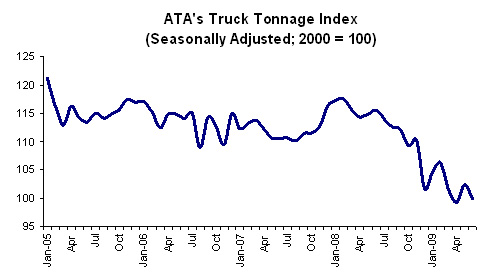


The ATA release warns:
"The sample includes an array of trucking companies, ranging from small fleets to multi-billion dollar carriers. When a company in the sample fails, we include its final month of operation and zero it out for the following month, with the assumption that the remaining carriers pick up that freight. As a result, it is close to a net wash and does not end up in a false increase. Nevertheless, some carriers are picking up freight from failures, and it may have boosted the index. Due to our correction mentioned above, however, it should be limited."
(h/t Barry Ritholtz at the Big Picture.)

14. HOME PRICE DECLINE SLOWING, CALIFORNIA FORECLOSURES DOUBLE NEW HOME SALES IN JUNE

Barry Ritholtz reports that home price declines are "slowly abating." Here is his graph:
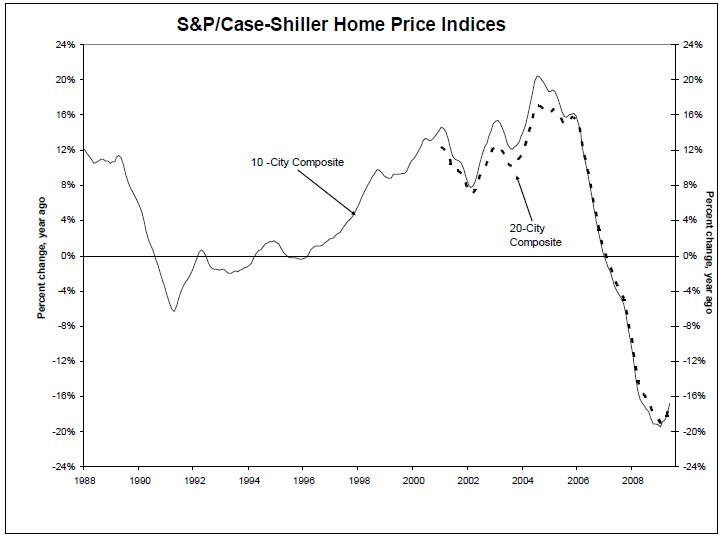


Jake at Econopic picked up on the Big Picture's quote of the day of Mark M Hanson which notes that California foreclosures are more than double the national new home sales for June. His graph:


15. EPA MAY GIVE ALGAE BIG BOOST

Russell Gold at Environmental Capital notes that Blair Carter at the Renewable + Law Blog reports that "that the Environmental Protection Agency will count algae as an advanced biofuel under Renewable Fuel Standard rules being developed."
"Why do EPA’s steps towards including algae matter? Because when Congress created its mandate to blend advanced biofuel into the fuel pool, it created a big market for these fuels. By 2012, the law mandates that two billion gallons of these advanced biofuels be blended, a figure that rises by tenfold by 2022. It’s all in Section 202 of the Energy Independence and Security Act of 2007.

... For algae to be included, the law says it needs to have no more than 50% of the 'lifecycle greenhouse gas emissions' of gasoline and diesel. This could be tricky, says David Woodburn, an alternative energy analyst with ThinkEquity. 'The hard part for me is understanding how the EPA plans to calculate the GHG emissions of algae fuels, based on the variety of feedstocks (sugar, CO2, other), processes (open ponds, photobioreactors), and algae varieties being explored--especially before November,' he says, noting when the rules are supposed to be finished."
Blair Carter's post can be found here.

16. TEXAS DROUGHT GETS WORSE

Tom Benning at the Wall Street Jounral reports on the drought in Texas.
"Nearly 80 of Texas' 254 counties are in 'extreme' or 'exceptional' drought, the worst possible levels on the US Department of Agriculture's index. Though other states are experiencing drought, no counties in the continental U.S. outside Texas currently register worse than 'severe.' In late April, the USDA designated 70 Texas counties as primary natural-disaster areas because of drought, above-normal temperatures and associated wildfires."
The Journal carries an interactive graphic:

Wednesday, May 13, 2009

Daily Sources 5/13

1. EUROZONE INDUSTRIAL PRODUCTION DOWN 20% IN MARCH YOY, EVEN AS GERMAN IP IS FLAT

Jan Strupczewski at Reuters reports that Eurostat released data today showing the industrial production in the eurozone fell by 20% in March from the year previous. From February, industrial production for the 16 members of the monetary union fell 2% in March.
"Industrial production accounts for roughly 17% of euro zone gross domestic product and the grim March output data could mean the economy shrank more than economists expect.

'Following today's release this indicator is pointing to a -2.2-2.3% quarter-on-quarter reading in Q1. This suggests downside risks to our 2% forecast,' said Saleem Bahaj, economist at Goldman Sachs.

Eurostat also revised down production data for February to a monthly fall of 2.5% from the initially reported decline of 2.3% and, in year-on-year terms, to a plunge of 19.1% from 18.4%."
However, Germany, the largest economy in the eurozone, announced flat industrial production in March last week, though exports continued to drop--see Daily Sources 5/8 #4.

2. CHINESE INDUSTRIAL PRODUCTION UP 7.3% IN APRIL YOY, EVEN AS ELECTRICAL GENERATION DOWN AS MUCH AS 4% YOY AND INDUSTRIAL PRODUCTS IMPORTS FALL BY 14.3%

The AFP reports that Chinese industrial output rose by 7.3% in April year over year according to data released by the National Bureau of Statistics today.
"The figure was down from 8.3% growth in March, and 11.0% in February, according to earlier data issued by the government.

'It was a small fluctuation in a generally upgoing trend,' said Lian Ping, a Shanghai-based economist with the Bank of Communications.

'It's rather unlikely it will go back to a rate of around five percent,' he said.

Growth in industrial output--a main gauge of activity in factories and plants across China--hit lows of little more than five percent at the end of last year."
On May 5, the China Electricity Council released preliminary data that electricity generation was down 3.55% from a year previous and that the finalized statistic--to be released later this month--was likely to be a 4% decline. This was also in the face of CLSA Asia Pacific Markets' positive PMI reading for April--see Daily Sources 5/5 #3 for both of these. I find the notion of industrial production continuing to increase at annual rates of 7% or more difficult to reconcile with electrical generation decreases of annual rates of up to 4%.
"Exports of industrial products totaled 566.2 billion yuan (~ $83 billion ) last month, a steep decline of 14.3% from the same month in 2008, the statistics bureau said."
3. CHINA BANKING REGULATORS PROPOSE RULES FOR ESTABLISHMENT OF CONSUMER LENDING FIRMS AS WESTERN BANKS EXIT CHINESE FINANCIAL SECTOR IN ORDER TO SHORE UP BOOKS

Sky Canaves at the China Journal reports that the China Banking Regulatory Commission told Xinhua that it had issued a draft of new regulations that establish guidelines for the establishment of new consumer financing corporations. Although there was a record number of new loans made in the first quarter and April, consumer lending accounts for only 12% of total loans--see Daily Sources 5/7 #2 and Daily Sources 5/12 #2.
"Under the proposed rules, domestic and foreign-invested consumer finance companies would be able to make loans for durable goods, as well as general-purpose personal loans, in amounts up to five times the borrower’s monthly income.

The finance companies would not be allowed to accept deposits and would have to maintain a minimum registered capital of 300 million yuan (~ $44 million). Prospective applicants should have at least 80 billion yuan in total assets, five years of experience in consumer financing, and profitability in the last two fiscal years, according to the draft rules."
Canaves notes that private consumption currently accounts for about 35% of Chinese GDP. Chen Qiong, an official with the commission said,
"The establishment of consumer finance companies will expedite an increase in personal consumption, thus driving increases in the production and sales volumes of manufacturers and retailers, while also driving demand in related industries and altering the GDP’s over-reliance on exports and fixed asset investment."
In the meantime, Louise Story and David Barboza at the New York Times reports that Bank of America agreed yesterday to sell about a third of its 16% stake in China Construction Bank for $7.3 billion.
"[A] person involved in the deal said Bank of America agreed to a private placement sale to a consortium that includes China Life Insurance, Temasek Holdings of Singapore and the private investment firm Hopu Investments of China, which is partly controlled by Fang Fenglei, the Chinese partner of Goldman Sachs. ...
Bank of America’s move comes a few weeks after Allianz and American Express sold nearly $2 billion worth of shares in another big Chinese bank, the Industrial and Commercial Bank of China, according to Reuters. The Royal Bank of Scotland also recently sold its stake in the Bank of China."
4. CHINA MAY HAVE RESTARTED AS MUCH AS 1.4 MMT OF ALUMINUM CAPACITY IN APRIL AS RIO TINTO DEAL LOOKS LIKELY TO SOUR

Richard Dobson at Bloomberg report Ru Xiaojie, an analyst at Aluminum Corp. of China Ltd., indicated at a conference today that the country may have restarted as much as 1.4 million metric tons of capacity in April. Ms. Ru indicated that the country may produce as much as 12.6 million tonnes of aluminum this year. Alcoa notes there is oversupply on the market. Meanwhile, the Rio Tinto Chinalco deal appears unlikely to go through.

5. KAZAKH PRESIDENT SIGNS BILL INTO LAW SENDING MORE GAS VIA RUSSIA, EU NABUCCO EFFORT DOESN'T SECURE FEEDSTOCK PARTICIPATION AS THE U.S. SEEMS TO RELAX SUPPORT FOR NABUCCO

Upstream online.com reports that Kazakh President Nursultan Nazarbayev has signed into law Kazakhstan's agreement with Russia and Turkmenistan today to carry more natural gas via the Central Asia-Center pipeline system, which would take the gas to Europe through Russia.

"The Russian pipeline plan is expected to transport up to an extra 10 billion cubic metres of Turkmen gas a year and the same volume of extra Kazakh supplies, according to the original deal."
Last Friday's the EU, meaning I infer Andris Piebalgs, signed an "energy agreement" with Azerbaijan, Georgia, Turkey and Egypt regarding a southern transit corridor. The Southern Corridor Summit apparently failed to seal the deal with other key meeting participants: Turkmenistan and Kazakhstan, ie most of the feedstock, which now appears to have gone north. On Friday the rumor that the US was not unequivocal in its support for Nabucco was mooted at the USDOS daily press briefing:
"QUESTION: Robert, just a quick thing on energy issues. The new Obama Administration envoy for energy Richard Morningstar was in a conference in Bulgaria, and he seemed to say that the Nabucco pipeline, which is EU-backed, was not, quote, 'the holy grail,' and suggested that the Russian alternative, South Stream, might work as well. Is this part of the reset in relations with Russia and the US? And what’s the US position on the two pipelines?

MR. WOOD: I think it--I think--and I haven’t seen the remarks from Ambassador Morningstar. But we have always supported diversification of energy supply and resources. And--but I don’t have the specifics with regard to the two pipelines. I haven’t heard--you know, only--I’ve only heard what you have said about it. I’d have to talk to Ambassador Morningstar to get further clarification. But as I said, we want to see a diversification of energy resources in that region, as we said, and worldwide in general."


6. OFFICIAL KREMLIN STRATEGY FORECAST EXPECTS RESOURCES TO BE CENTER OF FUTURE INTERNATIONAL DISPUTES

Al Jazeera reports today that the Kremlin released its National Security Strategy today which forecast that
"The attention of international politics in the long-term perspective will be concentrated on the acquisition of energy resources.

Amid competitive struggle for resources, attempts to use military force to solve emerging problems can't be excluded.

The existing balance of forces near the borders of the Russian Federation and its allies can be violated."
The document identified the Middle East, the Barents Sea, the Arctic, the Caspian Sea and Central Asia as likely loci of future resource conflicts. (h/t Leanan at the Oil Drum's Drumbeat.)

7. BANK ROSSI CUTS RATES ON OIL PRICE INCREASES, WHILE OPEC MONTHLY OIL REPORT SHOWS INCREASE IN SUPPLY IN APRIL, BIGGEST CHEATER IS IRAN

Emma O’Brien at Bloomberg reports that Bank Rossi cut its benchmark interest rates effective tomorrow today, the refinancing rate, seen as the limit for borrowing, was cut to 12% from 12.5% and the repurchase rate charged on central bank loans was cut to 11% from 11.5%.
"Bank Rossii has been buying foreign currency on the market as a way of reducing the ruble’s volatility and controlling its advance, [First Deputy Chairman Alexei] Ulyukayev said. The central bank is purchasing dollars and euros at about 37.20 versus the basket, after earlier defending 37.25, MDM [Bank]’s [Mikhail] Galkin, [head of fixed-income and credit research in Moscow] said, adding that policy makers bought about $1 billion yesterday."
The ruble has been climbing on stronger oil prices.


Spencer Swartz at Environmental Capital reports that OPEC's monthly report released today found that its eleven central members increased oil production by 220 kb/d.
"The production increase--as if the global recession and rising oil prices weren’t already a good enough deterrent--further diminishes the prospect of OPEC announcing any production cut when it meets in Vienna May 28. After months of reducing its output by around 150,000 barrels a day more than its OPEC quota obliges it to, Saudi Arabia, OPEC’s top dog, will be in no mood to hear Iran talk about more cuts when the Persian state is pumping some 400,000 barrels over its quota, according to OPEC’s latest data.

The kingdom was already annoyed privately in March when OPEC last met about the “cheaters” within OPEC. Ditto with the other OPEC Gulf producers, like Kuwait, which have also been carrying their full weight of OPEC cuts and forgoing oil revenue.

The April rise in production 'buries the chance of a fresh cut,' says one analyst who tracks OPEC closely."
Jackson Thies and Mine Yücel at the Dallas Federal Reserve Bank produce a graph showing OPEC production as a percentage of the (implied) quota in February and March:


The EIA produced a graph of OPEC surplus capacity versus price in today's Week in Petroleum report as well:


All fundamentals--even with the reduction in commercial stockpiles reported on below--do seem to point toward a downward pressure on price.

8. UZBEKISTAN, VIA SOUTH KOREA, TO ALLOW NATO SUPPLY TO AFGHANISTAN VIA NAVOI, OBVIATING MANAS CONTROVERSY

Deirdre Tynan at EurasiaNet.org reports that Uzbek President Islam Karimov announced during the state visit of South Korean President Lee Myung-Bak that a cargo airport in the city of Navoi is being used for non-lethal supply of NATO forces in Afghanistan.


A South Korean corporation is heading a renovation project at the airport which would convert it into a world-class air freight hub.
"South Korea’s involvement in the project provides a face-saving way for the resumption of US-Uzbek strategic cooperation, capping over a year of US diplomatic efforts to bridge the rift that opened amid the fallout from the 2005 Andijan massacre.

Karimov evicted US forces from an air base in Karshi Khanabad in late 2005 as a response to US protests over his administration’s handling of the Andijan events.

The Uzbek-South Korean agreement regarding Navoi airport gives Karimov the ability to deny to Moscow that he has cut a deal with the United States. But at the same time, Washington stands to get what it needs--a transit base that can take over much of the load from the American base in Kyrgyzstan, which is scheduled to close this summer."
Though the deal is publicly a commercial arrangement between South Korean and Uzbek entities, the US Transportation Command in late 2008 conducted a market survey which concluded that the hub at Navoi could provide "an integrated commercial-based solution to meet US forces’ transportation requirements to Afghanistan." In late February, the Kyrgyz Parliament voted nearly unanimously to formally cancel the US lease to Manas, giving the President the power to serve US forces an eviction notice within 180 days--see Daily Sources 2/20 #4. In the beginning of February the Kyrgyz President, Kurmanbek Bakiyev, announced in Moscow that he had secured $150 million in aid from Moscow, the forgiveness of $180 million in debt, and $2 billion in loans. Kyrgyz nominal GDP in 2008 was about $5 billion. US annual aid was running at about $150 million, but mostly was directed to non-governmental recipients--see Daily Sources 2/5 #6. Navoi's use as a supply route for NATO forces came as KNOC signed deals to explore five oil and gas fields as part of an oil for infrastructure strategy being employed by the big four energy importers in Asia--China, India, Japan, and South Korea--see Daily Sources 5/12 #6. If Seoul is coordinating its energy security policy with US general security concerns in Asia that may well, in certain corners of the world, give it a considerable edge, in a way similar to, say, Total's decision to enter a new upstream venture in Venezuela in conjunction with China's CNPC--see Daily Sources 4/14 #6. Tynan's piece at EurasiaNet is well worth reading in full. (h/t FP Passport's Morning Brief.)

9. POPE CALLS FOR TWO STATE SOLUTION TO ISRAEL PALESTINE CONFLICT AND END TO GAZA EMBARGO, ANGERS EVERYONE

Howard Schneider at the Washington Post reports that Pope Benedict called for greater international pressure on Israel for the creation of a Palestinian state as well as urging an end to the embargo on Gaza. Scneider quotes the Pope as telling the crowd in Bethlehem, which is located in the West Bank:
"I call on the international community to bring its influence to bear in favor of a solution. ... I pray too that, with the assistance of the international community, reconstruction work can proceed swiftly wherever homes, schools or hospitals have been damaged or destroyed, especially during the recent fighting in Gaza. ... Please be assured of my solidarity with you in the immense work of rebuilding which now lies ahead, and my prayers that the embargo will soon be lifted."


Unsurprisingly, the pontiff managed to displease everyone, as Israelis condemned him for not making stronger expressions of regret for the Holocaust and Palestinians said that since he did not refer to the situation as the "Israeli occupation," he is a tacit ally of Tel Aviv. However, perhaps Benedict's overriding concern was to assure--in light of his speech in 2006 which highlighted a dialogue of Manuel II Paleologus saying that the spread of faith by the sword was irrational and contrary to God's will which offended so many and the recent televised meeting of US Christian soldiers in Afghanistan mulling over how best to proselytize given their situation--that Islamic community that Catholicism, insofar as he is its highest plenipotentiary, is not a sponsor of what many in the Muslim community regard as a Crusade.

10. MEND SAYS CIVIL WAR EMERGING IN NIGERIA

Platts reports that Nigeria's MEND released an email statement warning oil companies to remove personnel from the region as the conflict with the central authorities flared up.
"Oil companies operating in the region are advised to evacuate their staff within the next 24 hours to avoid them being part of the statistics of an emerging civil war.

All freedom fighters in the Niger Delta have been placed on alert to defend their positions and unleash a horrible toll on the oil industry and the Nigerian economy."
11. US RETAIL SALES DOWN 0.4% IN APRIL FROM MARCH

Jeff Bater at the Wall Street Journal reports that US retail sales fell by 0.4% in April from March, according to the latest data from the Commerce Department.
"Sales in March were revised down, decreasing 1.3% instead of 1.2% as previously reported. Sales rose in January and February, after sliding six straight months."
Import prices rose by 1.6% in April from March, completely due to the 15.4% increase in petroleum prices during that time. Excluding oil, import prices were down 0.4% in April from March, and 5.6% down in April from a year previous. Including oil, import prices in April were down 16.3% from the year previous, "the biggest one-year drop since the index was first published in 1982."

12. GOVERNMENT ONLY GUY HIRING, BUT GOVERNMENT IS BROKE, WILL IT GO AFTER PREDATORY LENDERS TO SHORE UP REVENUES?

Rebecca Wilder makes the point that the April jobs report showed that the government was adding a record number of jobs, but that this is taking place as state budgets generally are sharply in the red. She notes that federal jobs only account for 13% of all government jobs (as of April), whereas state jobs have a 24% share and local governments account for 64%. She links to Conor Dougherty's story at Real Time Economics which notes that revenue has declined in 45 of the 47 states which have reported their first quarter numbers. The WSJ helpfully provides a map:


Dougherty notes that the steepest decline in revenue was seen in Alaska, where first quarter revenues were down a whopping 74.1%, primarily on oil prices. In the meantime, Bruce Krasting at his blog notes that Goldman Sachs settled with the Massachusetts Attorney General for $60 million in a case which charged GS with predatory lending practices in Boston. Krastings notes:
"This means next to nothing for Goldman Sachs. However, a very dangerous precedent has been set. In the critical years 2005-2007 Goldman was ranked 15th in the League Tables for sub prime and Alt-A origination/securitization. Goldman’s management must be pleased as punch with that poor showing today. Those that ranked high on that list are no doubt consulting with their attorneys.

If Goldman gets its hand slapped for $60 million over 714 mortgages what does this mean for Countrywide Financial?"
(h/t Yves Smith at naked capitalism.)

13. FORECLOSURES UP, SPREADING TO SUBURBS, AND CORRELATED TO JOB LOSSES, WHICH ARE EXPECTED TO CONTINUE

On top of this news, Dan Levy at Bloomberg reports that US foreclosure filings rose to a record level for the second consecutive month in April, per data released from RealtyTrac today. 342,038 properties received an auction or default notice in April, as banks have increased their efforts to seize properties.
"Foreclosure filings jumped 32% from the year-earlier period, RealtyTrac said. Filings were little changed from March as some states delayed seizures. Ten states accounted for three-quarters of all foreclosures in April, with California leading the nation."
The culprit? "The inevitable result" of steep job losses. (California, incidentally, is one of the state's facing the worst budget shortfall this year.) And Crain's Chicago Business News notes that the foreclosure wave has headed out to the Chicago suburbs from the city proper according to data from the Woodstock Institute, perhaps indicating that the same is happening generally across the nation.
"Foreclosure cases filed in the first quarter jumped between 25% and 70% from the fourth quarter in DuPage, Will, McHenry, Lake and Kane counties, according to new data provided to Crain's by the Woodstock Institute, a Chicago-based housing advocacy group. Meanwhile, foreclosures fell 8% in Chicago, the first quarterly decline in a year.

Across the six-county Chicago metropolitan area, foreclosure filings rose 6% in the first quarter to 17,819, the highest one-quarter total since the housing crisis began in mid-2006.

The shifting locus of new foreclosures shows how the recession and job losses are supplanting subprime lending as the main driver of mortgage defaults, says Geoff Smith, vice-president in charge of research at Woodstock. While the first wave of foreclosures hit hardest in poorer city neighborhoods targeted by high-interest-rate lenders with loose credit standards, the latest round is striking middle-class areas where most borrowers qualified for standard-rate mortgages."
(I also came across this article due to Yves Smith's daily links.)


And on top of that, Phil Izzo at Real Time Economics records that the National Association of Realtors reported yesterday that the median single-family home price fell 14% in the first quarter from the year previous to $169,000. Izzo's post includes a useful sortable chart of the rate of change in home prices by region correlated to job losses for the same. "The data are sortable by city, state, price, percent change from a year earlier and unemployment rate." Michael Shenk, a Research Assistant at the Federal Reserve Bank of Cleveland plots a graph of the number of new single family home sales versus the median sales price for those houses:


(I wonder whether the average sales price would look worse than the median sales price.) Shenk notes:
"[T]he most positive sign for housing markets is that the home-price indexes are beginning to suggest that price declines may be slowing. Both the latest S&P/Case-Shiller indexes and the FHFA index indicate some stability in the 12-month growth rate of prices as of February. The FHFA index shows prices actually improving in February, while the Case-Shiller index, which is narrower than the FHFA index in terms of geographic coverage but also includes nonconforming loans which the FHFA index leaves out, simply has prices falling at a slower pace."


(h/t Mark Thoma at Economist's View.)

14. MIT COMMERCIAL REAL ESTATE INDEX SHOWS PRICES FELL 28% YOY

In the meantime, the MIT commercial property price transactions-based index developed by Professor David Geltner showed that transaction prices of commercial property sold by major institutional investors fell by 5.8% in the first quarter. The index is now down 21% on the year and 26% below its peak in mid-2007. Geltner commented:
"It's possible that the first quarter of 2009 was the nadir in market sentiment. Sales volume is down almost to nothing, as reflected in our demand index. The prices buyers are willing to pay fell a record 12% in the first quarter and is now 28% below a year ago and 39% below its mid-2007 peak."
(I also came across this story via Mark Thoma's blog.)

15. OBAMA ADMINISTRATION TO REGULATE DERIVATIVES

Stephen Labaton at the New York Times reports that the Obama Administration will ask Congress to pass legislation which would require that all derivatives instruments be traded via an exchange and be subject to tight regulatory oversight.

16. COMMERCIAL OIL STOCKS UNEXPECTEDLY FALL, SENATE TO CONSIDER STRATEGIC PETROLEUM PRODUCTS RESERVE

In a sharp reversal from weeks of stock builds, the EIA today announced that commercial stocks of crude oil fell by a whopping 4.7 million barrels in the week ended May 8 to 370.6 million barrels. Though the stocks are still well above the five year historical range for this time of year and at highs last seen in the early 90s, a Bloomberg survey indicated that the median expectation of analysts was for a one million barrel build. Gasoline inventories also fell by 4.1 million barrels, and are now in the middle of the five year historical range for this time of year, versus a split analyst expectation for builds and draws. Distillate stocks built by a million barrels to 147.5 million barrels and are completely counter-cyclical with 40.4 million barrels (37.7%) more in storage than this week last year.


Nick Snow at the Oil & Gas Journal reports that the US Senate Energy and Natural Resources Committee will consider a bill introduced by Jeff Bingaman (D-NM)--S. 967, the Strategic Petroleum Reserve Modernization Act of 2009--which would create a strategic petroleum products reserve. Europe maintains products reserves, but the US strategic reserve is entirely made of crude. There are two primary difficulties with creating strategic products reserves:

One: Petroleum products degrade in storage at relatively speedy rates; crudes do not.
Two: The specifications for each petroleum product in the US varies by state. So, for example, gasoline stored for use in Texas would meet the environmental regulations for Texas gasoline, much more lax than those in California.

Of course, in an emergency Washington has in the past relaxed specifications requirements to meet products shortages, so this second objection is more about the rationality of the US products market than a products SPR, per se.

Friday, May 8, 2009

Daily Source 5/8

1. CHINESE CONSUMERS SAVE, UNLESS THEY'RE PAID TO SPEND ... WHAT ARE THEY BEING PAID TO SPEND ON? CARS.

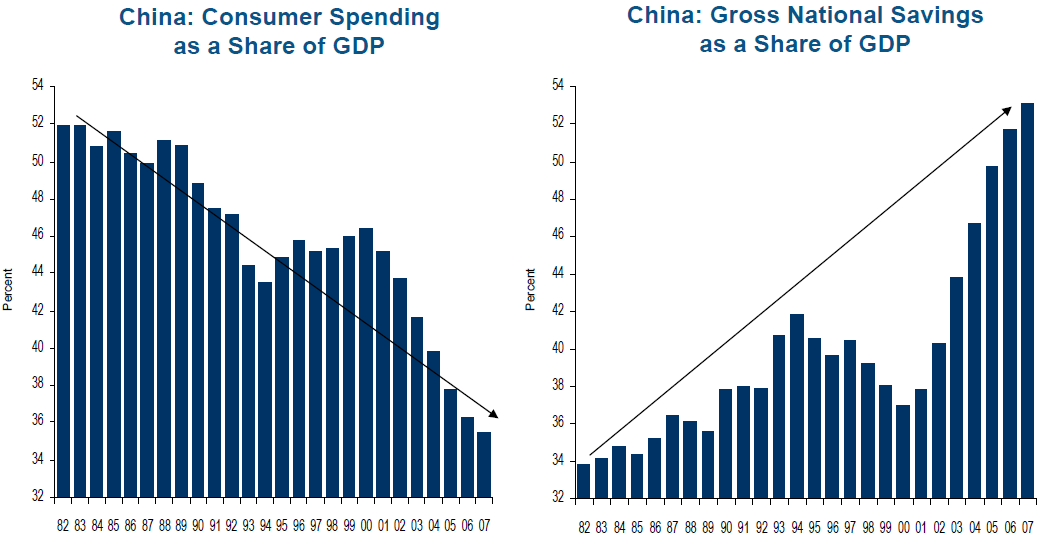
Barry Ritholtz at the Big Picture posts a fascinating graph which plots the trend of consumer spending as a share of GDP in China over time parallel to the trend of savings as a share of GDP:


The chart makes me think that culturally in China the consumer will only consume with abandon if the government pays him to. And the government is paying him to. Fang Yan and Michael Wei at Reuters report that passenger cars sales in China grew to 831,000 units in April, up from 604,900 units from a year earlier and 772,400 in March. Earnings did not particularly grow, however, as the Chinese stimulus targeted small vehicles, which do not yield the same margins as their larger cousins.
"'Beijing's stimulus policies are having a longer-lasting effect than expected,' said Qin Xuwen, an analyst with Orient Securities. 'As long as volume continues to grow, which is quite likely given the records in March and April, and there is no sudden spike in commodity prices, bottom lines of automakers will improve this year.'"
Which is an issue, oil prices are perking up, to say the least.

2. AND MORE CARS = MORE OIL DEMAND, SO THE NDRC PUBLISHES MORE DETAILS ON ITS NEW FUEL PRICING POLICIES, WHICH ARE MORE RESPONSIVE TO GLOBAL PRICES

The state is trying to make transportation fuel costs in China more responsive to global prices and thus make oil demand more responsive to them. The National Reform and Development Commission introduced new rules for pricing domestic petroleum products at the beginning of the year, and Xinhua reports the agency detailed it method on its website today:
"China would adjust domestic fuel prices when global crude prices reported a daily fluctuation band of more than 4% for 22 working days in a row.

The commission said refiners would enjoy 'normal' profit when global crude prices are below US$80/b, but would face narrower profit margins when the crude prices rise above US$80/b.

However, fuel prices would not go further up, or only be raised by a small margin, when crude prices rise above US$130/b, and fiscal and tax tools would be used to ensure supplies, the NDRC said."
On January 1 the NDRC introduced a new fuel consumption tax on importers and refiners of 0.8 yuan/liter (~$0.11745/liter or $0.445/gallon or ~$13.78/barrel) and suggested that it would reduce benchmark prices by 30-50%, though this more recent announcement appears to reflect a decision to let the price float to a certain extent--see Daily Sources 12/19 #1. In any case, close to a million new passenger vehicles a month, compact or not, translates into a considerable amount of oil demand. Dinakar Sethuraman at Bloomberg reports that the director of investor relations for China Petroleum & Chemical Corp., Zheng Baomin, indicated in a speech that Asia's largest refiner expects Chinese oil products demand to grow at 0.6 to 0.7 times that of GDP growth.
"The government has forecast GDP to expand 8% in 2009, Zheng said at a conference today in Singapore. This equates to China’s oil-product demand growing between 4.8% and 5.6% this year, according to Bloomberg calculations based on Zheng’s speech."
And China's National Bureau of Statistics data does suggest that apparent products demand was up slightly year on year in March. And Eadie Chen and Tom Miles at Reuters report that the petroleum products stocks held by Sinopec and CNPC fell by 15%--I infer from the month earlier. Sales rose by 5%.

3. WHILE COMMODITIES PRICES APPEAR TO BE SPIKING (ON CHINESE STIMULUS) CAUSING CORPORATIONS TO HEDGE, CAUSING MORE PRICE RISES LIKELY TO UNDERMINE STIMULUS GIVEN WEAK OVERALL DEMAND

And the entire commodities complex appears to be spiking, with the the spot S&P GSCI commodity index, a basket of raw materials, recently moving above 400, 32% higher than in late December, per Javier Blas at the Financial Times. Blas says that the price spikes, combined with rumors of "green shoots," have unnerved corporate consumers who are rushing to hedge their raw material requirements:
"The head of metals trading at a bank in London said: 'Consumers are being dragged to hedge, even if their demand is not strong, because they are afraid of the rapid price increase in some markets.'

Bankers pointed to hedge examples such as Delta, the world's largest airline, which has boosted its fuel hedge to 75% of this year's needs, from less than a third late last year.

Cargill and Louis Dreyfus, two of the world's largest agricultural trading houses, last week secured a hefty position in the sugar market, pushing prices higher, to supply India, the world's largest consumer."
And Grant Smith at Bloomberg reports on the latest prediction, by PVM Oil Associates Ltd., that oil is set to move to $62.65/b shortly, and from there to $78/b within six months.The problem remains that oil at those levels seems to precipitate demand destruction. I updated my VMT vs front month WTI prices (nominal) chart last night and $70-$80/b appears to the point at which people drive less in the US ... I would imagine that the effect would be more pronounced in China:


The bright spot, from the perspective of oil bulls, seems to be localized in China, as even the stimulus program there does not appear to have especially heartened representatives of the steel sector there. Reuters reports that Mr Shan Shanghua, secretary general of the China Iron and Steel Association said,
"'We are still aiming at a yearly production of 460 million tonnes. Whether we can make it or not depends on exports and domestic demand. But I am sure that if we remain at that high production rate and do not cut output, it will be a disaster.'

Mr. Shan said the Chinese, led in the negotiations by Baosteel, should be able to get a price below the spot market, which would mean a cut of more than 30%. He said that 'There is a common sense that wholesale prices should always be lower than those for retail.'"
(h/t Yves Smith at naked capitalism.) The Baltic Dry Index, though off its lows, isn't recovering at a rate that would make me all that optimistic:


4. GERMAN EXPORTS DOWN 16 Y-O-Y IN MARCH, OWEN HUMPAGE SAYS EURO MORE LIKELY ALTERNATIVE TO DOLLAR THAN SDRS

Der Spiegel reports that the value of German exports in March fell by 16% from a year earlier according to the Statistics Office. (They rose slightly from February--by 0.7%--but February is 10% shorter than March.)
"German industrial production remained flat in March, following a year long decline, data released by the Economics Ministry also showed on Friday.

'Recent positive impulses came from the car industry that has benefited from economic stimulus measures at home and abroad,' the ministry said in a statement, referring in part to the German 'scrapping bonus' scheme which pays a bonus to drivers junking an old car and buying a new one.

Meanwhile, German manufacturing orders released on Thursday, unexpectedly jumped just over 3% between February and March. The rise, its first in seven months, also fueled hopes that the worst of the recession may have passed."
Owen F. Humpage at Vox EU writes that the notion of trading the dollar for SDRs is faced with the same problem as deciding, say, to stop your business communications in English and talk in Klingon instead. Though some central banks may be diversifying their reserves into metals, the dollar is by far the largest held foreign reserve internationally.


Humpage comments:
"These currencies’ official reserve rankings parallel their status in international commerce more generally. This correlation should be of no surprise. Why hold a currency that no one uses? According to a 2007 BIS survey, roughly 88% of daily foreign exchange trades involve dollars. Again, the euro is a distant second, with the British pound and Japanese yen trailing."
He concludes that at its core the SDR notion is based on inflation concerns, which would be more easily met by switching to the euro than SDRs. Worth reading in full.

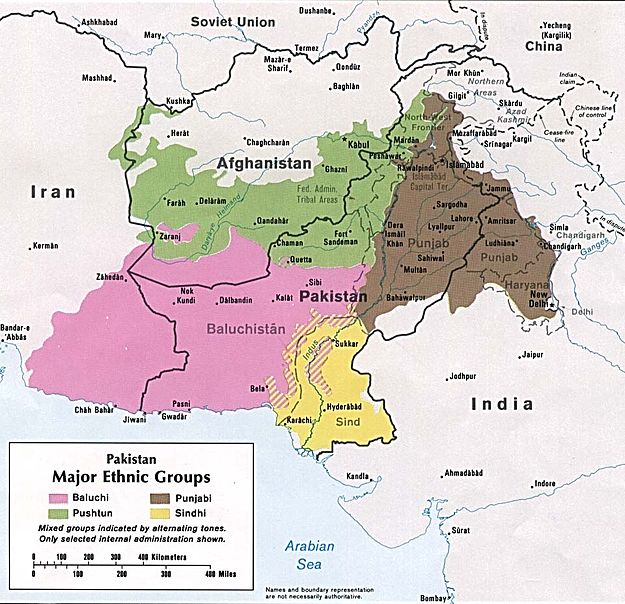
5. PAKISTANI PM TELLS COUNTRY ALL BETS ARE OFF IN SWAT, CHINESE AMBASSADOR TO ISLAMABAD COMPLAINS OF US PRESENCE IN REGION

Pamela Constable at the Washington Post reports that Pakistan's Prime Minister, Yousuf Raza Gillani, made a late night televised address last night which told the country that the armed forces are being "called in to eliminate the militants and terrorists," effectively ending negotiations with the Taliban for now. The announcement:
"signaled the final collapse of a fragile peace accord between the government and Taliban forces in the Swat region. It also represented the civilian government's formal green light for a full-fledged offensive by the military, which until now has been fighting sporadically."
Gillani has been regarded within the country as a hopeful figure having negotiated the end of the conflict with the lawyers' movement which ended in Chief Justice Chaudhry being restored to his seat and the governance of Punjab restored to the PML-N. Meanwhile, Kalbe Ali at the Karachi Dawn reports that the Chinese Ambassador to Islamabad, Lou Zhaohui, told reporters today that Beijing is "concerned over the increasing US influence' in the region.
"‘These are issues of serious concern for China,’ he said, adding that China was concerned over the US policies and the presence of a large number of foreign troops in the region.

He said that US strategies needed some ‘corrective measures’ to contain terrorism. However, he added, terrorism was a serious issue and required cooperation between countries in the region to counter it."
6. FMR ASST SECY OF DEFENSE ARGUES AFGHAN MILITARY SHOULD BE GIVEN LARGER GOVERNANCE ROLE

Former Assistant Secretary of Defense Bing West argues in the Wall Street Journal that the most important step to take in order to establish relatively amicable security in Afghanistan is to give the Afghan Army a larger role in governing the country.
"But as long as Pakistan is a sanctuary, US forces here will be on the strategic defensive, no matter how skillful their military tactics. We can't stay forever. The basic question is: How to consolidate the battlefield gains? That depends upon how the mission is defined. President Barack Obama has avoided promising to build a vibrant democratic nation. 'The achievable goal,' he said recently, 'is to make sure it [Afghanistan] is not a safe haven for terrorists.' Such a minimalist policy can be achieved in one of two ways.

The first is to apply the classic counterinsurgency model: After the military push the enemy from a populated area, the police take over, while government appointees provide honest governance and basic services. This approach pursues the expensive nation-building that Mr. Obama has not endorsed. It requires thousands of additional police trainers and hundreds of civilian advisers in the districts. These advisers also serve as watchdogs against corruption, acting as a shadow government to restrain officials prone to skimming and payoffs. It's a sound approach that is slow and expensive.

The second option is to expand the role of the Afghan army to act as the facilitators and watchdogs of governance. Today, American commanders like Capt. Howell routinely participate in shuras or councils. They can gradually hand off such governance-related tasks to Afghan officers."
Worth reading in full.

7. KRG LETTER SUGGESTS THAT A DEAL HAS BEEN STRUCK WITH BAGHDAD ON STATUS OF KURDISH CONTRACTS WITH OIL COMPANIES

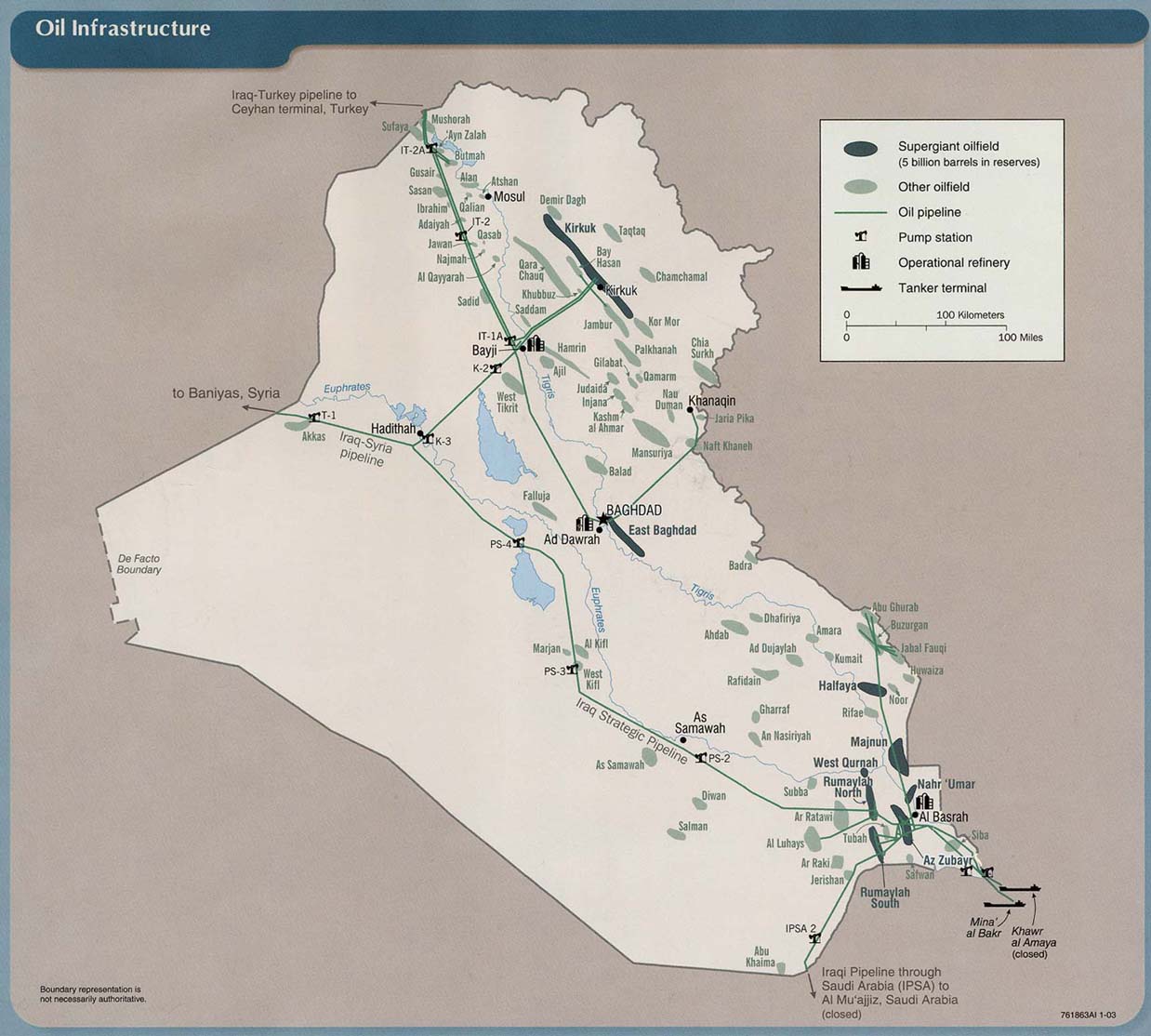
William MacNamara at FT Energy Source reports that the Minister of Natural Resources of the Kurdistan Regional Government, Dr. Ashti Hawrami, released a statement today which stated that crude exports from the Tawke field of 60 kb/d and the Taq-Taq field of 40 kb/d will officially begin being exported through the Iraq-Turkey pipeline come June.


Key excerpt from the letter which Energy Source reproduces in full:
"The exported crude oil from both fields will be marketed by SOMO [Iraq's State Oil Marketing Organization] and the revenue will be deposited to the federal Iraq account for the benefit of all Iraqi people. The average API gravity of the crude oil mix at a combined rate of 100,000 barrels per day will be around 35 degrees. Once the Taq-Taq pipeline is laid and further upgrades are made to the Tawke pipeline, the combined exports from these two fields will reach 250,000 barrels per day, with the average API gravity of around 39 degrees. These higher API gravity oil mixes will improve on the overall quality of the present Kirkuk oil mix which is only around 31 degrees API."
Though the letter clearly implies that a deal has been struck with the central government regarding the validity of the licenses the Kurdish Regional Government has granted various E&P firms in the region, the Iraqi Oil Ministry denied to reporters at Reuters that any such deal had been struck. The companies involved also indicated surprise when approached by reporters. McNamara adds:
"While no expected the power struggle between Iraq’s central and regional governments to end any time soon, many many players involved in the Kurdistan oil industry said in recent weeks that the two sides were closer than ever to an agreement over Kurdish oil exports and were hammering out the final details of revenue-sharing."
8. POPE VISITS HOLY LAND, BRZEZINSKI URGES LARGER, MORE PROACTIVE--AND MORE BALANCED--APPROACH BY OBAMA ADMINISTRATION IN PALESTINE PEACE PROCESS

Rachel Donadio at the New York Times reports that Benedict XVI arrived in Jordan today as part of a visit to the Middle East that will take him to Israel and the Palestinian territories.
"On Monday, Benedict lands in Tel Aviv for four intense days in Israel that will include visits to the Western Wall, holy to Jews; and, sacred to Catholics, the Church of the Holy Sepulcher and the hall where Jesus is believed to have had the Last Supper. In Jerusalem he will visit the religious compound in the Old City known to Muslims as the Noble Sanctuary and to Jews as the Temple Mount.

The Vatican’s Jewish interlocutors say they hope the trip will mend fences, while Israeli officials hope it will boost Christian tourism to the region.

The trip is an important opportunity for the pope 'to demonstrate visually,' that the relationship between Jews and Catholics 'has continued to flourish since the visit of John Paul II,' said Rabbi David Rosen, chairman of International Jewish Committee on Interreligious Consultations."
In Jordan the Pope will meet with Muslim clerics and scholars as part of his outreach. In a review of Richard Haas's most recent book in Foreign Affairs, former Secretary of State Zbigniew Brzezinski makes the argument that the Obama Administration will need to abandon the passive approach to the Israeli-Palestine issue going forward as things are coming to a head:
"If the new president is to avoid in the Middle East not only the gross errors of his immediate predecessor but also the much too long-lasting passivity of the Clinton years, he truly has to lead. Admittedly, making matters more difficult for him is the legacy of the last 16 years, when a subtle shift took place in the US approach to the Israeli-Palestinian conflict: the United States moved from being a genuine mediator seeking to nudge both sides toward peace to holding a posture of thinly veiled partiality in favor of one of the parties to the conflict. The result has been detrimental to the prospects for peace--for without engaged and genuinely forthright US mediation, the two parties to the conflict have shown themselves to be unable to reach a genuine compromise.

To make matters worse, Islamist extremism is gaining ground among a growing number of Palestinians, and Israeli politics are currently moving in an increasingly intransigent direction. In the months to come, the next Israeli prime minister may try to prod the United States to go to war with Iran, while arguing disingenuously that the Palestinians must first become economically more developed before an Israeli-Palestinian peace can be seriously considered. The argument regarding the Palestinian issue, in effect, will be for leaving things as they are, notwithstanding the danger that the prolonged stalemate (with its periodic violence and the relentless expansion of the settlements that it allows) is already poisoning the prospects for a two-state solution."
9. SUDAN TO ALLOW NEW HUMANITARIAN GROUPS INTO DARFUR

The BBC reports that Sudan's Minister of Humanitarian Assistance, Haroun Lual Ruun, told reporters that the country would allow new humanitarian organizations into Darfur. He also indicated that Khartoum would allow those UN and NGO organizations remaining in the region to expand their operations.
"'I think what we're hearing... is that new NGOs with new names, new logos, if necessary, can come in,' [UN humanitarian chief John Holmes] was quoted as saying by Reuters news agency.

'That means there's an opportunity to exploit some of that expertise and experience that is there and I think that is a welcome degree of flexibility about how it might happen in the future.'"
Sudan's President Omar al-Bashir expelled most aid agencies from Sudan and the Darfur region following his indictment in the International Criminal Court in March--see Daily Sources 3/6 #5. Bashir also responded to the decision by releasing from prison a prominent critic of his regime, Hassan al-Turabi, the foremost Islamist in Sudan who had ties to Osama bin Laden--see Daily Sources 3/10 #15. Turabi was originally imprisoned by Bashir in part because Turabi had come out in favor of the ICC's indictment of the President, which makes more sense, I suppose, in light of recent conjecture that it might indict former US officials for their actions in prosecuting the second Gulf War. Foreign Affairs hosted a Q&A session on Sudan with Andrew Natsios, Professor of Diplomacy at Georgetown University, where he was asked what "are the United States' key national interests with regard to the Sudan crisis?" His response:
"The central US national interest in Sudan is humanitarian. The cooperation between the Sudanese and US government on counterterrorism has been exaggerated and overemphasized as a motivating force in US policy--it is useful but not central to the relationship."
This is code. It is in the interests of US elected officials and other American political associations to address Sudan primarily in terms of Darfur, because the US is primarily a Christian country and to openly address it in a hard-headed fashion would be bad for the political future of either. If I were to take a stab at what the US national interest is in Sudan, it would be:
A) The establishment of a stable government, capable of policing its constituents, and thus with which meaningful negotiation can take place;
B) So that a policy within Sudan which actively discourages militant Islamists from setting up base there;
C) Which probably could only take place when the civil war is brought to an end, which leaks instability into neighboring countries, most significantly via panicked migration flows, all of which are unable to provide basic services to their own citizens or subjects, much less to foreign migrants, one of which, at least, is a key US ally;
D) Meaning that the consolidation of rebel movements into a single coalition with which the central government can come to an agreement with; and
E) Additional supply of oil and gas to the global market, not only from Sudan, but also from Chad, which has been drawn into the conflict, as the additional crude theoretically mitigates price on the global market, and thus the share gasoline and diesel takes from the average American's pocket book.
10. VENEZUELAN TROOPS SEIZE FOREIGN OIL SERVICES COMPANIES' ASSETS

Manuel Hernandez at Reuters reports that Venezuela sent troops to seize control of boatyards and other assets belonging to oil services companies late yesterday after the National Assembly gave final approval to a law which would empower the government to nationalize their operations first and consider the legality and terms of compensation later. Yesterday Chávez told the media:
"'Tomorrow, we will start to recuperate assets and goods that will now belong to the state, as social property, as they should always have been,' Chavez said, adding that thousands of workers would be taken on by state oil company PdVSA.

But members of a Zulia business group that represents local oil firms told Reuters soldiers seized the installations of 20 companies on the eastern side of [Lake Maracaibo] late on Thursday."
Companies potentially affected by the deal include Baker & Hughes, Halliburton, and Williams, among others. Carlos Camacho at Platts reports that Venezuelan Energy and Oil Minister Rafael Ramirez indicated on Wednesday that:
"companies re-injecting natural gas and or water to sustain oil production--a means that sustains one-sixth of all Venezuelan production--are the main intended targets of the new law, as well as companies providing E&P barge services."
Reports began surfacing in March that Caracas was having a tough time meeting its obligations to foreign contractors in the country--see Daily Sources 3/19 #5.

11. SWINE FLU CASES RISE, BUT REMEMBER THAT TB KILLS TENS OF THOUSANDS MORE DAILY

Donald G. McNeil Jr. at the New York Times reports that the World Health Organization announced today that 2,384 people in 24 countries have confirmed cases of swine flu. The disease does not, at this stage, appear to be more lethal than regular flu, though it is clearly highly contagious and the historical fear with respect to diseases that jump between species is that the new species has no resistance to the disease which could, under the, um, wrong circumstances create a true global disaster. So, while being in favor of the reporting and the actions taken by the authorities, here is the curative for the media hysteria over the matter, by Hans Rosling, h/t Parke Wilde at US Food Policy:


12. US HEADLINE UNEMPLOYMENT NOW 8.9%, U-6 IS 15.8%, FAR WORSE DECLINE THAN LAST 5 RECESSIONS, BUT STILL RATE OF UNEMPLOYMENT RANKS GROWING SLOWER

The Bureau of Labor Statistics released the unemployment data today, showing that U-3, or headline unemployment, grew by 0.4% in April from March to 8.9% nationally (without adjusting for seasonality). U-6, or "total unemployed, plus all marginally attached workers, plus total employed part time for economic reasons" crept up 0.2% to 15.8%. The number of unemployed persons, or U-3, rose by 563,000 to 13.7 million in April, well below analyst expectations which were of at least 600,000. Justin Fox at the Curious Capitalist put together a graph which plots the current decline in employment against five prior recessions, noting that the employment situation is clearly much worse than what was seen in 1982 and 1974:


Fox comments:
"Basically, the report offers a little bit of backing for the 'job market is turning' story that some other more timely but less reliable indicators have been hinting at, but not much. These numbers will be revised over the next couple of months as more data come in, and by then they may tell a somewhat different story. One thing that the revisions won't change: This employment downturn is now clearly much, much worse than those of 1981-1982 and 1973-1974."

Wednesday, March 18, 2009

Daily Sources 3/18

1. Krishna Guha, Bertrand Benoit, Chris Giles and Daniel Pimlott at the Financial Times report that the IMF will reduce today its forecast for global GDP in 2009 to a contraction of 0.6%.
"The eurozone economy was forecast to contract by 3.2% in 2009, [Ms. Ter-Minassian, an adviser to IMF managing director Dominique Strauss-Kahn] said, against the earlier forecast of a 2% decline. The US would shrink by 2.6% (1.6%), and Japan 5% (2.6%), making it the worst-hit big economy. The IMF in Washington said the figures cited by Ms Ter-Minassian were 'unofficial' and 'out of date'."
In early March the IMF began indicating that a downward revision was under way--see Daily Sources 3/3 #1.

2. Philip P. Pan and Karen DeYoung at the Washington Post report that many Russia analysts believe that Moscow is signaling interest in a deal on Iran.
"In a meeting last week with a bipartisan commission studying US policy toward Russia, President Dmitry Medvedev expressed alarm in 'very graphic language' over Iran's successful test launch of a satellite last month, linking it to Tehran's nuclear program, said Dmitri Simes, director of the commission.

'Medvedev said it demonstrated how far-reaching Iran's nuclear ambitions are, and that he was very concerned,' said Simes, who is also president of the Nixon Center in Washington. 'He felt it was a clear challenge to both Russian and American interests and said he would like both countries to work on this challenge together.'"
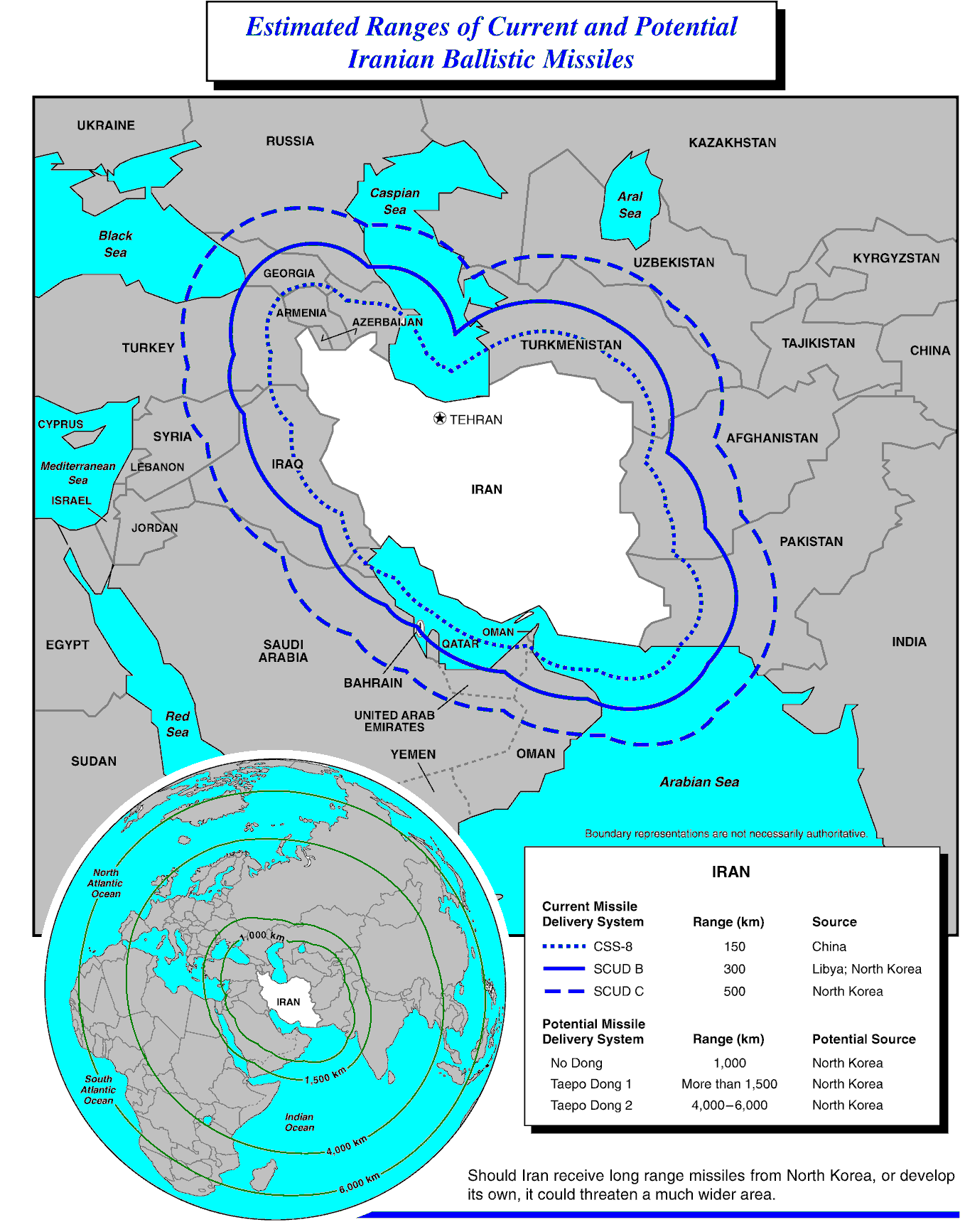
The Federation of American Scientists provide the following illustration of Iranian missile capabilities.


Satellite launches reportedly use technologies required for the development of ICBMs. In November, Iran claimed it had successfully tested missiles with a range of 1,200 miles, which as you can see from the map does not quite put Moscow in range--and obviously is even further from presenting any potential threat to, say, Warsaw. That said, it plainly makes a lot of sense that Iran's perennial missile tests would have the--likely unintended--effect of ruffling Moscow's feathers, given that a nuclear armed Tehran which could reach Moscow is definitely not in their interests.
"Alexander Pikayev, a top arms control scholar in Moscow, said Russian policy toward Iran will be determined by competing interest groups and political factions. Defense manufacturers and the atomic energy industry oppose tougher sanctions, for example, but the United States could win over the latter by reviving a bilateral pact on civilian nuclear cooperation that was frozen after the Georgian war, he said.

Pikayev said Medvedev may be more likely to support sanctions because a breakthrough in US relations would boost his political stature at home and set him apart from his powerful predecessor, Prime Minister Vladimir Putin. Putin might resist, but his relationship with Iranian President Mahmoud Ahmadinejad is said to be strained and he surprised Russia's foreign policy establishment by endorsing earlier U.N. sanctions, Pikayev said."
Frankly, I doubt this assessment--I think the notion of a nuclear armed Iran with the capability of hitting Moscow will outweigh the economic considerations involved in putting the kibosh on nuclear power cooperation with Iran. Indeed, it is hard to see many places in which Iranian and Russian interests coincide. Perhaps they do in terms of energy pricing, but Iran's potential as an alternative source of gas for European industry is probably a critical item in Moscow's long term thinking. And as the weekend's events proved, Russia still regards oil production coordination with OPEC as being less in its interest than good terms with Europe--and producing at full bore to claim all price increases produced by the cartel. (A policy which Iran appears to follow with respect to the organization's production quotas as well, ironically enough.)

3. The Associated Press reports that North Korea yesterday gave the organizations distributing US food aid inside that country till the end of March to leave--rejecting all future food aid.

4. Judy Dempsey at the New York Times yesterday reported that Russia signed two natural gas deals with Hungary yesterday. One deal signed last week has the Budapest and the Hungarian Development Bank to finance the South Stream project on Hungarian soil.


The other deal has Gazprom and MOL establishing a 1.3 billion cubic meters storage facility in Hungary. To make sense of that, here is a map that Jérôme Guillet drew up of Ukraine's gas infrastructure--note the three asterixes to the West, which represent gas storage facilities.


As Guillet pointed out in a piece for the European Tribune:
"Storage capacity is important in the gas business, as demand is seasonal (there is more in winter for heating) and can almost triple in Europe between summer and winter. If you can pre-position your gas near the markets when transport capacity becomes strained, you can extract a lot more value from that seasonality. The storage facilities near the Hungarian and Slovak borders were ideal for Soviet exports, but now they are in Ukrainian hands, and thus Russia must have a minimum of technical cooperation from the Ukrainians, who physically control and operate these facilities, not to lose a lot of money in their export markets. More, unavoidable leverage for the Ukrainians."
Hungarian Prime Minister Ferenc Gyurcsany's plea for a regional aid package from the EU was turned down last week. He has been a supporter of the Nabucco Pipeline, but questions of sourcing the gas (which would likely have to come from Iran) and project financing continue to bedevil the project.

5. Edward Hugh at Fistful of Euros posts that Poland's Central Statistical Office has released its industrial output data for February showing a 14.3% annual rate of decline in February, following a revised annual rate of decline of 15.3% in January. Output was up 2.7% in February from January however. Hugh provides a helpful graph of industrial production for the last two years:


Hugh points out that industrial production is on the decline across the spectrum of export-oriented Eastern European economies, warning against too much disambiguation between them. Worth reading and mercifully short.

6. Bettina Wassener at the New York Times reports that the World Bank lowered its forecast for Chinese growth in GDP for 2009 to 6.5%. 6.5%, though quite high by global standards just now, is well below the Chinese principle of "bao ba"--or "protect the 8"--below which conventional wisdom holds that Beijing will begin to see significant, read destabilizing, social unrest. Kevin Hamlin at Bloomberg reports that bank sees signs China's economy is stabilizing faster than the rest of the world.
"'The government’s stimulus is working,' said Louis Kuijs, a senior economist at the World Bank in Beijing. 'China’s fundamentals are strong enough to ride out this storm.'"
Meanwhile, Andrew Batson at China Journal helpfully translated the complete text of Chinese Ministry of Commerce’s statement announcing its decision to block Coca Cola’s proposed acquisition of China Huiyuan Juice Group Ltd. Key excerpt:
"Through its review, the Ministry of Commerce found that this concentration will have an adverse impact on competition. After the concentration is completed, Coca-Cola could use its market dominance in carbonated soft drinks to limit competition in the market for juice through tying, bundling or other exclusive transactions, resulting in consumers being forced to accept higher prices and reduced variety. At the same time, because brands can restrict entry to the market, it would be hard for the threat of potential competition to remove the restrictive effect on competition. In addition, the concentration will also reduce the room for small and medium-sized juice companies to survive, and will have an adverse effect on the structure of competition in China’s juice market."
The notion that dominance in the carbonated drink market could adversely affect competition in the juice market is unlikely to please most corporate headquarters. The fact that the Ministry of Commerce took stock of the market power of brands is interesting given that some have written that the primary value-addition that Western corporations bring to emerging markets is, well, brands. Meanwhile, the Sydney Morning Herald reports that shares in Rio Tinto have taken a beating on fears that the deal with Chinalco taking a 18% stake in the company.
"'[The 8.7% decline in share price] is [due to] the uncertainty surrounding the Chinalco deal, there has been a bit of talk out today that there is a lot of opposition to the deal and this is what's weighing on it,' MF Global senior trader Anthony Anderson said.

'The FIRB extension and the senate inquiry into foreign investment is adding to the uncertainty.'

The mounting political concern follows a decision by the Foreign Investment Review Board (FIRB) to extend its review to 90 days and initiate a more in-depth examination of the transaction, after the initial 30-day evaluation period closed on Monday.

The transaction, which has been backed by the Rio Tinto board, will also allow Chinalco to appoint two new non-executive board members to the global miners board."
(h/t Emmanuel at International Political Economy Zone.)

7. Platts reports that Italian major Eni has signed a major cooperation agreement with Pakistan to develop major projects all along the oil and gas product chain.
"The agreement also allows Eni to become a strategic partner in developing the oil and gas sector in Pakistan and to enter fields which are currently managed by state-run oil companies."
8. David E. Sanger and Eric Schmitt at the New York Times reports that "two of the high-level reports on Pakistan and Afghanistan that have been forwarded to the White House in recent weeks have called for broadening the target area to include a major insurgent sanctuary in and around the city of Quetta."


Baluchistan has separatist tendencies and is in the middle of a small bore separatist struggle, both in Pakistan and Iran.


Note that Baluchis can be found in southern Afghanistan where most of that country's opium production--and violence--is concentrated.

9. Galrahn at Information Dissemination notes that due to the Obama Administration's review of all military ties, GE has been asked to freeze work on turbines it was to provide the Indian navy for three Shivalik-class stealth frigates. Though I strongly disagree with the way Galrahn frames the story, I think it is an important data point. Clearly the US is likely to approve continued sales of engines to the Indian Navy.

10. Maher Chmaytelli and Juan Pablo Spinetto at Bloomberg report that Shokri Ghanem, chairman of Libya’s state-run National Oil Corp., told journalists today in Vienna that Libya will exercise its right to buy Calgary-based Verenex Energy Inc., which would effectively block CNPC's bid for the E&P company.
"Verenex has assets in Libya that are worth 'hundreds of millions' of dollars, Ghanem said in an interview with Bloomberg on March 16."
It is an interesting signal given China's Africa Policy announced in 2006 and Ghaddafi's recent selection as chair of the African Union--see Daily Sources 2/3 #9.

11. Justin Stares at Lloyd's List reports that the Bangladeshi High Court ordered the closure of all ship breaking yards operating without environmental clearance.
"Industry sources said they were 'staggered' by the ruling, which if confirmed will close down one of the world’s largest breaking industries just as scrapping activity peaks.

'None of the 36 shipbreaking yards in Chittagong currently have an environmental clearance,' said the NGO Platform on Shipbreaking. 'The decision therefore effectively shuts down an industry that has been highly criticized by environmentalists and human rights activists for many years for operating with complete disregard for the law, human health and the environment.'

The scrapping industry, which claims to employ 250,000 either directly or indirectly in Bangladesh, is expected to appeal.

The court was ruling on a petition filed by the Bangladesh Environmental Lawyers Association. Judges ordered that no ship on the Greenpeace 'dangerous ships list' be allowed into the country, according to reports by the platform and local media."
It is a decision bound to amplify the effects of the financial crisis, economically-speaking ... it seems that probity only comes when it will hurt the most, ironically. Note the significance of the courts in the Muslim-majority nation. Well-worth reading in full.

12. Nasreen Seria at Bloomberg reports that the South African Reserve Bank's Monetary Policy Committee will meet next week and accelerate its schedule to monthly meetings for the rest of the year from planned meetings every two months.
"Global economic conditions 'are getting worse' and the 'changed' environment requires the MPC to meet more regularly, Governor Tito Mboweni said in a phone interview from Pretoria today."
13. Victor L. Simpson at the Associated Press reports that in Cameroon Pope Benedict XVI reiterated yesterday that condoms were not an answer to the fight on AIDS--"You can't resolve it with the distribution of condoms. ... On the contrary, it increases the problem." I would note that Africa is one region where Catholicism--and more conservative Catholicism--is growing quickly. However, perhaps the one really impressive and compellingly moral US foreign policy triumph under the Bush Administration was the huge increase in aid to Africa in terms of the fight on AIDS, including condoms and retro-viral drugs. The people in Africa are well aware of how these aid programs have reduced the mortality rate in the continent. The notion that condoms are against life and a concession to death, and thus amoral, as opposed to a way to protect life and thus moral, will not, I believe, make much sense to them. Pope Benedict XVI appears to have a tin ear when it comes to husbanding the moral authority of the Church.

14. The Port of Long Beach recently posted its numbers for February, showing a 40% decline in container traffic from February 2008:


So far in 2009 the port has recorded a 20.2% decline in traffic. The Port of Marseilles, France, also recently posted its report for February, showing a 21% annual decline in total traffic. It registered a 16% decline from the traffic seen in January:


Hydrocarbons account for about 74% of Marseilles' traffic and it lost about 12% in volume from the year before. The grim trade data continue their march.

15. Bob Willis at Bloomberg reports that the consumer price index rose by 0.4% in February from January. Excluding fuel and food, prices climbed by 0.2% from the month prior. On an annual basis, the consumer price index rose by 0.2%, up from the 0% annual rate seen in January. Excluding fuel and food, prices climbed by an annual rate of 1.8% in February, up from a 1.7% annual rate of increase seen in January.
"Energy expenses increased 3.3%, led by an 8.3% increase in gasoline prices. Still, the fuel’s cost is down 36% from a year earlier.

Food prices, which account for about a fifth of the CPI, fell 0.1%, the first drop since April 2006."
16. The Federal Open Market Committee met today and decided to keep the federal funds rate unchanged at 0-.25%. Excerpt from its press release:
"To provide greater support to mortgage lending and housing markets, the Committee decided today to increase the size of the Federal Reserve’s balance sheet further by purchasing up to an additional $750 billion of agency mortgage-backed securities, bringing its total purchases of these securities to up to $1.25 trillion this year, and to increase its purchases of agency debt this year by up to $100 billion to a total of up to $200 billion. Moreover, to help improve conditions in private credit markets, the Committee decided to purchase up to $300 billion of longer-term Treasury securities over the next six months."
This follows the latest Treasury International Capital data which shows, courtesy of Brad Setser at Follow the Money, that foreign purchases of long term treasuries have collapsed:


Foreign government demand for US agency debt fell off a cliff late last year and purchases were even banned by Moscow just the other week. Meanwhile, Jon Hilsenrath at Real Time Economics reports that the Fed's quarterly survey of banks shows that during the week of February 2-6, banks extended $85.6 billion in credit to businesses, an increase of 13% from the first quarter of 2008--per JP Morgan Chase economist Michael Feroli:


17. The EIA reported that crude oil stocks built by 2 million barrels in the week ended March 13 to 353.3 million barrels, well above the historical average for this time of year, but still below the most recent peak of 354 million barrels seen on June 29, 2007. According to a survey by Bloomberg, analysts had expected a 1.5 million barrel build. Gasoline stocks grew by 3.2 million barrels, are near the top of the historical average. Analysts had expected a 1.5 million barrel draw. Distillates stocks grew by 100,000 barrels, are well above the five year historical average range as well as counter-cyclical, and versus analyst expectations of a 1 million barrel build. Taken in isolation, the data would be bearish on the price of crude.