Showing posts with label south africa. Show all posts

Thursday, July 22, 2010

Daily Sources 7/22

1. EUROPEAN DATA OPTIMISTIC

Quentin Peel at the Financial Times reports that both manufacturing and services purchasing manager indices showed unexpected strength in the Eurozone.
"Taken in isolation, the indices suggest a real growth rate of gross domestic product in the eurozone of 0.7 per cent in the third quarter – above the 0.5 per cent for the second quarter – but analysts warned against extrapolating the figures for the full quarter."
Worth reading in full.


2. US CHIEF OF THE JOINT CHIEFS OF STAFF SAYS HE HAS MOVED FROM BEING CURIOUS TO CONCERNED AT CHINESE NAVAL BUILD UP

Brian Spegele at China Real Time reports that the chairman of the Joint Chiefs of Staff, Adm. Mike Mullen, told troops at a town hall meeting in South Korea Wednesday that
“I have moved from being curious about what [the Chinese] are doing to being concerned about what they are doing.”
This has apparently been the position of the chairman for some time now.

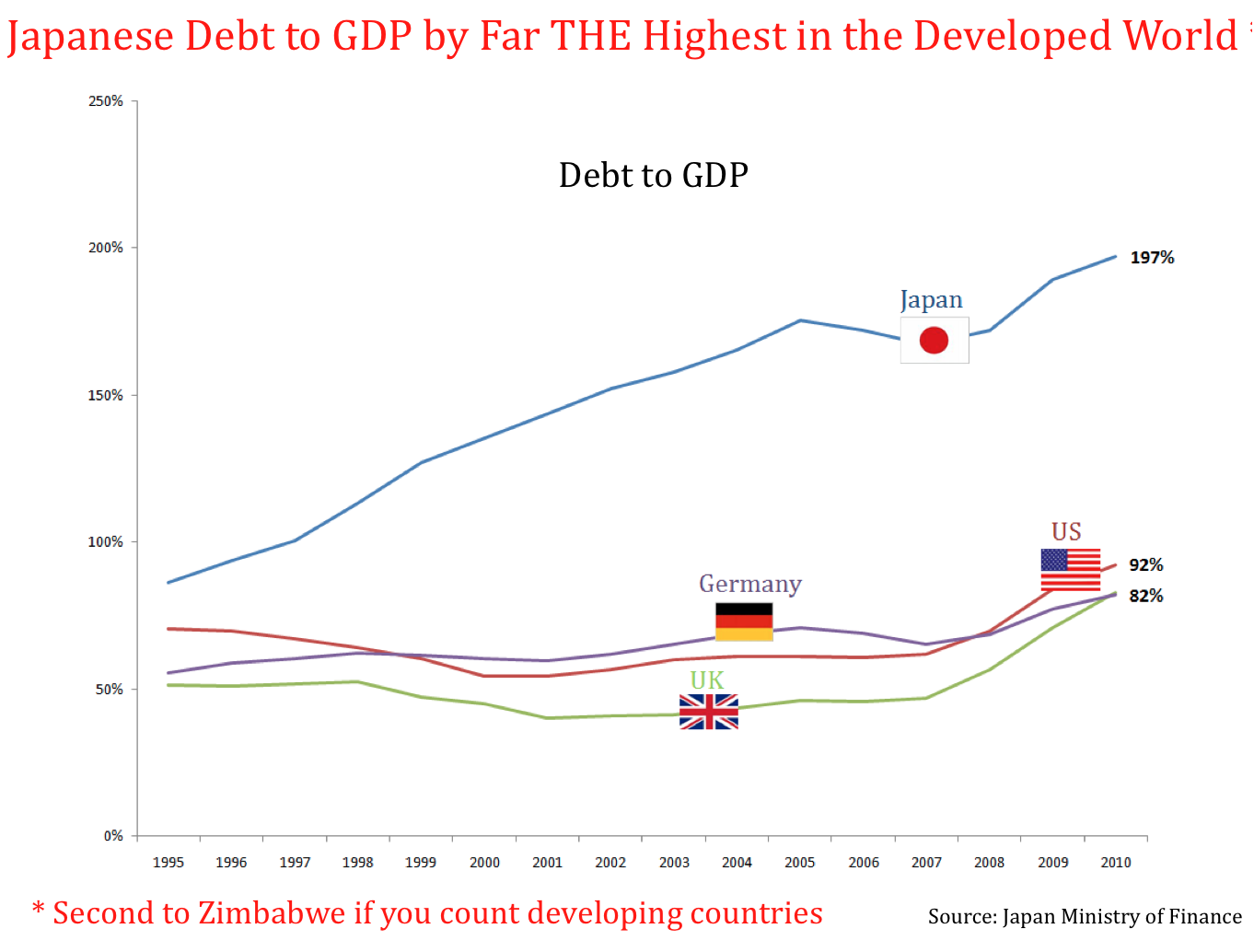
3. IS JAPAN IN DANGER OF FAILING?

Barry Ritholtz at the Big Picture reports on Vitaliy Katsenelson's argument that Japan will be the next big economy to crash.


4. ICJ RULES KOSOVO SECESSION LEGAL

Douglas Muir at A Fistful of Euros reports that the International Court of Justice today ruled that the Kosovo unilateral declaration of independence was legal. What does that mean for Catalonia, Scotland, Abkhazia, etc.?

5. VENEZUELA SEVERS DIPLOMATIC RELATIONS WITH COLOMBIA AGAIN

Christopher Toothaker at the Associated Press reports.

6. ONGC AND PETROVIETNAM TO PURCHASE BP STAKE IN OFFSHORE GAS FIELD

Nidhi Verma at Reuters reports that India's state owned ONGC has reached an agreement in principle with PetroVietnam for a joint purchase of BP's stake in a Vietnamese offshore gas field.

7. SOUTH AFRICA KEEPS BENCHMARK INTEREST RATE AT 6.5%

Nasreen Seria and Franz Wild at Bloomberg report that South Africa's central bank has decided to keep interest rates steady at 6.5%.
"Seven interest rate cuts since December 2008 and inflation at its slowest pace in four years have helped to spur consumer spending and growth in Africa’s biggest economy. [Central Bank Governor Gill] Marcus resisted calls from labor unions and exporters to cut interest rates again today as the World Cup, which ended on July 11, fueled wage demands and pushed up prices of hotel rooms, flights and restaurant bills."
8. FORMER SINGAPORE PRIME MINISTER SAYS ENERGY INDEPENDENCE UNATAINABLE

Peter Maloney at Platts reports that the former Prime Minister of Singapore answered the question of whether the city state could become energy independent firmly in the negative.
"He was also refreshingly direct about the prospect of renewable energy making a significant dent in Singapore's energy mix. Wind power is out, he said. The island does not have winds that are strong or consistent enough. And solar power is too expensive.

Lee noted that China has a huge share of the market for photovoltaic equipment, but the Chinese charge too much. If they want to lower prices, then Singapore might be interested, he said. Until then the island nation is looking to diversify its energy sources in other ways.

Right now, about 80% of the country's electricity is generated by natural gas, most of it from Indonesia. So Singapore is building an LNG regasification terminal to import LNG from Qatar."
9. PERU TO PURCHASE RECORD NUMBER OF DOLLARS TO STAVE OFF SOL'S APPRECIATION

John Quigley at Bloomberg reports that Peru may purchase a record number of dollars to prevent the sol from appreciating on investment in the country.
"Foreign investors are moving capital into the country as policy makers lift borrowing costs to prevent the $129 billion economy from overheating. The central bank will probably raise reserve requirements again, following an increase on July 18, Segura said. The Finance Ministry said this week it will coordinate dollar purchases with the central bank to slow gains in the currency."
10. INITIAL JOBLESS CLAIMS RISE TO 464K

Peter Boockvar at the Big Picture reports that initial jobless claims totaled 464k, 19k above expectations and up from a revised 427k last week.

11. RAILFAX WEEKLY DATA--LOOKS LIKE GROWTH IS MODERATING

Atlantic Systems Inc.'s weekly railfax showed that year to date rail carriage of coal was down 1.4%. That should mean for no recovery in industrial production in the US.


Their graph of total North American carloads of waste and scrap material in four week rolling averages:

Monday, August 3, 2009

Daily Sources 8/3

1. EUROPE RETURNING TO NUCLEAR POWER

Kate Mackenzie at FT Energy Source has a good summary of the nuclear renaissance in Europe--where several countries have reversed, or are in the process of reversing, decisions to eliminate nuclear power from the generation mix.

2. TBLISI SAYS MOSCOW ATTEMPTING LAND GRAB FROM SOUTH OSSETIA

Misha Dzhindzhikhashvili at the Associated Press reports that Tblisi today accused Russia of attempting to take more territory outside the breakaway province of South Ossetia.
"'It's very alarming that as the first anniversary of the Russian aggression against Georgia comes close, Russia and its puppets are deliberately inciting tensions and behave defiantly,' the Georgian Foreign Ministry said.

But South Ossetia's spokeswoman Irina Gagloyeva told The Associated Press that the border move was legitimate and rejected any land-grabbing ambitions.

'Let the Georgians relax about their territory. We don't need a single centimeter of their soil,' Gagloyeva said."
3. CHINESE CRUDE STOCKS FALL 2.7% IN JUNE FROM MAY, REFINERIES PRODUCED 7.77 MB/D

Jim Bai and Aizhu Chen at Reuters write that Xinhua reported that Chinese crude stocks fell by 2.7% in June from May to 275 million barrels.
"Chinese refineries boosted production by 6% in June to a record 7.77 mb/d after a rise in domestic motor fuel prices aided margins."
4. TOKYO CONCERNED BY SLATE OF IRANIAN NEWS OF NEW CHINESE-IRANIAN OIL DEALS

Kyodo News reports that Tokyo has responded to the news aired in Iran that CNPC was to take a 70% share in South Azadegan, a field which Japan had secured interest earlier but dropped it on international concern about Tehran's nuclear program, by calling for renewed international cooperation on the issue. Japanese Vice Economy, Trade and Industry Minister Harufumi Mochizuki said "It is not desirable that international cooperation collapses this way." CNPC on Friday had denied that a new MOU regarding the field had been signed--see Daily Sources 7/31 #7. Tamsin Carlisle at the National reports that on Saturday a Chinese consortium signed a deal to build a new 360 kb/d refinery in Khuzestan province and expand the capacity of a refinery in Abadan to 360 kb/d from 210 kb/d. Carlisle provides a decent summary of Chinese-Iranian energy deals this year and further in the past as well as different details on the CNPC Azadegan deal:
"The agreement called for CNPC to purchase a 63% stake in the $2.5bn project from NIOC, leaving the Iranian state oil company with a 27% interest and Japan’s Inpex with 10%."
5. INDIA AND CHINA TO COOPERATE ON MONITORING HIMALAYAN MELTING GLACIERS

James Lamont at the Financial Times reports that India and China will collaborate on monitoring melting glaciers in the Himalayas, a crucial source of water supply for both countries.
"Jairam Ramesh, India's environment minister, said academic research bodies on both sides would share information. He also told the FT that New Delhi was also open to a dialogue about water resources with Beijing, saying the two countries had shared concerns."
6. SAUDI ARAMCO TO CUT PRICES, OPEC PRODUCING SLIGHTLY MORE IN JULY FROM JUNE

Christian Schmollinger at Bloomberg report that Saudi Aramco may cut the price of Arab Light crude oil by as average of $1.30/b,
"according to a survey of refiners from South Korea, Japan, Singapore and India. The company is expected to set new official levels this week. Extra Light may fall by $1.40/b, said the traders who asked not to be identified, citing confidentiality agreements.

Saudi Arabian Oil, known as Saudi Aramco, last month raised Arab Light by 10 cents to a premium of $1.50/b to the average of Persian Gulf benchmark’s Oman and Dubai. That was the highest price since July 2008. Asian refiners have been reducing their output as falling consumer demand has cut their so-called crack spreads, or profit margins."
Meanwhile, Karyn Peterson and Mark Shenk at Bloomberg report that the news wire's latest survey showed that OPEC increased oil output by 45kb/d to 28.39 mb/d in July from June."The 11 OPEC members with quotas ... pumped 26.035 mb/d, 1.19 million more than their target."
"Iran, the member that’s least compliant with output limits, according to the survey, expects oil prices to reach $80/b by the end of the year on 'optimistic' signs in the market, the country’s OPEC Governor, Mohammad Ali Khatibi, said.

Angola increased production by 20,000 barrels to 1.81 mb/d. The gain left output 293,000 barrels above the nation’s target, the second-biggest excess in the group. Output in the African country surpassed Nigeria’s for the first time since June 2008.

Venezuela raised output by 10,000 barrels to 2.21 mb/d. The South American country pumped 224 kb/d above its target of 1.986 million last month, the survey showed."
7. 100 IRANIAN POLITICIANS PUT ON TRIAL FOR FOMENTING UNREST IN COOPERATION WITH FOREIGNERS, LOTR FORMERLY INAUGURATES AHMADINEJAD'S SECOND TERM

Borzou Daragahi at the LA Times reported yesterday that Iran put 100 prominent politicians on trial, charging them with fomenting unrest in conspiracy with foreigners.
"Analysts say the confessions read at the trials are meant to lift the morale of hard-liners upset by coverage by reformist news outlets and Persian-language news channels abroad as well as to frighten opponents and take the wind out of the sails of the protest movement.

But as night fell, Tehran, the capital, erupted in angry cries of 'Allahu Akbar!' or 'God is great!' in what has become a daily rooftop ritual of protest."
The nighttime chants deliberately mirror events of the 1979 revolution. Thomas Erdbrink at the Washington Post reports that today Mahmoud Ahmadinejad was inaugurated by Leader of the Revolution Ayatollah Ali Khamenei as president for a second term. Karroubi, Mousavi, and Rafsanjani all elected not to attend the ceremony.
"Relatives of the late Ayatollah Ruhollah Khomeini, who led Iran's 1979 Islamic revolution, also failed to show up. According to pro-opposition Web sites, Hassan Khomeini, a grandson who usually attends such ceremonies, left for Pakistan some days ago. Other prominent absentees were two Friday prayer leaders from the Shiite holy city of Qom, the Parlemannews Web site reported."
8. NIGERIAN AGRICULTURAL POTENTIAL UNTAPPED, LEAVING FOOD SUPPLY VULNERABLE

David Hecht at the Washington Post notes that Nigeria's food supply is especially vulnerable to a disruption caused by low rainfall or other climate-driven variables. He concludes:
"The good news is that Nigeria has boundless agricultural potential. Of the 3.14 million irrigable hectares of land in the country, the World Bank says only 7% is currently being utilized. And though large tracts of farmland have been lost to desertification, more than half the country's estimated 98 million hectares of arable land currently lie fallow.

'The opportunities for our farmers are enormous if only they were to get the right institutional support,' said Sabo Nanono, the head of Kano state's commercial farmers association. 'We could feed the entire West African region; we could produce enough rice in just two or three [of Nigeria's 36] states to feed the nation and even to export.'

Somehow, the supply chain that feeds 140 million people keeps cranking along. The country has not seen a major famine for nearly four decades, since the Biafran civil war. But Nanono warned that it wouldn't take much to send this vulnerable country--and region--over the edge.

'The reality is that if the rains are bad throughout the region or the price of inputs became unaffordable, there could be massive food shortages, and neither the government nor any other institution stands ready to help,' he said. 'Then only God could save us.'"
Hecht's report is part of the Food Insecurity Project.

9. SOUTH AFRICAN PMI DOWN TO 37.3 IN JULY

Nasreen Seria at Bloomberg reports that South Africa's PMI fell to 37.3 in July from 37.9 in June. It is the first fall in PMI seen in three months.
"Manufacturing output, which makes up 15% of the economy, fell 17.1% in May from a year ago, after dropping a record 21.8% in the previous month, the statistics office said on July 9. Production has dropped every month since October 2008."
10. SETSER AND ZIEMBA ESTIMATE MAJOR SOVEREIGN WEALTH FUNDS HOLD ABOUT $1.5 TRILLION IN FOREIGN ASSETS, DOWN FROM $1.8 TRILLION LAST YEAR

Brad Setser and Rachel Ziemba at Follow the Money estimate, in contrast to other estimates, that total external assets of major sovereign wealth funds roughly were about $1.5 trillion as of June 2009, down from their estimate of roughly $1.8 trillion held in the middle of 2008.
"$1.5 trillion is lot of money. But it is substantially less than $7 trillion or so held as traditional foreign exchange reserves."
The post includes an extremely interesting table of estimated assets held by each major sovereign wealth funds at the bottom.

11. 1.5 MILLION TO EXHAUST INITIAL UNEMPLOYMENT INSURANCE IN THE NEXT FEW MONTHS, 1-IN-3 GROCERY SHOPPERS NOW ONLY PURCHASE ITEMS ON SALE

Barry Ritholtz has a pair of posts looking at the rate of people who have exhausted their unemployment insurance. In the first, he notes that the New York Times estimates that about 1.5 million more people will have exhausted their unemployment insurance over the course of the next few months. He links to a helpful graph from the NY Times:


In the second, he notes, as have others such as Rebecca Wilder at News and Economics, that there are additional unemployment programs available after one exhausts the initial unemployment insurance:
"[T]he Emergency Unemployment Compensation (EUC) which is good for 20 weeks. Then, there is the Supplemental EUC, which depending upon what your state thinks of the Federal largesse of handing out money to the recently unemployed, ranges anywhere from 13 to 20 more weeks."
Evidently, as of July 11, the number of people who have exhausted their initial unemployment insurance and are now on EUC or supplemental EUC, has gone from 127,000 a year ago to 2.66 million. The worry is that given that 70% of the economy is based on household consumption, growing unemployment will undermine any nascent recovery. In that vein, Credit Bubble Stocks notes that Information Resources Inc. has published market research which concludes that now
"about 1 in 3 [grocery] shoppers buy exclusively items on sale, twice as many as 18 months ago."
12. US PMI UP TO 48.9 IN JULY

Mark Shenk at Bloomberg reports that the Institute for Supply Management released its PMI today showing an uptick to 48.9 in July from 44.8 in June. (A reading above 50 indicates expansion; below 50 indicates contraction.) It is the highest reading seen since August 2008.

13. CHEVRON TO END ALL ONSHORE GAS DRILLING IN THE US

I missed the interesting factoid reported Friday by the Associated Press that Chevron will stop all US onshore gas rigs on low profitability this year.
"'By the end of the year, we will not have a single gas land-rig running,' George Kirkland, Chevron’s executive vice president for global upstream and gas said in a conference call."

Monday, May 4, 2009

Daily Sources 5/4

1. MEXICO TO LOWER SWINE FLU PRECAUTIONS, JAPAN TAKES EFFORTS TO KEEP IT OUT ALTOGETHER, AND RICHARD POSNER ARGUES THAT THE RELATIVELY HIGH PROBABILITY OF SUCH AN EVENT ARGUES FOR A GLOBAL CRISIS FUND

Elisabeth Malkin and Sharon Otterman at the Washington Post report that Mexico will relax its efforts to counter swine flu given that there has been a reduction in the number of cases coming to light and the assessment that it is only slightly more contagious than regular flu.
"Across the country, most factories and offices will reopen on Wednesday, Health Minister José Ángel Córdova said in a news conference. A decision has not yet been made to reopen schools, which have remained shuttered for well over a week."
Meanwhile, Blaine Harden at the Washington Post reports that Tokyo has taken strong measures to try and prevent the swine flu from spreading to the island.
"As long as the threat of a flu pandemic persists, anyone who flies into this country from North America while experiencing any flu-like symptoms or ailments will not be allowed to walk off an airplane and infect the country. Last week, inspectors began boarding every flight from Mexico, Canada and the United States. They take the temperature of about 6,000 passengers a day. Near Tokyo's Narita airport, 500 rooms have been secured by the Health Ministry to quarantine infected passengers."
Meanwhile, Judge Richard Posner estimates on The Becker-Posner Blog that were swine flu to end up being similar to the 1918 influenza pandemic worldwide costs would be around $20 trillion.
"([T]his estimate excludes the narrowly economic costs, but they would probably be lower, in part because thinning out populations can raise per capita incomes, especially if the very young and the very old, and poor people in overpopulated countries, are the principal victims), and if we indulge a further guess that there is a 1% annual probability of such an event, the annual expected cost would be $600 billion."
Judge Posner concludes:
"We need an overall 'catastrophe budget' that would match expenditures to the net expected benefits of particular measures targeted at particular catastrophic threats."
Worth reading in full.

2. CHINESE REAL ESTATE MARKET LOOKS BAD, BUT RETAIL SALES APPEAR TO BE RECOVERING (PARTICULARLY IN RURAL AREAS TARGETED BY THE STIMULUS PROGRAM--AND PARTICULARLY OF GOLD), THE NDRC DECIDES TO SHUTTER ALL SMALL INDEPENDENT REFINERIES BY 2011 AND SETSER NOTES THAT BEIJING'S PURCHASES OF TREASURIES WELL IN EXCESS OF THE VALUE OF US IMPORTS FROM CHINA

Richard Brubaker at All Roads Lead to China noted yesterday that the most recent edition of the JLL Property Market Monitor reported:
"Total prime retail stock in 21 major Chinese cities will grow at a CAGR of 20.2% through the next three years, while retail sales are only projected to grow at 9.2%. The divergence between stock growth and retail sales growth will drive up the national vacancy rate from 7.2% at end 2008 to a projected 13.9% at the end of 2011."
Mr. Brubaker comments that the report outlines the difficulties facing the residential, commercial, and retail sectors, but sees a bright spot in infrastructure. The post includes a link to the full report. (h/t Yves Smith at naked capitalism.) Meanwhile, Xinhua reports that Chinese retail sales climbed 9% year-over-year during the May Day Holiday, which lasted from May 1 - 3.
"The [Chinese Ministry of Commerce] said robust sales were reported for gold, jewelry, home appliances and autos, as retailers launched promotion campaigns.

Sales of gold and other jewelry rose 19.6%, the ministry said, without giving specific figures."
I'm not sure of the cultural context here, but generally large increases in gold sales wouldn't indicate great confidence in the future. Sales of products targeted by stimulus programs grew at about half the rate for gold and jewelry. (h/t Joshua Keating at FP Morning Brief.) Juliana Liu at BBC News has a report which suggests that a considerable portion of the upswing in retail sales is taking place in rural areas, where electronics purchases increased by 70% in March from February.
"But in an effort to get thrifty Chinese to spend more money, Beijing expanded a pilot program to subsidize electronics purchases for farmers in February.

The government pays 13% of the retail price for designated models of refrigerators, washing machines, colour television sets, mobile phones and personal computers."
Meanwhile, the National Reform and Development Commission Sunday announced plans to shut down all refineries operating in the country with crude distillation units with a capacity of 20 kb/d or less by 2011, per Platts.
"The commission will also prevent the development of new refining units under the guise of heavy oil and bitumen processing facilities."
Although over three quarters of Chinese refining capacity is controlled by the state oil firms, there are a large number of independent small refineries of this sort in operation.
"For instance, around 12 of 37 private refineries in eastern Shandong province have less than [20 kb/d] of oil refining capacity each, according to industry sources.

Despite having an overall processing capacity of over 45 million mt/year (900,000 b/d), Shandong's independent refineries get only 1.79 million mt/year of domestic crude allocation from the state oil majors, barely 4% of their total capacity.

Difficulty in securing crude feedstocks for their refining needs has forced Chinese independent refiners to process fuel oil and bitumen instead in order to stay afloat."
Now would be a good time for Beijing to undertake this effort, given a decline in demand, an incoming surplus of refining capacity in the Asian-Pacfic region (though I suspect that China intends to refine as much of its consumption as possible domestically in the long term), and its aim of reducing carbon emissions (given that these topper refineries tend to be unsophisticated and thus especially polluting.)

In the meantime, Brad Setser puts the kibosh on the notion that Beijing has been acting as "a friendly neighborhood grocer" who provides credit so that its customers can purchase his goods.
"China’s rise as a true banker shows up cleanly in the most recent US balance of payments data. The detailed data tables include a table on China. And it turns out China’s $419 billion in purchases of US assets over the last four quarters exceeded the United States $308 billion bilateral balance of payments deficit with China."


Well worth reading in full.

3. JAPAN OFFERS $100 BILLION IN CURRENCY SWAPS TO ASIAN NATIONS STRUGGLING WITH THE CRISIS

Raphael Minder at the Financial Times reports that Tokyo yesterday at the meeting of finance ministers at conference of the Association of South-East Asian Nations in Indonesia that it would offer $100 billion in assistance to Asian countries dealing with the current financial crisis. Specifically, Japan would arrange a ¥6,000bn (~$61.5 billion) bilateral currency swap scheme on top of a $38.4 billion commitment to the Chiang Mai Initiative.
"Kaoru Yosano, the Japanese finance minister, when asked if Japan could afford to deal with its own economic woes while helping fellow Asian strugglers, said the latest offers underlined Tokyo’s firm belief that the crisis required a more concerted international response.

'The financial crisis is not something hitting only a handful of countries ... That is why we believe it is an issue that can only be solved with international co-operation.'"
4. THE SPANISH PROPERTY MARKET IS SERIOUSLY TANKING

Lluías Pellicer at El País reports that the Spanish property market is going through a period of bloodletting, with properties being advertised at discounts of up to 55%. Discounts in Madrid and Barcelona are currently at between 30-35% whereas in Valencia and Andelusia are offering discounts of up to 55%. Even so, the surplus real estate is not coming off the market, with sellers reporting sales of about a third of their inventories. (In Spanish. h/t Eurointelligence.)

5. SOUTH AFRICAN MANUFACTURING DECLINES FOR 12TH STRAIGHT MONTH

Mike Cohen at Bloomberg reports that South African manufacturing declined for the twelfth straight month in April per the latest Investec Purchasing Managers Index, which fell to 35.6 from 36. (A reading below 50 indicates contraction; a reading above 50 indicates expansion.)
"An index measuring new sales orders rose to 33.7 last month from 32.6 in March, while a business activity index advanced to 32.8 from 31.2, Investec said. An employment index fell to 36.2 from 49.2 and an inventory index slumped to 28.7 from 37.1 while a purchasing commitment index declined to 29.9 from 34.3."
South Africa is the largest economy in Africa with nominal GDP estimated to have been about $300 billion in 2008.

6. RUSSIAN CRUDE PRODUCTION UP

Nadia Rodova at Platts reports that the Russian Energy Ministry released data over the weekend showing the oil production had increased 1.3% in April from a year previous, to 40.315 million mt (9.81 million b/d).
"In March, the year-on-year rise of 0.4% was the first in more than a year as crude output registered a fall throughout 2008 as well as the first two months of 2009.

On a month-on-month basis, average daily crude output rose by 0.5% in April from 9.76 mb/d in March."
Crude deliveries to Russian refineries also rose slightly.

7. BUT OPEC SUPPLY DOWN 0.3% IN APRIL, WITH IRAN, ALGERIA, ANGOLA AND NIGERIA UPPING PRODUCTION AS BRAZIL ANNOUNCES ITS ENERGY POLICY GOING FORWARD

Reem Shamseddine at Maktoob reports that Saudi Aramco intends to release 15 oil rigs by the end of the year, citing a large production capacity surplus and falling demand in the global oil market.
"When the kingdom [completes] projects to boost capacity to 12.5 mb/d in June, it would have had spare capacity of 4.5 mb/d. That is more than double the 1.5 to 2.0 mb/d cushion it aims to keep to meet any surprise outages in the global oil supplies."
By the end of 2009, the number of rigs operating in Saudi Arabia would thus fall to 100 from 115. In the meantime, Karyn Peterson and Mark Shenk at Bloomberg report that a survey conducted by the wire service showed that OPEC oil output was cut by 0.3% in April.
"Oil output averaged 27.58 mb/d last month, down 75,000 from March, according to the survey of oil companies, producers and analysts. The 11 OPEC members with quotas, all except Iraq, pumped 25.255 mb/d, 410,000 more than their target of 24.845 million."
Saudi Arabia cut output by 25 kb/d, the UAE cut 40 kb/d, and Kuwait cut output by 20 kb/d, according to the survey. Nigeria, Angola, Iran, and Algeria increased output. Meanwhile, Eric Watkins at the Oil & Gas Journal reported Friday that Brazil's Environment Minister Carlos Minc announced at the G8 meeting in Italy--which Brazil attended as an observer--the country's energy policy going forward which would increase the production of renewable transportation fuels (such as ethanol) and increase its petroleum refining capacity primarily to meet domestic demand with an eye to exporting the surplus.
"The Brazilian government said only 1% of the land suitable for agriculture in Brazil is used to grow sugarcane. As a result, the government plans to step up the recovery and use of degraded land to plant sugarcane.

Brazil and the US contribute 70% of the world's ethanol output. The Brazilian government's energy policy aims to produce 23.3 billion liters/year of ethanol and to export five billion liters. For biodiesel, the goal is to reach production of 3.3 billion liters/year by 2010.

Petrobras has three new biodiesel plants and plans to produce 640 million liters/year by 2013. Including ethanol, the company plans to spend $2.8 billion on biofuels up to 2013."
Brazil currently produces 1.9 mb/d of oil, but due to its sub salt finds offshore expects to produce as much as 3.2 mb/d by 2020. The plan thus has Petrobras increasing its refining capacity to 3.1 mb/d by that year.

8. MARK LYNCH ASKS WHY SADR IS IN TURKEY

Mark Lynch at the Abu Aardvark's Middle East Blog wonders what Moqtada al-Sadr is doing in Turkey.
"What does his public appearance portend for the role of the Sadrists in Iraqi politics in the coming period? Is this a bid for prominence in the upcoming national elections? How would a Sadrist political revival affect the escalating tension between Maliki and his Shia rivals such as ISCI? Or is this about security, whether the U.S. withdrawal plan or the recent uptick in attacks on Shia targets? Does Sadr's choice of Turkey as the place to re-emerge send any message about the movement's approach to the ever-hotter Kurdish issue?"
I would add the question of how this will play out in terms of the notion of the Iranian theocratic notion of "rule by the just jurist"--a question I took a stab at early last year in my post on Law and Revolution in Iran. Lynch's post is worth a look.

9. CONFLICT BETWEEN ISLAMABAD AND THE TALIBAN HEATS UP, THE WEST PUBLICLY AFRAID OF IMMINENT COLLAPSE

Kamran Haider at Reuters reported yesterday that the Pakistani military has redoubled its efforts to oust Taliban fighters in Bruner:
"In the Buner valley, 100 km (60 miles) northwest of the Pakistani capital, security forces backed by helicopter gunships and artillery attacked militants in three hamlets on Monday, residents and security officials said.

'There's been heavy firing going on since morning. It's very scary. Troops are using heavy artillery and gunships,' resident Nasir Khan told Reuters by telephone."
Meanwhile, Zarar Khan at the Associated Press reports that the Taliban has resumed armed patrols of the Swat Valley, in apparent violation of the peace deal whereby sharia law would be imposed in the region in return for the Taliban laying down their weapons. The patrols came even as regional authorities announced the creation of a sharia appeals court, which was rejected by a high ranking cleric who protested that he had not been consulted on its makeup.
"As tensions mounted Sunday, the government ordered a curfew for Swat from 9 p.m. to 6 a.m., said Khushal Khan, a top administrator, who confirmed the patrols. He said officials were discussing what to do if the insurgents violate the order."
Susanne Koelbl and Gabor Steingart at Der Spiegel have a useful analysis of the situation where they underscore the increasing alarm with which US foreign policy policymakers are viewing the situation in Pakistan.
"The mood is one of borderline panic in Washington these days when conversation turns to Pakistan. US Secretary of State Hillary Clinton said that the possibly crumbling state poses 'a mortal threat' to the world: 'I think that the Pakistani government is basically abdicating to the Taliban and to the extremists.' These fears were echoed by her special representative to the region, Richard Holbrooke: 'Pakistan is in an emergency situation.' And the 'collapse of the state' is likely to happen within six months, warns David Kilcullen, an influential counter-terrorism advisor to the US military.

On Tuesday of last week the US National Security Council held an unscheduled meeting under the leadership of its chairman, General James Jones. The only topic on the agenda was the situation in Pakistan."
Some Western analysts have concluded that the interests of the West and Pakistan are at cross purposes in the region, which explains Islamabad's apparent reluctance to take on the Islamic militants inside the country.
"A British regional expert with top intelligence agency connections recently told an exclusive circle of members of parliament in London: 'The ally Pakistan does not share our interests.' He said Islamabad 'is antipathic to Karzai's government and to any administration in Afghanistan which is indulgent of Indian influence. Pakistan thus wants the end of Karzai, a pro-Pakistani Pashtun government in Afghanistan and wants the British, the Americans and NATO out of Afghanistan.'"
Though it is very hard to tell from my far remove, I have difficulty with the logic of this argument. While it is true that Islamabad would likely prefer Western forces out of its backyard and certainly does not regard an India-friendly government in Kabul as in its interests, the country would have an incredibly difficult time reigning in centrifugal forces were it to lose the financial support of the West. Indeed, it would likely go bankrupt.

Moreover, I doubt that many policymakers in Islamabad would regard a chaotic Afghanistan as in its interests. Perhaps it considers a Taliban-run Afghanistan as stable and malleable, or at least relatively benign, but I find it hard to see how it would given the ties it has to nascent secessionist movements in the Northwest Frontier, Swat, and Baluchistan--which are directly challenging their putative patrons in military intelligence. Further, the success of the lawyers' movement has, I take it, strengthened the legitimacy of the central government even if the view of the populace regarding the mores of justice is likely much more tolerant of the views of Muslims more draconian than the West, or even elites in Islamabad, are comfortable with.

Either way, though jaw jaw is preferable to war war, the Taliban is refusing a negotiated solution to the problem, wanting to take for itself the monopoly of force in more regions. I cannot see how the elites in Islamabad would, under any conditions, find that an acceptable outcome, though they will likely try negotiations preferable in nearly all scenarios than outright war on a portion of their own population. Before taking military action, it is good sense to see if disputes can be solved politically, if you want to maintain the support of as wide a constituency as possible. But until the Taliban seems more amenable to a real structured and long-term solution I would expect Islamabad to up the pressure on them incrementally. The article is well worth reading in full.

10. MARYLAND AND VIRGINIA, THE DE FACTO HOSTS OF THE CAPITAL, APPEAR TO ANTICIPATE FURTHER REDUCTION IN THE EMBARGO ON CUBA

Fredrick Kunkle at the Washington Post reports that Maryland and Virginia are hustling to take advantage of what they believe will be further reductions of tensions between the US and Cuba.
"Virginia agriculture has already benefited from the relaxation of the 47-year-old trade embargo with Cuba, increasing exports from less than $1 million to $40 million in five years. Maryland has been developing farm trade in Cuba, though so far on a more modest scale. Last year, Maryland spent $6,000 on a trade mission that sewed up a $12.8-million deal on soybeans.

'There's just a lot of excitement,' said Todd P. Haymore, commissioner of the Virginia Department of Agriculture and Consumer Services. 'We feel certain that things are going to happen based on what the Obama administration has already done -- just the fact that we're talking about changing policies in place for 40 years or more.'"
The article gives a pretty good overview of the political state of affairs--worth a look.

11. 'GREAT RECESSION' LIKELY TO INCREASE 'NATURAL RATE' OF UNEMPLOYMENT GOING FORWARD

Matthew Benjamin and Rich Miller at Bloomberg report that the current recession will likely result in a higher "natural rate" of unemployment in the US.
"Fallout from the recession implies a 'markedly higher' natural rate of unemployment, says Edmund Phelps, a professor at Columbia University in New York and winner of the 2006 Nobel Prize in economics. 'It was 5.5%; maybe it will be 6.5%, maybe 7%.'

That has implications for policy makers as well as workers. The Obama administration and the Federal Reserve are counting on the jobless rate to fall to a medium-term equilibrium of about 5% as the economy recovers. A natural rate significantly above that would drive up the annual budget deficit--which will top $1 trillion for the first time this year--by reducing tax revenue and pushing up spending on unemployment benefits.

A higher rate would also require the Fed to make a choice: Accept an economy with more Americans permanently out of work, or try to boost employment at the risk of heating up inflation."
A Scylla and Charybdis situation indeed. A must read.
Thursday, April 30, 2009

Daily Sources 4/30

1. WHO RAISES ALERT ON SWINE FLU TO CATEGORY 5

Denise Grady and Alan Cowell at the New York Times report that the World Health Organization yesterday raised its alert level on the swine flu to 5, or "sustained community-level outbreaks in at least two countries--a signal that a pandemic is imminent." 5 is just below the highest alert level, 6, which indicates that a global pandemic in underway. Phase 5 activates an intense effort to develop a vaccine. Mark Stevenson and Andrew O. Selsky at the Associated Press report that Mexico has responded by shutting non-essential services for five days and urging businesses to stay closed and citizens to stay home during that time.
"'It really is all of humanity that is under threat during a pandemic,' WHO Director General Margaret Chan said in Geneva. 'We do not have all the answers right now, but we will get them.'

Switzerland and the Netherlands became the latest countries to report swine flu infections. In addition to Mexico and the US, Canada, New Zealand, Britain, Germany, Spain, Israel and Austria have confirmed cases."
Fort Worth, Texas, announced the temporary closure of all school districts to last through May 12, and dozens of schools have been closed across the country. From the New York Times story:
"Most people will not have immunity to this new virus and, as it continues to spread, more cases, more hospitalizations and more deaths are expected. And as the virus spreads, the likelihood grows that it will mutate--possibly into [a] more lethal strain."
Jane Rickards at the Washington Post reports that Beijing gave the green light for Taipei to officially be invited to the WHO's 62nd World Health Assembly, which begins May 18 in Geneva.
"Experts on relations between Taiwan and the mainland said they believed the two sides had been secretly negotiating the matter for months.

'They're finding a way to accept each other,' said Andrew Yang, secretary general of the Chinese Council of Advanced Policy Studies. 'This will provide room for more positive negotiations for future international participation.'"
Donald G. McNeil Jr. at the New York Times reports that Homeland Security Secretary Janet Napolitano was heavily pressured by Congress to officially close the border with Mexico, although at this stage experts do not believe the outbreak is containable via quarantines.
"Closing borders is dangerous because many goods needed in a pandemic are made abroad, said Dr. Michael T. Osterholm, director of the Center for Infectious Disease Research and Policy at the University of Minnesota, including most masks, gowns and gloves, electrical circuits for ventilators and communications gear, and pharmaceutical drugs and the raw materials to make them. ...

'You cut those off and you cripple the health care system,' he said. 'Our global just-in-time economy means we are dependent on others.' Much of our food is from overseas. 'A Kellogg’s Nutri-Grain bar has ingredients from nine countries in it,' he noted."
Further, Mexico has the third largest share of trade with the US, after Canada and China, per the US Census Bureau's foreign trade statistics. It roughly accounts for $350 billion in trade per annum. Kyle Peterson at Reuters notes that "US Commerce Department data shows about 5.9 million US citizens flew to Mexico in 2008." Total global tourism receipts account for about 9% of global GDP, according to 2008 Travel and Tourism Economic Research of the World Travel & Tourism Council (WTTC). Wikipedia's article on tourism indicates that the US is the third most visited country in the world and that Mexico is the tenth-most. Platts reports that Mexico's state oil company, PEMEX, will remain in operation during the suspension of non-essential services. Thus, until this outbreak is contained, it will add to the global economic downturn, with exports likely to be hit hardest, on top of the already dismal numbers continuing to be posted as per Rebecca Wilder's weekly roundup of global economic data:


Global instability could thus potentially sharply increase. Though this particular outbreak is not reportedly as dangerous as the 1918 Spanish Flu, be safe. Apparently the most practical actions you can take are to wash your hands with soap regularly and attempt to limit social interaction.

2. JAPANESE INDUSTRIAL OUTPUT UP 1.6% IN MARCH, BUT ASIAN SPOT LNG DOWN $0.30/MMBTU

Hiroko Tabuchi at the New York Times reports that Japanese industrial output grew by 1.6% in March from the month earlier. The rise follows 10.2% and 9.4% declines in January and February, respectively. "Other recent economic data show a brightening picture. Exports in March rose 2% from the previous month, the first increase in nearly a year." Meanwhile, Jonty Rushforth at Platts reports that Asian spot LNG prices fell by $0.30/MMBtu to $3.80/MMBtu on April 30, per Platt's June Japan Korea marker. Several suppliers have cut production in the face of excess supply in the region, but apparently supplies remain more than abundant. A considerable share of LNG demand is for industrial production.

3. SIGNS OF DEFLATION IN THE UK; SOUTH AFRICA'S RESERVE BANK CUTS BENCHMARK INTEREST RATE

Angela Monaghan and Edmund Conway at the UK Telegraph report that UK weekly wages fell at an annual rate of 5.8% in February, the steepest decline in wages seen in 60 years. (h/t Yves Smith at naked capitalism.) Evidently Pretoria's inflation expectations are also for it to slow, as Nasreen Seria and Mike Cohen at Bloomberg report South Africa's Reserve Bank has cut its benchmark interest rate by a full percentage point to 8.5%.
"'Despite the widening output gap, inflation remains sticky but is expected to continue on its downward path,' [Bank Governor Tito Mboweni] said. 'The most recent central forecast of the bank shows a near-term deterioration in the inflation outlook.'

The Reserve Bank expects inflation to average 5.4% in the final quarter of 2010. Mboweni didn’t say today whether the inflation rate will drop into the target range this year, as he forecast last month."
4. MOSCOW ARRANGES FOR DEFENSE OF GEORGIAN BREAKAWAY REGIONS' BORDERS, BUT EVIDENTLY IS REBUFFED ON BP'S SHARE OF THE CPC PIPELINE

The Associated Press reports that Russia signed a deal with South Ossetia and Abkhazia officially authorizing Moscow to defend their borders. Georgian President Mikhail Saakashvili condemned the deal, telling reporters in Poland:
"We are seeing some kind of legal maneuvering to try to legalize, but you cannot legalize something that is fundamentally illegal. It is very dangerous to everybody, including Russia itself."


Meanwhile, Amanda Rayborn at Platts reports that KazMunaiGaz has purchased BP's stake in the CPC pipeline for $250 million, apparently denying Lukoil's application to purchase the stake--see Daily Sources 4/14 #7.


5. US ECONOMIC DATA MIXED, SOME SEE 'GREEN SHOOTS'

Kelly Evans at Real Time Economics reports that the Labor Department's data on initial unemployment claims fell by 14,000 to 631,000.
"This is still a high level, of course, but the four-week average of new claims--which smoothes out weekly volatility--also declined, to 637,250."
However, Evans notes:
"The total number of workers receiving jobless benefits jumped to nearly 6.3 million for the week ended April 18, a far higher figure than has been previously recorded by the Labor Department. With such high levels of workers on jobless rolls, it could keep a lid on any hopes for a recovery, particularly as the unemployment rate, now 8.5%, is expected to hit double digits."
Meanwhile, Jeannine Aversa at the Associated Press reports that unemployment rates have risen for the third straight month in all the nation's largest metropolitan areas in March.
"In Wednesday's metro unemployment report, the government said 18 regions registered jobless rates of at least 15%. Meanwhile, 15 regions had rates below 5%. They include: Ames, Iowa; Houma-Bayou-Cane-Thibodaux, La.; Iowa, City, Iowa; Manhattan, Kansas; and Lubbock, Texas."
Nonetheless, Phyllis Plitch at Real Time Economics reports that Dow Jones new economic sentiment indicator showed a small upturn in April to 27.6 in April, from 26.3 in March. It had bottomed at 22.2 in November.
"[The new economic sentiment indicator] is reported on a scale of 0 to 100, where higher numbers represent increasingly positive sentiment. In back-testing to 1990, the ESI has proven reliable in identifying nearly every major economic downturn and recovery as they happened, often in advance of other major economic indicators.

Other recent sentiment indicators have suggested the US economy is starting to rebound. The Dow Jones ESI, however, is more cautious. In April, the ESI remained well below where it bottomed during the previous two recessions and has so far only crept off last November’s lows. This suggests the economy continues to contract, albeit at a significantly slower pace."
The full statement following Fed's Open Market Committee meeting for April was posted on Real Time Economics yesterday, and it suggests that inflation remains subdued. Key excerpt:
"Information received since the Federal Open Market Committee met in March indicates that the economy has continued to contract, though the pace of contraction appears to be somewhat slower. Household spending has shown signs of stabilizing but remains constrained by ongoing job losses, lower housing wealth, and tight credit. Weak sales prospects and difficulties in obtaining credit have led businesses to cut back on inventories, fixed investment, and staffing. Although the economic outlook has improved modestly since the March meeting, partly reflecting some easing of financial market conditions, economic activity is likely to remain weak for a time."
Providing some support to the housing market and thus the economy overall are 30 year fixed rate mortgages which have fallen to 4.78% in the week ended April 30, the lowest seen since Freddie Mac began tracking the rate in 1971, per David Wessel at Real Time Economics.

Wednesday, April 29, 2009

Daily Sources 4/29

1. CHINA, INDIA AND SOUTH AFRICA CALL FOR $200 BILLION IN CONTRIBUTIONS TO ADDRESS GLOBAL WARMING

Alex Morales at Bloomberg reports that China, India, and South Africa have called on the industrialized nations to contribute at least $200 billion to help them address global warming in a new proposal to the UN.
"'Economic and social development and poverty eradication are the first and overriding priorities of the developing countries,' China said. The statements reiterate demands China has previously made during 16 months of climate talks that most of the climate burden should be carried by the richest nations. Contributions should be additional to existing aid, China said."
$200 billion is about 0.5% of the industrialized world's economic production. The three also called upon the industrialized world to cut greenhouse emissions by at least 40% from 1990 by 2020, twice the cut the EU has agreed to make.

2. CHINESE PREMIERE SAYS GOOD RELATIONS WITH JAPAN IN ITS INTERESTS

Yoko Kubota at Reuters reports that Chinese Premier Wen Jiabao told Japanese Prime Minister Taro Aso during his visit to Beijing today that stable and friendly relations between the two countries "suits the fundamental interests of the people of both countries."
"In their remarks with reporters present, neither leader mentioned North Korea. But Japan's NHK television reported that the two were likely to discuss Pyongyang's threat.

Aso said earlier that swine flu was also likely to feature in his meetings with Chinese leaders."
(h/t Foreign Policy's Morning Brief.)

3. PIETRO GARIBALDI ARGUES THE CONSERVATIVISM OF THE ECB WILL MAKE EURO PREFERABLE TO THE DOLLAR AFTER THE CRISIS EASES

Eurointelligence reports that Pietro Garibaldi has an opinion piece in La Stampa which argues that the financial crisis will strengthen the euro's position relative to the dollar.
"One reason is the likely scenario of higher inflation in the US, post-recovery, as the Fed is unlikely to role back its monetary easing sufficiently fast, and since inflation is highly effective at reduce the real value of debt. Another reason is the European Central Bank’s relative conservativism, in particular its reluctance to cut interest rates to zero."
4. SWINE FLU SPREADS TO GERMANY

Der Spiegel reports that swine flu has spread to Germany.
"Meanwhile, in Spain, authorities have confirmed 10 cases of the disease--including one victim who has not recently visited Mexico. Suspected cases have also been reported in many other countries, including France, Belgium, Switzerland and Chile. In Austria, officials with the Health Ministry in Vienna confirmed that a 28-year-old woman had been infected with H1N1, and a total of five cases were confirmed in Great Britain."
5. RUSSIA SECURES TWO BIG ARMS DEALS WITH TURKEY AND VIETNAM

Yevgeny Bendersky at Real Clear World reports that Russia has recently concluded two major new defense exports deals with Turkey and Vietnam. "Turkey has recently decided to purchase Russia's latest and most advanced air defense system, the S-400." The estimated purchase price for the missile system ranges from $1 to $4 billion.
"Russia's 'Rosoboronexport' also recently announced that it will be building six 'Kilo' diesel-electric submarines for the Vietnamese Navy, to the tune of approximately $1.8 billion."
6. LITHUANIAN GDP FELL BY 12.6% IN Q1, BAD OMEN FOR THE BALTIC GENERALLY

Joel Sherwood and Katie Martin at the Wall Street Journal report that Statistics Lithuania said today that Lithuanian GDP fell by 12.6% in the first quarter from the year previous.
"Economists say that figure suggests expectations of a 10% slump in GDP across the Baltic region this year could be too optimistic. Latvia and Estonia are to release first-quarter GDP growth estimates in early May."
7. UAE PROPERTY MARKET PRICES FALL BY 41%; IPIC SEEKS MORE CAPITAL TO INVEST WITH AT THE BOTTOM


BBC News reports that Colliers International released a new report showing that property prices in Dubai fell 41% in the first quarter of 2009 from the first quarter of 2008.
The fall followed the annual 8% decline seen in the fourth quarter of 2008 from 2007. Meanwhile, JGW at Frontier Markets reports that the Abu-Dhabi-based International Petroleum Investment Company (IPIC) announced on Monday that it had received a2/AA/AA long term credit ratings by Moody’s, Fitch Ratings and Standard and Poor’s, respectively, with a stable outlook.
"According to one analyst, the ratings are 'a signal that [state sovereign] funds are eager to keep spending and [are] willing to borrow to increase their buying power.'"
8. US GDP FELL BY 6.1% IN THE Q1, BUT PRODUCTIVITY IS FLAT, AND INVENTORY DRAWDOWNS ACCOUNTED FOR NEARLY HALF OF THAT FALL

Justin Fox at the Curious Capitalist reports that the Bureau of Economic Analysis released data today showing that US GDP fell by an annual rate of 6.1% in the first quarter. That follows the contraction seen in the fourth quarter of 2008 of 6.3%. (Though the data on the first quarter is still likely to be revised.) Fox comments:
"So the worse-than-expected GDP headline number is not going to discourage those economic forecasters who've been predicting a marked easing in the pace of the downturn, or even an end to it within a few months. In fact, the sharp decline in private inventories that accounted for 2.79 percentage points (almost half) of the GDP decline is actually extremely good news, because it means businesses may have already made most the inventory adjustment that's a part of every recession—clearing the way for an upturn."
Brian Blackstone at Real Time Economics notes that in addition nonfarm business value added fell by 8.2% in the first quarter. Evidently, nonfarm business value is used to estimate productivity.
"Still, nonfarm productivity, which is defined as output per hour of labor, will likely come in flat or down only slightly for a second-consecutive quarter — a heroic effort, given the extent of the economic contraction over the past six months.

Productivity shrank just 0.4% in the fourth quarter, at an annual rate, despite a 6.3% contraction in GDP and 8.8% drop in nonfarm value added.
...
To put that in perspective, the last time the U.S. had recessions approaching the current one in severity, in the mid 1970s and early 1980s, productivity posted quarterly drops of as much as 5%."
9. CRUDE IN STORAGE AT 18-YEAR HIGHS IN EUROPE AND US; MARKET SHRUGS

Alaric Nightingale at Bloomberg reports that Rotterdam--Europe's largest port--may be running out of spare storage capacity for crude and oil products.
"Rotterdam can store 11.9 million cubic meters of crude, port data from 2007 show. That’s equal to about 75 million barrels or enough to supply the 27-nation European Union for about five days.

Some on-shore storage tanks for oil products are either full or have no unreserved space available, Pieter Kulsen, a Rotterdam-based refined oils consultant at PJK International BV, said by phone yesterday."
Meanwhile, the EIA reported that US commercial crude stockpiles grew by 4.1 million barrels to 374.7 million barrels in the week ended April 24. The median expectation of a survey of analysts was for a 1.8 million barrel build, according to a Bloomberg survey. The total is the largest commercial crude stock holding seen since September 1990. Gasoline stocks, on the other hand, fell by a whopping 4.7 million barrels, though it is still at the high end of the five year historical range for this time of year and 1.5 million barrels up from a year ago. Analysts had expected a 200,000 barrel build. From Mark Shenk's Bloomberg article:
"'Nobody was looking for a gasoline decline of that size,' said Sean Brodrick, natural resource analyst with Weiss Research in Jupiter, Florida. 'This shows that refineries are keeping processing rates too low because there’s obviously some demand out there for gasoline.'"
Distillate stocks grew by 1.8 million barrels to 144.1 million barrels--38.3 million barrels more than were held a year ago, which is about 36.2% greater than what is historical at this time of year, moving counter-cyclically. Analysts had expected a 1 million barrel gain. From Shenk's article again:
"'The weekly numbers haven’t been kind to the market recently,' said Kyle Cooper, an analyst at energy consultant IAF Advisors in Houston. 'It’s hard to explain why prices aren’t lower because there is plenty of petroleum.'"
That is, taken in isolation, the data are mixed, but should be bearish on the price of oil. So far today the price of front month sweet light on NYMEX has risen by about a buck a barrel.

Wednesday, March 25, 2009

Daily Sources 3/25

1. Jason Clenfield at Bloomberg reports that Japanese exports fell 49% in February year-over-year. Shipments to the US fell 58.4%. Automobile exports fell 70.9%. "Exports to Europe dropped a record 54.7%, shipments to Asia declined 46.3% and goods sent to China slumped 39.7%." Imports fell 43%.

2. Geoffrey A. Fowler at China Journal reports that Beijing's decision to shut down access to youtube.com coincided with the release on March 20th of a video by the Tibetan government in exile of Chinese security forces beating Tibetan protesters. This is the offending video:


Karin Brulliard at the Washington Post reports that a peace conference which was to publicize the role of sports in unity and the reconciliation of differences was canceled today because the South African government had denied the Dalai Lama the visa required for his attendance.
"Two of three South African Nobel peace laureates who had invited the Tibetan leader, retired Archbishop Desmond Tutu and former president FW de Klerk, said Monday that they would boycott the event, and organizers said the third, former president Nelson Mandela, would probably do the same. The Norwegian Nobel Committee also backed out."
A spokesman for South African President Kgalema Motlanthe told the media that South Africa would not welcome the Dalai Lama under any circumstances nor at any time.

3. Peter Stein at China Journal reports that Fan Gang, the head of China's National Economic Research Institute and a member of the People's Bank of China's monetary policy committee, responded to President Obama's televised remarks yesterday today by saying:
"Of course [an alternative is necessary] in the long run, if we want to avoid the cyclical problems associated with the dollar standard."
Mr. Fan also addressed the question of managing the renminbi.
"Fan says while China is eager to keep its currency stable, there is pressure to let the yuan fall-—'not just domestic pressure, but regional pressure,' as other Asian currencies weaken, making them more competitive. Rather than let the yuan fall against the dollar, he suggests that China should make reference more to the other currencies in the basket it uses to set the yuan’s exchange rate. 'Eventually, China’s currency should be related to other currencies, not just the dollar,' he says.

Fan worries that the Fed’s quantitative easing is raising the risk of dollar inflation and devaluation, which 'is a concern not just for China but for everyone.'"
(By the way, the Federal Reserve Bank of Atlanta's macroblog had a post yesterday by SVP in charge of research for the Atlanta Fed, David Altig and Daniel Littman, an economist at the Cleveland Fed, which was at pains to show that the Fed's move is not, strictly speaking, "quantitative easing." The reason (basically): quantitative easing is about increasing liabilities only--or quantity of bank reserves from the perspective of central banks--whereas the FOMC's most recent move was also explicitly about increasing the number of assets on the Fed's balance sheet. h/t Mark Thoma at Economist's View.)

Meanwhile, Phil Izzo at Real Time Economics reports that in a conference hosted by the Wall Street Journal yesterday Paul Volcker seemed to be both reassuring to Beijing while simultaneously dismissive of the primary complaint. The former head of the Fed and current chair of the White House’s Economic Recovery Advisory Board, said that the US's greatest strengths were its history and reputation, and that that shouldn't be put at risk by deliberately inducing inflation:
"One historic way of getting yourself out of this situation—-or trying to—-is to inflate. Either you do it deliberately or you allow it to happen. And if we permit that to happen then I think all these dollars will come tumbling down on us. I get a little nervous when I see the Federal Reserve announcements that they want have the amount of inflation that’s conducive to recovery. I don’t know what ‘the amount of inflation that’s conducive to recovery’ would be appropriate. I’d much rather they say that they want to maintain stability in the currency, which is conducive to confidence and recovery."
All of which would seem to reassure Beijing. On the other hand, Volcker appeared unmoved by the naif taken advantage of by slick Uncle Sam act coming from Beijing:
"I think the Chinese are a little disingenuous to say, ‘Now isn’t it so bad that we hold all these dollars.’ They hold all these dollars because they chose to buy the dollars, and they didn’t want to sell the dollars because they didn’t want to appreciate their currency. It was a very simple calculation on their part, so they shouldn’t come around blaming it all on us."
Indeed, were Chinese long term strategy to include dislodging the dollar from its reserve currency status, perhaps the policy of overloading the US with debt long after it was clear that the debt was unsustainable would be a reasonable policy.

Meanwhile, China Daily News today reported that the government raised "the benchmark retail prices of gasoline by 290 yuan (US$42.46) per ton, or 5%, and diesel by 180 yuan per ton, or 3.7%." The National Reform and Development Commission did not specify whether the increases were for factory gate prices or retail prices. Either way, the decision should put downward pressure on demand for gasoline and diesel. The prices are well above comparable US prices.

4. Eurointelligence notes that the vote of no confidence removing Czech Prime Minister Mirek Topolánek from office yesterday basically means that the largest obstacle to the Lisbon Treaty is now the Czech Republic.
"[The] really worrying aspect of the Topolanek resignation lies in the politics of Lisbon ratification. The Czech parliament’s lower house has accepted the Treaty, but the Senate has yet to vote. [Jean] Quatremer quotes MEP Elmar Brok as saying that this could mean the end of the Lisbon Treaty."
P O Neill at Fistful of Euros reports that in a speech to the European Parliament today, Topolánek said:
"that President Barack Obama’s massive stimulus package and banking bailout 'will undermine the stability of the global financial market.' … Topolanek bluntly said that 'the United States did not take the right path.'

He slammed the US’ widening budget deficit and protectionist trade measures — such as the 'Buy America'-—and said that 'all of these steps, these combinations and permanency is the way to hell.' 'We need to read the history books and the lessons of history and the biggest success of the (EU) is the refusal to go this way,' he said.

'Americans will need liquidity to finance all their measures and they will balance this with the sale of their bonds but this will undermine the stability of the global financial market,' said Topolanek."
5. Anna Shiryaevskaya at Platts reports that Gazprom may exercise its option--which expires in April--of purchasing a majority stake in gas fields in West Siberia and a 20% stake in oil production company Gazprom Neft from Italian oil and gas companies Eni and Enel. The assets were purchased by Eni and Enel in the April 2007 tender of Yukos properties. A deal to purchase the assets might be announced in Italian Prime Minister Silvio Berlusconi's April 6-7 visit to Moscow.

6. Simone Meier at Bloomberg reports that Munich's Ifo Institute's business climate index, based on a survey of 7,000 executives, fell to 82.1 from 82.6 in February.
"Ifo’s gauge of current conditions declined to 82.7 from 84.3. Still, the measure of expectations increased to 81.6 from 80.9.

'The Ifo’s absolute level is still depressingly low,' said Carsten Brzeski, an economist at ING Group in Brussels. 'Nevertheless, the gradual improvement of the Ifo’s expectation component is at least a tender green shoot of stabilization.'"
7. Doris Leblond at the Oil & Gas Journal reports that at a press conference yesterday meant to officially launch France's adoption of countrywide 10% ethanol requirement in gasoline in fact let the public know that the initiative would take longer to complete than previously thought. Jean-Louis Schilansky, president of the oil trade group UFIP, said at the conference that he expected 75% of the country's retail station network would offer 10% ethanol gasoline by the end of the year.
"The government's purpose in introducing the E10 at least 5 years ahead of the EU is that is should reduce carbon dioxide emissions in France by 1 million tonnes/year by 2010."
8. David Jolly at the New York Times reports that the IMF announced via a communique from Washington that it would provide a $17.5 billion loan to Romania under a two-year stand by arrangement. An additional $9.7 billion loan from the European Union and other bodies will be forthcoming as part of an international stabilization package.

9. A post of Willem Buiter, which originally appeared on his Maverecon.com blog, was reposted on VOX EU arguing that the eurozone is vulnerable because there is no single fiscal organization that can recapitalize either the European Central Bank or cross border financial institutions when they make systemically dangerous decisions.
"When the Bank of England develops an unsustainable hole in its balance sheet, Mervyn King knows he only needs to call one person: Alistair Darling, the UK Chancellor of the Exchequer. If the Fed were to become dangerously decapitalised, Ben Bernanke also needs to call just one person, Timothy Geithner, the US Secretary of the Treasury.

Whom does Jean-Claude Trichet call if the Eurosystem experiences a mission-threatening and mandate-threatening capital loss? Does he have to make 16 phone calls, one to each of the ministers of finance of the 16 Eurozone member states? Or 27 phone calls, one to each of the ministers of finance of the 27 EU member states whose national central banks are the shareholders of the ECB? I don’t know the answer, and I doubt whether Mr. Trichet does.

This situation is intolerable. We need a fiscal Europe ... ."
10. Travis Pantin at the UAE National reports that the Gulf Cooperation Council secretariat decided at a conference in Manama yesterday that the original deadline for a common currency for the member nations of January 1, 2010, is untenable.
"Although the GCC states still plan to complete preliminary steps to prepare for introducing the common currency by December, the process will not be finalised until a dedicated GCC monetary council is created towards the end of this year.

'As soon as the monetary council is ratified by the member states, one of its tasks is to set the new timetable for introducing the physical currency,' said Nasser al Kaud, the deputy of the assistant secretariat general for economic affairs at the GCC."
The GCC, minus Oman, agreed to create a monetary council as a prelude to a joint central bank and monetary union in an accord late last year--see Daily Sources 12/30 #4. The GCC originally decided to form a monetary union by 2010 in 2001.

11. Upstream online.com reports that Oil Minister Hussain Shahristani told the media today that the Kurdistan Regional Government refuses to allow oil to be exported from the country via the national oil pipeline network.
"'Work is continuing to connect the (northern oilfields) to the Iraqi network. But there are objections from the KRG to handing over the oil, claiming that companies that developed the oilfields should be rewarded,' Reuters quoted Shahristani saying in an interview published in today's pan-Arab Asharq al-Aswat A newspaper."
12. The AFP reports that Morocco has begun a clampdown on Shia worshipers in the primarily Sunni country.
"The independent Arabic-language newspaper Al Jarida Al Aoula has reported that dozens of people suspected of having Shiite sympathies have been arrested since Friday in Tangiers in the north, Essaouira in the south and Ouyazze 120 kilometres (75 miles) north of Rabat."
The country simultaneously began a clampdown on homosexuality. Morocco cut ties with Iran a few weeks ago in response to the statement by a former speaker of the Majlis calling Bahrain the 14th province of Iran.

13. Mary Beth Sheridan at the Washington Post reports that Secretary of State Hillary Clinton today begins a trip to Mexico, the first of three cabinet level visits to the country which will precede President Obama's scheduled visit there from April 16-7.
"A senior State Department official said Clinton's trip will highlight the broad range of issues on which the neighbors interact. Mexico is the United States' third-largest trading partner and maintains close contacts with U.S. officials in areas ranging from agriculture to immigration.

'The idea of this trip is to not allow Mexico to be pigeonholed by one or two issues,' the official said Tuesday, briefing reporters on condition of anonymity. That approach will undoubtedly please Mexican authorities, who have angrily rejected suggestions by US military officials that the country could increasingly become ungovernable or even turn into a 'failed state.'"
Spencer S. Hsu and Joby Warrick at the Washington Post report that yesterday the Obama Administration announced that it would move 450 law enforcement officers to the border of Mexico to help combat violence erupting from conflicts with the drug cartels.
"Instead of proposing a costly new package, federal officials said they will redirect resources to cut off the financial lifelines supporting the cartels, in particular the estimated $18 billion to $39 billion in cash, wire transfers and other smuggled payments moving each year from the United States to Mexico.

The other US focus is 'to get its own house in order,' O'Neil said, increasing enforcement against the 90% of guns from the United States that are used in crimes in Mexico and acknowledging a $65 billion domestic market for illegal drugs that drives demand."
"Acknowledging" that US demand is the reason for the drug cartels' success in Latin and South America does nothing. Either steps towards ending this Prohibition need to be taken or the US needs to seriously target consumption. What does it mean to have outlawed cannabis and cocaine when our current and the last two presidents--at the very least--have admitted to their consumption?

14. Bryan Keogh and Andrea Jaramillo at Bloomberg report that Peru will sell 10 year dollar denominated bonds yielding 4.5% more than US treasuries. It is the first dollar-denominated debt the country will have sold in two years and Lima has hired Goldman Sachs and JP Morgan Chase to manage the sale. In September it was reported that foreign banks account for about 51% of Peru's financial system--see Daily Sources 9/30 #4. In January, two months after hosting an APEC conference, Peru's finance minister told the press that Lima was in talks with both the Fed and the People's Bank of China to arrange dollar swaps for the sol--see Daily Sources 1/15 #14.

15. Courtney Schlisserman at Bloomberg reports that US durable goods orders rose by 3.4% in February from January. "Excluding transportation equipment, orders gained 3.9 percent, the most since August 2005."

16. The EIA reported that for the week ended March 20 crude stocks grew by 3.3 million barrels to 356.583 million barrels, the largest commercial stockpile of crude seen in the US since July 23, 1993. According to a Bloomberg survey, Wall Street analysts had expected a 1.1 million barrel build. Gasoline stocks fell by 1.1 million barrels versus analyst expectations of a 650 kb drop, and are at the top of the historical range for this time of year. Distillate stocks fell by 1.6 million barrels versus Wall Street expectations of a 100 kb drop, and are well above the historical range for this time of year.

Tuesday, March 24, 2009

Daily Sources 3/24

1. President Barack Obama has an op ed in the Los Angeles Times today which urges the leaders of the G20 to strong measures and to continue to coordinate their response to the financial crisis with the US in the upcoming London summit. Key excerpts:
"My message is clear: The United States is ready to lead, and we call on our partners to join us with a sense of urgency and common purpose. Much good work has been done, but much more remains. Our leadership is grounded in a simple premise: We will act boldly to lift the American economy out of crisis and reform our regulatory structure, and these actions will be strengthened by complementary action abroad. Through our example, the United States can promote a global recovery and build confidence around the world; and if the London summit helps galvanize collective action, we can forge a secure recovery, and future crises can be averted."
The President stresses that the US has pursued two basic means of addressing the crisis, fiscal stimulus and the restoration of credit, and that these efforts will be enhanced by global coordination:
"This must continue to be amplified by the actions of our G-20 partners. Together, we can embrace a common framework that insists on transparency, accountability and a focus on restoring the flow of credit that is the lifeblood of a growing global economy. And the G-20, together with multilateral institutions, can provide trade finance to help lift up exports and create jobs."
The essay also specifically calls for greater contributions to the IMF:
"Third, we have an economic, security and moral obligation to extend a hand to countries and people who face the greatest risk. If we turn our backs on them, the suffering caused by this crisis will be enlarged and our own recovery will be delayed because markets for our goods will shrink further and more U.S. jobs will be lost. The G-20 should quickly deploy resources to stabilize emerging markets, substantially boost the emergency capacity of the International Monetary Fund and help regional development banks accelerate lending. Meanwhile, America will support new and meaningful investments in food security that can help the poorest weather the difficult days that will come."
The Administration chose the Los Angeles Times as the delivery vehicle for this message, which suggests that it is primarily directed at the members of the G20 that reside in Asia and will make more sense after the next item. Worth reading in full.

2. Andrew Batson at the Wall Street Journal reports that China's central bank governor Zhou Xiaochuan on Monday published a proposal to create a new currency to replace the dollar as the global reserve currency.
"In his paper, published in Chinese and English on the central bank's Web site, Mr. Zhou argued for reducing the dominance of a few individual currencies, such as the dollar, euro and yen, in international trade and finance. Most nations concentrate their assets in those reserve currencies, which exaggerates the size of flows and makes financial systems overall more volatile, Mr. Zhou said.

Moving to a reserve currency that belongs to no individual nation would make it easier for all nations to manage their economies better, he argued, because it would give the reserve-currency nations more freedom to shift monetary policy and exchange rates. It could also be the basis for a more equitable way of financing the IMF, Mr. Zhou added. China is among several nations under pressure to pony up extra cash to help the IMF."
The US has a 15% vote at the IMF which requires a 85% consensus in order to approve a change, meaning that every nation but the US has to agree in order for a proposal to be accepted.
"Mr. Zhou's idea is to expand the use of "special drawing rights," or SDRs--a kind of synthetic currency created by the IMF in the 1960s. Its value is determined by a basket of major currencies. Originally, the SDR was intended to serve as a shared currency for international reserves, though that aspect never really got off the ground.

These days, the SDR is mainly used in the IMF's accounting for its transactions with member nations. Mr. Zhou suggested countries could increase their contributions to the IMF in exchange for greater access to a pool of reserves in SDRs.

Holding more international reserves in SDRs would increase the role and powers of the IMF. That indicates China and other developing nations aren't hostile to international financial institutions -- they just want to have more say in running them. China has resisted the US push to make an immediate loan to the IMF because that wouldn't give China a bigger vote. "
The official translation of Zhou's speech can be found on the People's Bank of China's website here. Justin Fox at the Curious Capitalist argues, interestingly, that it would be in US interests to accept the proposal:
"Zhou's proposal was treated in the WSJ and the NYT as another Chinese attack on the dollar, and I guess it is. But it also points the way toward a global monetary regime that, in theory at least, would better serve the long-term interests of the US than the current dollar-denominated one.

The advantage of having your country's currency as the world's reserve currency is that you don't really have to play by the rules: You can run big deficits financed by the rest of the world, you can spend more than you earn, and to a certain extent you can escape the consequences of your profligacy by devaluing your currency when you run into trouble. The obvious disadvantages are that running big deficits and spending more than you earn aren't really great long-term economic strategies."
Worth reading in full. Meanwhile, Rebecca Wilder has the very useful post demonstrating that the quantitative easing by the Fed and the Bank of England have resulted in less growth in money supply than one might imagine, because the multiplier is collapsing as the banks and consumers hoard cash. She concludes that the European Central Bank and Bank of Japan are lagging in terms of growth in money supply, and that the ECB has actually allowed the money supply growth to go negative. Her graph illustrating this:


Worth a look.

3. Alex Morales and Mathew Carr at Bloomberg report that China, as well as dozens of developed nations, will be asked by the UN to accept "binding" targets on their carbon emissions in six days at negotiations to be held in Bonn.
"The UN whittled down hundreds of proposals circulating to get poor and rich countries to focus on closing a gap that threatens to derail a deal. Nations are closer to agreeing on a year for a long-term emissions target, 2050, and on how to fund greenhouse-gas reductions in poor countries, the UN said today.

'In a number of areas there is a very clear convergence and countries are quite close to each other,' Yvo de Boer, the UN’s top climate official, said in a telephone interview from Germany. Still, 'there are a number of areas where a lot of blanks need to be filled in."

China and India are among developing countries that have rejected adopting any targets until industrialized nations first make reductions. They argue that countries in North America and Europe were responsible for most of the buildup of heat-trapping emissions in the atmosphere blamed for warming the planet, dating to the beginning of the industrial age."
4. The Associated Press reports that Ukrainian Prime Minister Yulia Tymoshenko yesterday signed an agreement with European Commission President José Manuel Barroso which pledged to provide financing for the upgrade of Ukraine's 40 year old natural gas pipeline system in return for "embracing market economy practices."
"[The agreement] aims to improve both the safety and capacity of Ukraine's pipeline network and revamp its management so Western investors can put up money without fear of losing any of it to endless red tape or corruption."
Meanwhile, Edward Hugh at Fistful of Euros reports that "Ihor Burakovsky, the director and board chairman of the Institute for Economic Research and Policy Consulting says that 'experts' have forecast a 12% drop in Ukraine’s GDP in 2009 and an 18% inflation rate."
"In fact [industrial] output was up slightly month on month (by 5.4%) in February, in part as a result of the demand for steel exports produced by the sharp Hyrvnia devaluation, and February output was “only” down by 31.6%, following January’s 34.1% annual fall, so you could say that things were getting better, but frankly, and at this stage of the game, such finesse is a little but lost on me."
Ukraine is still yet to receive the second installment of the $16.4 billion IMF loan, as the IMF refuses to disburse the monies until certain measures are passed by the government.
"Lawmakers need to pass two more bills to qualify for the $1.9 billion installment of the IMF loan, which originally was expected on Feb. 15, according to Oleksandr Shlapak, the first deputy head of the president’s staff, with the central bone of contention being the 5% budget deficit projected for 2009, and on a lot lower contraction forecast than the current 'most realistic case' scenario."
Meanwhile, Upstreamonline.com reports that Russia responded to the EU-Ukrainian agreement by suspending talks with Kiev. Apparently, Moscow was upset it was not included in the talks between the EU and Ukraine in the first place.
"Prime Minister Vladimir Putin threatened to review ties with the European Union and officials warned that the risk of gas supply disruptions would rise if Russian interests were ignored."
RIA Novosti quoted the Prime Minster as saying,
"If Russia's interests are ignored, we will also have to start reviewing the fundamentals of our relations. We would very much like for things not to reach this point."
Putin indicated that Moscow had proposed to the European Commission that the two jointly allocate funds to Kiev, but at the time the EC indicated that they had no funds available for the Ukraine. Meanwhile, Vladimir Soldatkin at Reuters reports that Russian energy minister Sergei Shmatko told the media that Russia could maintain and raise oil output if prices remain above $50/b.

5. Uwe Klussmann at Der Spiegel reports that the television appearance of General Kurashvili, who was in charge of the Georgian peacekeeping forces in South Ossetia on August 7, 2008, is playing a key role in the EU's investigation into the causes of the Russo-Georgian conflict at that time.
"This is because Kurashvili may have been quoting directly from Order No. 2 from Aug. 7, a Georgian document that could shed light on the question of who started the war. When the commission questioned the Russian deputy head of the general staff, Anatoly Nogovitsyn, in Moscow, he quoted from the very same Georgian order. According to Nogovitsyn, the document also contained the phrase "reestablishment of constitutional order." If the order, which Russian intelligence intercepted, is authentic, it would prove that Saakashvili lied [and that Tblisi had chosen to mass troops by South Ossetia and then use a Russian response as an excuse for an attack]."
Tblisi refuses to allow EU investigators access to Order No. 2 of August 7, which seems awful close to an admission of guilt. Greg Scoblete at Real Clear World notes the Hill story by Kevin Bogardus on the 19th that Georgia had spent $300k on a six month contract and $470k on an eleven-month contract with lobbyists with contacts with the Democrats. Apparently Randy Scheunemann, Tblisi's old main PR man in the US (and foreign adviser to GOP presidential candidate Sen. John McCain--see Daily Sources 12/2 #1.) has been thrown over.

6. Eurointelligence notes that the FT Deutschland reports that the German Foreign Ministry has established a task force to explore potential threats to security posed by the financial crisis. "The scenarios include state defaults in politically unstable regions such as the Caucasus."

7. Scott Peterson at Japan Economy Watch notes that Japanese household financial assets fell by an annual rate of 5.7% in December--the sharpest drop on record. Peterson adds
"this is not good news for a country where a large proportion of the population is expecting to live off of savings fairly shortly. Further, Japanese consumers are unlikely to provide a boost to GDP as they are not going to increase discretionary spending in the face of investment losses."
8. Seyoon Kim at Bloomberg reports that Seoul plans to append 17.7 trillion won (~$13 billion), or 1.9% of GDP, on cash "handouts," cheap loans, infrastructure and job training to its 51 billion won already allocated. "The stimulus will boost economic growth by 1.5 percentage points and help create 552,000 new jobs, the finance ministry said in Gwacheon today." The government hopes to get the measure passed by parliament in April.

9. Platts reports that Nigerian oil and gas labor unions have rescinded their threat to strike tomorrow.
"'We have decided to suspend plans to call a strike following our meeting with the national security adviser Monday, which we believe was favorable,'deputy general secretary of the Petroleum and Natural Gas Senior Staff Association of Nigeria, or Pengassan, Lumamba Okugba, told Platts."
10. Nasreen Seria and Vernon Wessels at Bloomberg report that South Africa's central bank--the Reserve Bank--decided today to cut benchmark interest rates by 1% to 9.5%.
"The Reserve Bank is not 'necessarily at the end of the cycle' of rate cuts, [Monetary Policy Committee] member Brian Kahn said in a televised interview with the South African Broadcasting Corp. today. The risks to inflation are now 'more on the downside because of the softening economy.'"
Governor Tito Mboweni also indicated that the decision to accelerate the schedule of monetary policy committee meetings should not be misconstrued to mean that there will be changes in the repurchase rate at every meeting.

11. Valerie Rota at Bloomberg reports that Moody's Investor Service has said that Mexico's credit rating is safe.
"'Despite heightened anxiety about the escalation of violence and organized crime activity, Mexico does not fit the general profile of countries identified as failed states,' Moody’s said in a report released today. 'The general foundations of its investment-grade rating remain solid.'"
While I would usually be happy to hear of calm-headed assessments of situations distant, I imagine the first thought in a lot of heads today was much the same as mine: "Last time Moody's rated something ... sell, sell, shit, SELL SELL SELL!!!!" But then, today also Enrique Krauze has an op ed in the New York Times which points out that the failed state meme is best described as a caricature of the situation in the country. Key excerpts:
"Mexico is a tolerant and secular state, without the religious tensions of Pakistan or Iraq. It is an inclusive society, without the racial hatreds of the Balkans. It has no serious prospects of regional secession or disputed territories, unlike the Middle East. Guerrilla movements have never been a real threat to the state, in stark contrast to Colombia.

Most important, Mexico is a young democracy that eliminated an essentially one-party political system, controlled by the Institutional Revolutionary Party, that lasted more than 70 years. And with all its defects, the domination of the party, known as the P.R.I., never even approached the same level of virtually absolute dictatorship as that of Robert Mugabe in Zimbabwe, or even of Venezuela’s Hugo Chávez.
...
Our national institutions function. The army is (and long has been) subject to the civilian control of the president; the church continues to be a cohesive force; a powerful business class shows no desire to move to Miami. We have strong labor unions, good universities, important public enterprises and social programs that provide reasonable results."
That said, Krauze does call on readers to consider how much instability America's drug war is exporting. Worth reading.

12. R. Colin Johnson at the EE Times reports that US Navy researchers claimed to have found experimental evidence of cold fusion at the American Chemical Society's annual meeting.
"Cold fusion was first reported in 1989 by researchers Martin Fleischmann and Stanley Pons, then with the University of Utah, prompting a global effort to develop the technology. Normal fusion reactions, where hydrogen is fused into helium, occur at millions of degrees inside the Sun. If room temperature fusion reactions could be realized commercially, as Fleishchmann and Pons claimed to have achieved inside an electrolytic cell, it promised to produce abundant nuclear energy from deuterium--heavy hydrogen--extracted from seawater.

Other scientists were unable to duplicate the 1989 results, thereby discrediting the work."
Italian and Japanese researchers also reportedly presented evidence of cold fusion.