Showing posts with label peru. Show all posts

Thursday, July 22, 2010

Daily Sources 7/22

1. EUROPEAN DATA OPTIMISTIC

Quentin Peel at the Financial Times reports that both manufacturing and services purchasing manager indices showed unexpected strength in the Eurozone.
"Taken in isolation, the indices suggest a real growth rate of gross domestic product in the eurozone of 0.7 per cent in the third quarter – above the 0.5 per cent for the second quarter – but analysts warned against extrapolating the figures for the full quarter."
Worth reading in full.


2. US CHIEF OF THE JOINT CHIEFS OF STAFF SAYS HE HAS MOVED FROM BEING CURIOUS TO CONCERNED AT CHINESE NAVAL BUILD UP

Brian Spegele at China Real Time reports that the chairman of the Joint Chiefs of Staff, Adm. Mike Mullen, told troops at a town hall meeting in South Korea Wednesday that
“I have moved from being curious about what [the Chinese] are doing to being concerned about what they are doing.”
This has apparently been the position of the chairman for some time now.

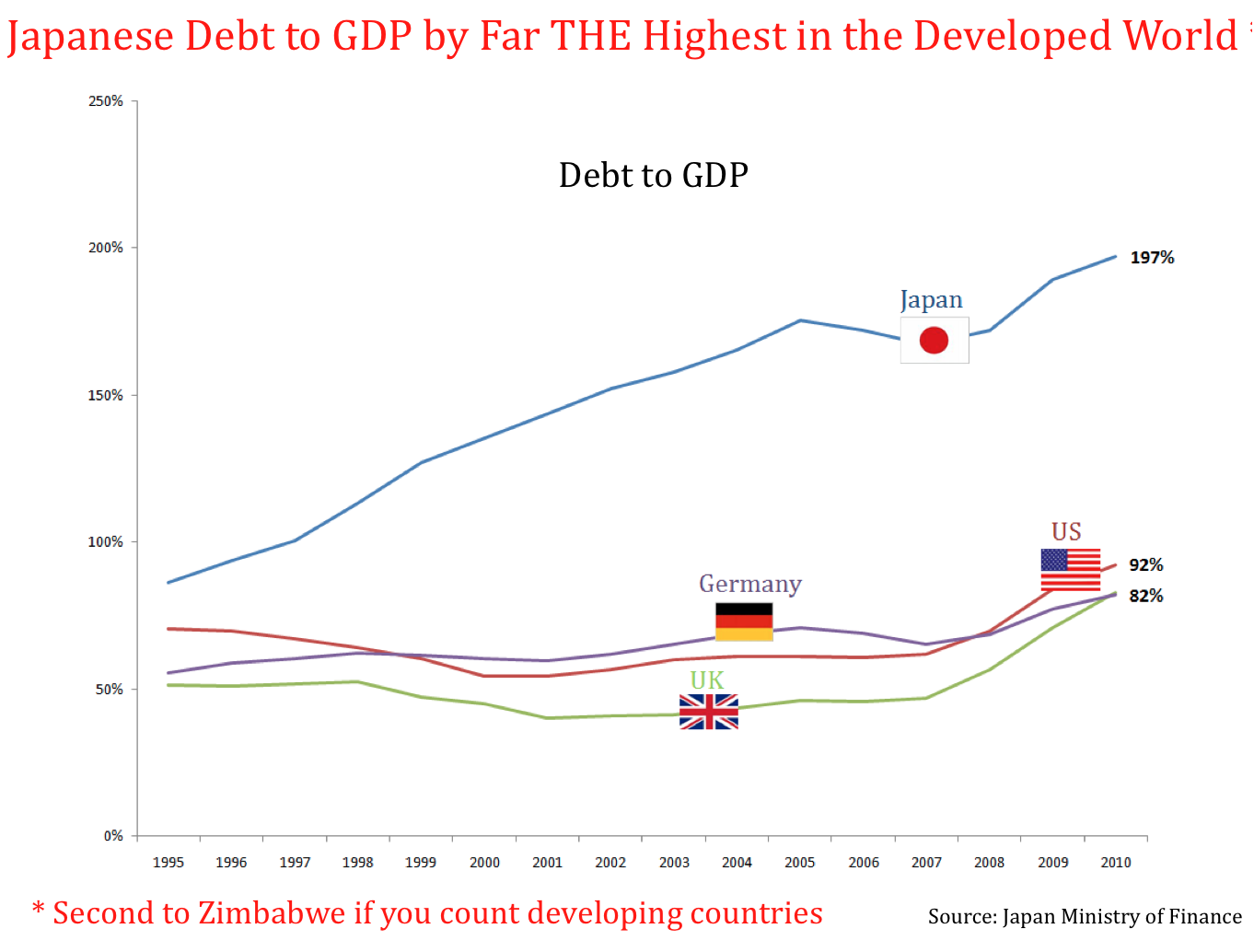
3. IS JAPAN IN DANGER OF FAILING?

Barry Ritholtz at the Big Picture reports on Vitaliy Katsenelson's argument that Japan will be the next big economy to crash.


4. ICJ RULES KOSOVO SECESSION LEGAL

Douglas Muir at A Fistful of Euros reports that the International Court of Justice today ruled that the Kosovo unilateral declaration of independence was legal. What does that mean for Catalonia, Scotland, Abkhazia, etc.?

5. VENEZUELA SEVERS DIPLOMATIC RELATIONS WITH COLOMBIA AGAIN

Christopher Toothaker at the Associated Press reports.

6. ONGC AND PETROVIETNAM TO PURCHASE BP STAKE IN OFFSHORE GAS FIELD

Nidhi Verma at Reuters reports that India's state owned ONGC has reached an agreement in principle with PetroVietnam for a joint purchase of BP's stake in a Vietnamese offshore gas field.

7. SOUTH AFRICA KEEPS BENCHMARK INTEREST RATE AT 6.5%

Nasreen Seria and Franz Wild at Bloomberg report that South Africa's central bank has decided to keep interest rates steady at 6.5%.
"Seven interest rate cuts since December 2008 and inflation at its slowest pace in four years have helped to spur consumer spending and growth in Africa’s biggest economy. [Central Bank Governor Gill] Marcus resisted calls from labor unions and exporters to cut interest rates again today as the World Cup, which ended on July 11, fueled wage demands and pushed up prices of hotel rooms, flights and restaurant bills."
8. FORMER SINGAPORE PRIME MINISTER SAYS ENERGY INDEPENDENCE UNATAINABLE

Peter Maloney at Platts reports that the former Prime Minister of Singapore answered the question of whether the city state could become energy independent firmly in the negative.
"He was also refreshingly direct about the prospect of renewable energy making a significant dent in Singapore's energy mix. Wind power is out, he said. The island does not have winds that are strong or consistent enough. And solar power is too expensive.

Lee noted that China has a huge share of the market for photovoltaic equipment, but the Chinese charge too much. If they want to lower prices, then Singapore might be interested, he said. Until then the island nation is looking to diversify its energy sources in other ways.

Right now, about 80% of the country's electricity is generated by natural gas, most of it from Indonesia. So Singapore is building an LNG regasification terminal to import LNG from Qatar."
9. PERU TO PURCHASE RECORD NUMBER OF DOLLARS TO STAVE OFF SOL'S APPRECIATION

John Quigley at Bloomberg reports that Peru may purchase a record number of dollars to prevent the sol from appreciating on investment in the country.
"Foreign investors are moving capital into the country as policy makers lift borrowing costs to prevent the $129 billion economy from overheating. The central bank will probably raise reserve requirements again, following an increase on July 18, Segura said. The Finance Ministry said this week it will coordinate dollar purchases with the central bank to slow gains in the currency."
10. INITIAL JOBLESS CLAIMS RISE TO 464K

Peter Boockvar at the Big Picture reports that initial jobless claims totaled 464k, 19k above expectations and up from a revised 427k last week.

11. RAILFAX WEEKLY DATA--LOOKS LIKE GROWTH IS MODERATING

Atlantic Systems Inc.'s weekly railfax showed that year to date rail carriage of coal was down 1.4%. That should mean for no recovery in industrial production in the US.


Their graph of total North American carloads of waste and scrap material in four week rolling averages:

Friday, August 7, 2009

Daily Sources 8/7

1. BALTIC DRY INDEX FALLS 17% ON REDUCED CHINESE DEMAND FOR COAL AND IRON, FUEL OIL--USED FOR SHIPS AND ELECTRICITY GENERATION--SWITCHING INTO CONTANGO ON INCREASED SUPPLY AND FALLING DEMAND, CRUDE RUNS SLIGHTLY DOWN IN CHINA ON 7% INCREASE IN PRODUCT INVENTORIES IN JUNE, AND THE SECOND-LARGEST CHINESE BANK WILL REDUCE NEW LENDING BY 70% IN 2H 2009

Alaric Nightingale at Bloomberg reports that the Baltic Dry Index fell by 17% this week on reduced Chinese demand for coal and iron.
"'The Chinese have backed off and it’s starting to show in the number of shipments this month,' Gavin Durrell, a Cape Town-based official at Island View Shipping SA, Africa’s biggest commodities shipping line, said by phone today. 'Iron ore and coal seem to be slowing down.'

China’s record coal and iron ore imports in the first half helped the index to advance as much as fivefold this year, reversing some of the record 92% collapse in 2008. Demand rose after the country’s government announced a 4 trillion yuan ($586 billion) stimulus package."


(h/t Yves Smith at naked capitalism.) In that vein, Jonathan Nonis at Platts reports that the 180 CST fuel oil--mostly used for power generation or marine fuel--appears to be set to switch into contango--where the nearby in time price is less than the future price--on increasing supply and less-than-expected demand.
"By 11.00 am Singapore time (0300 GMT) the September/October 180 CST spread was pegged at parity, down 50 cents/mt from the Asian close on Thursday. The last time the prompt 180 CST spread had been in contango at the Asian close was on June 16 at minus 50 cents/mt.

The weaker market structure on the utility grade also dampened the structure for the 380 CST bunker grade with the September/October 380 CST spread narrowing to 1.50/mt, from $2.20/mt on Thursday's close.

The softer fuel oil sentiment is brought about by larger Western arbitrage volumes in August and September, while demand over the same period is expected to decline on higher outright fuel oil prices, traders said.

Between 3.2 to 3.5 million mt of fuel oil is expected to arrive in Singapore in August, while September volumes were said to be in the range of 3.6-3.7 million mt. Meanwhile, the higher fuel oil prices--prompted by the sharp rise in crude prices--in recent weeks has had a negative impact on bunker demand in Singapore as well as regional buyers.

Reflecting this, heavy distillate stocks in landed storage in Singapore recovered from a seven-month low by a massive 5.26 million barrels (800,000 mt) to 19.320 million barrels for the week ended August 5, data from IE Singapore showed."
In late July fuel oil prices rose to nearly the cost of crude--see Daily Sources 7/28 #8. Meanwhile, Jim Bai and Aizhu Chen at Reuters report that Chinese refiners will cut very slightly crude runs in August to
"2.63 mb/d of crude oil in August, down marginally from 2.65 mb/d in July.

The August volume would represent around 88% of their total refining capacity."
Gasoline and diesel stocks held by CNPC and Sinopec rose by 7.7%
and 7.1% respectively at the end of June from the end of May.
"'Demand is not as high as what is being supplied,' a refinery official in east China also said, declining to be named as he is not authorized to speak to the media.

'Some plants may just want to accomplish their full-year plan after a slow start this year,' he added."
Meanwhile, Bloomberg News reports that the President of China's second-largest bank, the China Construction Bank, Zhang Jianguo, said that it would reduce new loans by 70% in the second half of 2009.
"'We noticed that some loans didn’t go into the real economy,' Zhang, 54, said in an interview yesterday at the bank’s headquarters in Beijing. 'I feel that some industries are expanding too rapidly. For example, housing prices are rising too fast, and housing sales are growing too fast.'"
"Construction Bank is one of the main beneficiaries of demand for infrastructure loans induced by China’s 4 trillion yuan economic stimulus package. Established in 1954 to fund building of roads, bridges, dams and other infrastructure, it was the nation’s biggest mortgage lender until the first half of 2008, when ICBC pushed it to second place."
The People's Bank of China in its recent quarterly monetary report announced that it would continue its policy of easy credit--see Daily Sources 8/6 #2.

2. INDONESIA TO CUT SUBSIDIES ON FOSSIL FUELS WITHIN A YEAR

Yvonne Chan at Business Green reports that the head of Indonesia's National Council on Climate Change, Agus Purnomo, told Reuters last week that Jakarta was likely to reduce subsidies for fossil fuels within a year.
"Some economists have forecast that fossil fuel consumption would drop by one-fifth if the subsidy were scrapped entirely. However, the complete removal of the subsidies is highly unlikely, given that previous cuts have led to social unrest.

Purnomo said a subsidy would continue to exist but would be 'below the distortion level that discourages renewable energy'."
Subsidies on propane, for example, which is used for cooking, and especially by the poor, are very difficult to scrap given the consequences.

3.GERMAN EXPORTS UP 7% IN JUNE FROM MAY, DOWN 22.3% FROM JUNE 2008, IMPORTS UP 6.8%

Der Spiegel reports that Germany's Federal Statistics Office announced today that the country's exports were up 7% in June from May, but down 22.3% from June 2008.
"[I]t was the biggest rise in exports since September 2006, when the figure was 7.3%. Experts had only anticipated a 1.1% rise after the figures were seasonally adjusted. The figure in May was a mere 0.2% gain."
"The Federation of German Wholesale and Foreign Trade (BGA) is forecasting an 18% slump in export sales for 2009, the first contraction since 1993 and the largest in postwar history. For 2010, BGA president Anton Börner is anticipating a return to growth of 5 or 10%.

Imports to Germany were also up slightly in June, climbing by 6.8% compared to the previous month. In total, goods valued at €56.3 billion euros were imported--17.2% less than the same period in 2008."
3. RUSSIAN ELECTRICITY DEMAND UP 4.2% IN JULY FROM JUNE ON INCREASING INDUSTRIAL DEMAND

James Allen at Platts reports that Russian electricity demand fell by 6.6% in the first seven months of the year, but have risen 4.2% in July from June. Year over year demand was down 5.7% in July.
"'We think the July increase in consumption may be a sign of economic recovery in Russia given the increasing capacity utilization being observed in some industries, particularly the metals sector,' said analysts at Alfa Bank in a daily briefing Friday.

Consumption in the Southern Russian, Mid-Volga and industrialized Urals Integrated Power Systems rose, respectively, 10.7%, 7.2% and 4.8% month on month while electricity demand in the northwestern region stayed flat after falling 7.6% month on month in June."
4. UKRAINE TO RECEIVE INTERNATIONAL FINANCING TO COVER PAYMENTS FOR GAZPROM GAS

Doris Leblond at the Oil & Gas Journal report that The European Commission, European Bank for Reconstruction and Development (EBRD), European Investment Bank (EIB), and World Bank
"have agreed to cooperate on a support package to help Ukrainian authorities develop 'sustainable solutions to Ukraine's medium-term gas transit payment obligations,' and to continue to 'support Ukraine's economic stabilization reform, including reform of the gas sector and accompanying reform of the social safety net,' according to a joint statement by the organizations."
The EIB and the EBRD are each considering loan packages of as much as $450 million; the World Bank is considering committing as much as $500 million.

5. UK ENERGY SECURITY REPORT

The recent report by Malcolm Wicks commissioned by UK Prime Minister Gordon Brown on British energy security can be found here. I have not been able to read it, but it was reported that it calls for trebling the amount of nuclear electrical generation in the country--see Daily Sources 8/5 #2.

6. INTERNAL ISRAELI MEMO CRITICAL OF NETANYAHU'S PUBLIC STAND ON SETTLEMENTS

Mark Lavie at the Associated Press reports that an internal memo by the Israeli Consul to Boston which criticized the Netanyahu administration for taking a combative stance with Washington regarding the settlements issue was leaked to an Isreali TV station, which read the report on air. The memo said the disagreement was causing "strategic damage to Israel." It goes on to say:
"In the distance created between us and the US administration, there are clear implications for Israel's deterrent capabilities. ...

There have always been differences between the governments, but coordination was always maintained. Now there is the feeling in Washington that Obama has to deal with obstinacy from the governments of Iran, North Korea and Israel. ...

The US administration makes efforts to lower the profile of the disagreements, but ironically, we are the source of the public disputes. ...

The standing of American Jews is also being damaged ... . The perception of confrontation between the governments of Israel and Obama puts the American Jewish community, which is so important to us, in a problematical position. The confrontation is distancing many from Israel."
7. KUWAIT BECOMES NET NATURAL GAS IMPORTER

Chris Stanton at the National reports that Kuwait's first cargo of LNG has arrived at its terminal, making it for the first time a net natural gas importer.
"Officials say LNG is an interim solution to plug the summer deficit, when consumption of gas at power stations spikes. Domestic supplies under development by Kuwait Oil Company (KOC) will eventually supplant the imports, the government said in June when it signed a supply contract.

But imports could be necessary for years to come, given the difficulty Kuwait will face in raising domestic production, said Raja Kiwan, an analyst at PFC Energy, a US-based consultancy."
8. 32 MEMBERS OF MEND MEET WITH NIGERIAN PRESIDENT ON AMNESTY PROGRAM

Felix Onuah at Reuters reports that
"[t]hirty-two members of the Movement for the Emancipation of the Niger Delta (MEND) led by the group's leader in Bayelsa state--Ebikabowei Victor Ben, known locally as Boyloaf--met Yar'Adua at the presidential villa in the capital Abuja.

'We on our part in the spirit of fair bargain hereby declare and agree to lay down our arms for this administration to immediately commence the other part of the bargain,' Ben said."
9. US TO PROVIDE $10 BILLION IN FINANCING FOR BRAZIL'S EXPLOITATION OF PRE-SALT FIELDS, BRAZIL AND PERU CONSIDERING $15 BILLION IN HYDROELECTRIC PROJECTS

EFE News Services reports that Brazilian Planning Minister Paulo Bernardo da Silva on Wednesday indicated that the US National Security Advisor, Gen. James Jones, indicated that the US was prepared to offer $10 billion in loans to develop the country's sub-salt reserves off its coast.
"He said the US Export-Import Bank already has signed a letter of intent in that regard with Brazilian state oil company Petrobras.

The loan is equal in value to a similar credit line agreed to with the China Development Bank, also for exploiting Brazil's 'pre-salt' area, so-named because the estimated 80 billion barrels of high-quality crude in that new oil frontier lie far beneath the ocean floor under layers of rock and an unstable salt formation."
Meanwhile, Andre Soliani Costa and Alex Emery at Bloomberg report that the Brazilian Energy Minister, Edison Lobao, told reporters that Brazil and Peru are considering five hydroelectric projects that may cost as much as $15 billion.
"'We need to have energy, to ensure Brazil’s energy security,' Lobao said. 'Whatever exceeds Peruvian needs will be exported to Brazil, which may re-ship the energy to other neighboring countries.'

Brazil is expanding its electricity grid to link jungle dams to industrial centers and reduce costly diesel-fuel generation. Latin America’s largest economy needs to boost its generating capacity by 50% in 10 years to 150,000 megawatts, Lobao said in March."
10. NEW ENHANCED RECOVERY TECHNOLOGY DEVELOPED BY CHEVRON MAY SUBSTANTIALLY INCREASE THEIR BOOKABLE BARRELS

Sheila McNulty at FT Energy Source reports that Chevron has invented an innovative carbonated steam flood technology to enhance recovery from oil fields--Berstein Research says it could several times over.
"It notes in a new report that the Middle East has many other examples of large scale heavy and intermediate oil accumulations trapped within carbonate reservoirs, and the role of steam assisted recovery in accessing these resources is only just getting started.

Chevron’s technology works by pumping steam into the carbonate reservoir, which heats up the heavy oil in the reservoir, reducing its viscosity so that it can more easily flow. At the same time it creates a pressure gradient, which pushes the oil towards vertical production wells.

Chevron this year began testing the technology in the partitioned neutral zone between Saudi Arabia and Kuwait, in which Chevron owns a 50% share of the resources."
Berstein estimates that the new method of enhancing recovery could increase Chevron's booked barrels quite substantially,
"this could equate to an additional 600-1,800 million barrels of oil equivalent of booked reserves being added over a number of years. This equates to approximately 5%-16% of Chevron’s 2008 end of year reserve base."
Worth reading in full.

11. UNEMPLOYMENT DOWN TO 9.4% IN JULY FROM JUNE, PRIVATE SECTOR HAS ADDED ZERO NEW JOBS IN 10 YEARS

Justin Fox writes that the July monthly employment report by the Bureau of Labor Statistics showed that non-farm employment was
"down 247,000 in July—compared with 395,000 in June and an average of 645,000 during the dark months of November through April."
The official unemployment rate fell to 9.4% from 9.5% in June. The U-6 number, for "marginally attached workers," also fell.
"Without the seasonal adjustments, employment fell a whopping 1.3 million in the month. And there were 5.9 million fewer jobs in July 2009 than in July 2008.'
Floyd Norris at the New York Times reports that for the first time since the Great Depression, the US has added virtually zero jobs in the private sector.
"Until the current downturn, the long-term annual growth rate for private sector jobs had not dipped below 1% since the since the early 1960s. Most often, the rate was well above that."
12. NEW FED REPORT SHOWS RATE OF GLACIERS MELTING IN NORTH AMERICA ACCELERATING

Jim Tankersley at the Los Angeles Times reports that the federal government yesterday released its most comprehensive study yet of melting glaciers in North America which showed that their rate of shrinkage is accelerating.
"For five decades, USGS researchers have periodically measured the glaciers' size with tools including measurement stakes and photographic surveys. Their data include tallies of winter snow accumulation and summer melt.

In each case, the data show that summer melting accelerated in the last 20 years. At the same time, winter snowpacks have tapered off. The reduced accumulations and increased melts have resulted in shrinking glaciers.

South Cascade Glacier, for example, had a volume of nearly 0.06 cubic mile of water in 1958, Josberger said. By 2008, it was down to 0.03 cubic mile.

When glaciers shrink, water runoff declines, setting the stage for drier conditions in the region, particularly at the end of summer, when other supplies of water dwindle."

Thursday, June 18, 2009

Daily Sources 6/18

1. BANK OF JAPAN JUNE REPORT INDICATES NO SPENDING GROWTH, HIGH UNEMPLOYMENT, ALMOST CERTAIN DEFLATION

Rebecca Wilder at News N Economics notes that the Bank of Japan released its June report on economic and financial developments today. She notes that the economy is bedeviled by no spending growth and high unemployment ... the one bright spot is that exports appear to be leveling out--her graph:


Ms Wilder notes: "since there is no domestic demand, deflation is all but given." Well worth reading in full. Kyodo News notes that the Bank of Japan report showed that the outstanding balance of financial assets held by households at the end of March fell by 3.7% from the year previous.
"Individual assets held in cash and deposits rose 1.4% to ¥786.50 trillion (~ $8.18 trillion), increasing for the ninth consecutive quarter and underscoring that households favor having their money on hand or keeping it in banks rather than invested in capital markets."
2. WORLD BANK RAISES FORECAST FOR CHINESE GDP IN 2009 TO 7.2%

Liu Li at the Wall Street Journal reports that the World Bank has raised its forecast of Chinese GDP growth to 7.2% in 2009 on the back of the stimulus program. In March, the bank forecast that growth would come in at about 6.5%.
"'The current surge in government influenced investment is welcome, and more domestic demand in China is helpful for the world economy," the bank said in its report. 'However, it is unlikely to lead to a rapid, broad based recovery in China, given the current global environment and the subdued short term prospects for market based investment.'

World Bank senior economist Louis Kuijs said at a press briefing the stimulus is likely to have a smaller impact on the economy next year."
Bank analysts also think that the stimulus this year may constrain the ability of Beijing to respond to events as they develop next year, during which the bank expects GDP to expand by 7.7%. Both numbers are below the "magic eight." It may or not be important in considering this report that some think that the World Bank's next head will hail from China.

3. CHINA RUSSIA'S LARGEST TRADING PARTNER IN FIRST FOUR MONTHS OF 2009

The Wall Street Journal notes that Russia's economy ministry said yesterday that China was Russia's largest trading partner in the first four months of 2009.

4. BANK OF ENGLAND CHIEF MERVYN KING SUGGESTS LIMITING SIZE OF BANKS

Katherine Griffiths at the London Times reports that the head of the Bank of England has indicated in a speech that he supports limiting the size of banks.
"Mr King sought to apply pressure on the Government to award the Bank stronger powers to police lenders that had in the past regularly ignored his warnings. But he admitted that he did not know in what form the Bank would discharge such a responsibility. But such a move would belittle the Financial Services Authority, the official banking regulator, which has been accused of allowing lenders to behave recklessly while on its watch.

The Governor reinforced a suggestion he had made before that retail banks should be split from investment banks and added that there should be a plan for potential winding down of the largest institutions so that there could be an orderly process if they failed."
His suggestions are more radical than suggestions made in either Brussels, Westminster, or Downing St. There is a video report with part of Mervyn King's speech and commentary at the link. (h/t Eurointelligence.)

5. OECD FORECASTS ITALIAN GDP TO CONTRACT BY 5.3% IN 2009

Eurointelligence reports that the OECD yesterday forecast that Italy's economy would contract by 5.3% in 2009, followed by a weak recovery in 2010.
"It warns of a rise in unemployment to over 10% next year, the public-sector deficit will hit 10%, while the level of debt will be approaching 120%. The reports also laments the slow progress Italy has made introducing reforms to free up the service sector, and to reform the administration. The OECD was particularly critical of car subsidies to prop up the country’s ailing auto sector, as this would lead to a misallocation of resources."
6. RUSSIAN ENERGY MINISTRY DRAFTS NEW OIL AND GAS TAX PROPOSAL

Anna Shiryaevskaya at Platts reports that Russia's energy ministry has drafted a new tax proposal with the idea of making production from new oil and gas fields profitable.
"If Russia implements new tax measures to stimulate oil production, the country might increase output to 511 million mt/year (10.2 million b/d) in 2013. Otherwise, production might drop to 450 million mt/year in 2013, [Energy Minister Sergei Shmatko] said. In 2008, Russia pumped 488.105 million mt (9.735 million b/d) of crude, down 0.7% on the year.

Among other incentives, Putin called for a temporary cut in the duty to export Eastern Siberia crude because transportation from the region is expensive and had limited infrastructure."
7. NORGES BANK CUTS BENCHMARK INTEREST RATE TO 1.25%

Josiane Kremer at Bloomberg reported yesterday that the Norges Bank cut the benchmark interest rate by 0.25% to 1.25%. The bank
"said it expects [the benchmark interest rate] to remain between 0.75% and 1.75% until Oct. 28. The assessment that the rate "can remain close to 1 percent for a period ahead still applies,' the bank said in a statement, forecasting a 1.5 percent benchmark in 2010."
The bank forecast that the mainland economy, excluding shipping and oil, will contract by 1.5% in 2009, and expand by 2.5% in 2010. It expects inflation to average 2.5% in 2009 and 1.75% in 2010.

8. BOLIVIA'S LITHIUM RESERVES PRESENT CONUNDRUM TO MULTINATIONALS

Rory Carroll and Andres Schipani at the Guardian UK report on the conundrum facing multinationals that want to become involved in Bolivia's lithium market. Bolivia is thought to posses fully half of the world's total supply of lithium, a key component in batteries for a variety of products, including electric cars. The government of Evo Morales, however, is wary of the influence of multinational corporations.
"'The government of Bolivia will never give away control of this natural resource,' [Morales has] said. He acknowledges, however, that a foreign partner is needed.

The government is talking to France's Bollore Group, South Korea's LG Group and Japan's Sumitomo and Mitsubishi. Bollore has been asked to join the government's scientific commission on lithium, suggesting it has the edge.

The government said it would choose as a partner the company which will help Bolivian industry and not just ­mining."
Morales has strong ties to the government of Hugo Chávez and followed in his footsteps by nationalizing the oil and gas industry in the country in 2006.

9. PERUVIAN AMAZON PROTEST LEADER LEAVES FOR NICARAGUA

The Associated Press reports Peruvian Amazon protest leader Alberto Pizango has left the country for Nicaragua, where he has been granted political asylum.
"Pizango sought refuge in Nicaragua's embassy last week after Peru filed sedition and rebellion charges against him, accusing him of provoking violence when protests over Amazon development proposals turned deadly. The June 5 clash left 24 police dead. Indian leaders say at least 30 civilians died."
Peru granted him safe passage Tuesday.

10. TOTAL US UNEMPLOYMENT INSURANCE ROLLS FALL, BUT INITIAL CLAIMS RISE, RISING OIL COSTS LIKELY TO UNDERMINE US TRADE SITUATION, NORTH AMERICAN TRAIN FREIGHT CONTINUES TO SHOW STEEP FALL

The Associated Press reports that the Labor Department announced that total unemployment insurance rolls fell last week by 148,000 to 6.76 million, for the first time since January. Initial claims, however, rose by 3,000 to a seasonally adjusted 608,000. "The four-week average, which smooths fluctuations, fell by 7,000 to 615,750." Phil Izzo at Real Time Economics reports that Panjiva, Inc. remarked in a research note that there was a 2% uptick in manufacturers exporting to the US in May. But,
"'Looking forward, with the price of petroleum skyrocketing, it is likely that we will see a further deterioration in our trade situation and that will not help us as we try to get out of this recession,' Naroff Economic Advisors said in a research note last week."
The railfax report for total North American freight by rail volumes for the week ended June 13 were down 19.2% from a year earlier.

11. US TOTAL NAT GAS RESERVES ESTIMATION UP 35%

Jad Mouawad at the New York Times reports that the Potential Gas Committee released a report today showing that natural gas reserves in the US have increased by 35%.
"Estimated natural gas reserves rose to 2,074 trillion cubic feet in 2008, from 1,532 trillion cubic feet in 2006, when the last report was issued. This includes the proven reserves compiled by the Energy Department of 237 trillion cubic feet, as well as the sum of the nation’s probable, possible and speculative reserves."
The New York Times provides a helpful illustration.


The report calculates all gas that one could conceivably get out of the ground, however, not the amount that would be economical to get out of the ground (which is one reason, for example, why reserves calculated by oil companies can fluctuate rather wildly with price.) Near term this will prove an important difference, front month natural gas is trading at a $46.36/b discount to front month sweet light on NYMEX on a BTU basis.

12. SOUTHERN CALIFORNIA EDISON REACHES AGREEMENT FOR AS MUCH AS 726 MWs FROM SOLAR-THERMAL TROUGH GENERATORS

Dow Jones reports that Edison International's Southern California Edison utility has reached agreements
"with wind and solar power suppliers on four pacts for as much as 960 megawatts of power from renewable-energy sources ... include a potential 726 megawatts of power from solar-thermal trough generators."
All for the good, but the water requirements of solar-thermal trough generators may prove a problem in the future--see Daily Sources 6/8 #16.

Wednesday, March 25, 2009

Daily Sources 3/25

1. Jason Clenfield at Bloomberg reports that Japanese exports fell 49% in February year-over-year. Shipments to the US fell 58.4%. Automobile exports fell 70.9%. "Exports to Europe dropped a record 54.7%, shipments to Asia declined 46.3% and goods sent to China slumped 39.7%." Imports fell 43%.

2. Geoffrey A. Fowler at China Journal reports that Beijing's decision to shut down access to youtube.com coincided with the release on March 20th of a video by the Tibetan government in exile of Chinese security forces beating Tibetan protesters. This is the offending video:


Karin Brulliard at the Washington Post reports that a peace conference which was to publicize the role of sports in unity and the reconciliation of differences was canceled today because the South African government had denied the Dalai Lama the visa required for his attendance.
"Two of three South African Nobel peace laureates who had invited the Tibetan leader, retired Archbishop Desmond Tutu and former president FW de Klerk, said Monday that they would boycott the event, and organizers said the third, former president Nelson Mandela, would probably do the same. The Norwegian Nobel Committee also backed out."
A spokesman for South African President Kgalema Motlanthe told the media that South Africa would not welcome the Dalai Lama under any circumstances nor at any time.

3. Peter Stein at China Journal reports that Fan Gang, the head of China's National Economic Research Institute and a member of the People's Bank of China's monetary policy committee, responded to President Obama's televised remarks yesterday today by saying:
"Of course [an alternative is necessary] in the long run, if we want to avoid the cyclical problems associated with the dollar standard."
Mr. Fan also addressed the question of managing the renminbi.
"Fan says while China is eager to keep its currency stable, there is pressure to let the yuan fall-—'not just domestic pressure, but regional pressure,' as other Asian currencies weaken, making them more competitive. Rather than let the yuan fall against the dollar, he suggests that China should make reference more to the other currencies in the basket it uses to set the yuan’s exchange rate. 'Eventually, China’s currency should be related to other currencies, not just the dollar,' he says.

Fan worries that the Fed’s quantitative easing is raising the risk of dollar inflation and devaluation, which 'is a concern not just for China but for everyone.'"
(By the way, the Federal Reserve Bank of Atlanta's macroblog had a post yesterday by SVP in charge of research for the Atlanta Fed, David Altig and Daniel Littman, an economist at the Cleveland Fed, which was at pains to show that the Fed's move is not, strictly speaking, "quantitative easing." The reason (basically): quantitative easing is about increasing liabilities only--or quantity of bank reserves from the perspective of central banks--whereas the FOMC's most recent move was also explicitly about increasing the number of assets on the Fed's balance sheet. h/t Mark Thoma at Economist's View.)

Meanwhile, Phil Izzo at Real Time Economics reports that in a conference hosted by the Wall Street Journal yesterday Paul Volcker seemed to be both reassuring to Beijing while simultaneously dismissive of the primary complaint. The former head of the Fed and current chair of the White House’s Economic Recovery Advisory Board, said that the US's greatest strengths were its history and reputation, and that that shouldn't be put at risk by deliberately inducing inflation:
"One historic way of getting yourself out of this situation—-or trying to—-is to inflate. Either you do it deliberately or you allow it to happen. And if we permit that to happen then I think all these dollars will come tumbling down on us. I get a little nervous when I see the Federal Reserve announcements that they want have the amount of inflation that’s conducive to recovery. I don’t know what ‘the amount of inflation that’s conducive to recovery’ would be appropriate. I’d much rather they say that they want to maintain stability in the currency, which is conducive to confidence and recovery."
All of which would seem to reassure Beijing. On the other hand, Volcker appeared unmoved by the naif taken advantage of by slick Uncle Sam act coming from Beijing:
"I think the Chinese are a little disingenuous to say, ‘Now isn’t it so bad that we hold all these dollars.’ They hold all these dollars because they chose to buy the dollars, and they didn’t want to sell the dollars because they didn’t want to appreciate their currency. It was a very simple calculation on their part, so they shouldn’t come around blaming it all on us."
Indeed, were Chinese long term strategy to include dislodging the dollar from its reserve currency status, perhaps the policy of overloading the US with debt long after it was clear that the debt was unsustainable would be a reasonable policy.

Meanwhile, China Daily News today reported that the government raised "the benchmark retail prices of gasoline by 290 yuan (US$42.46) per ton, or 5%, and diesel by 180 yuan per ton, or 3.7%." The National Reform and Development Commission did not specify whether the increases were for factory gate prices or retail prices. Either way, the decision should put downward pressure on demand for gasoline and diesel. The prices are well above comparable US prices.

4. Eurointelligence notes that the vote of no confidence removing Czech Prime Minister Mirek Topolánek from office yesterday basically means that the largest obstacle to the Lisbon Treaty is now the Czech Republic.
"[The] really worrying aspect of the Topolanek resignation lies in the politics of Lisbon ratification. The Czech parliament’s lower house has accepted the Treaty, but the Senate has yet to vote. [Jean] Quatremer quotes MEP Elmar Brok as saying that this could mean the end of the Lisbon Treaty."
P O Neill at Fistful of Euros reports that in a speech to the European Parliament today, Topolánek said:
"that President Barack Obama’s massive stimulus package and banking bailout 'will undermine the stability of the global financial market.' … Topolanek bluntly said that 'the United States did not take the right path.'

He slammed the US’ widening budget deficit and protectionist trade measures — such as the 'Buy America'-—and said that 'all of these steps, these combinations and permanency is the way to hell.' 'We need to read the history books and the lessons of history and the biggest success of the (EU) is the refusal to go this way,' he said.

'Americans will need liquidity to finance all their measures and they will balance this with the sale of their bonds but this will undermine the stability of the global financial market,' said Topolanek."
5. Anna Shiryaevskaya at Platts reports that Gazprom may exercise its option--which expires in April--of purchasing a majority stake in gas fields in West Siberia and a 20% stake in oil production company Gazprom Neft from Italian oil and gas companies Eni and Enel. The assets were purchased by Eni and Enel in the April 2007 tender of Yukos properties. A deal to purchase the assets might be announced in Italian Prime Minister Silvio Berlusconi's April 6-7 visit to Moscow.

6. Simone Meier at Bloomberg reports that Munich's Ifo Institute's business climate index, based on a survey of 7,000 executives, fell to 82.1 from 82.6 in February.
"Ifo’s gauge of current conditions declined to 82.7 from 84.3. Still, the measure of expectations increased to 81.6 from 80.9.

'The Ifo’s absolute level is still depressingly low,' said Carsten Brzeski, an economist at ING Group in Brussels. 'Nevertheless, the gradual improvement of the Ifo’s expectation component is at least a tender green shoot of stabilization.'"
7. Doris Leblond at the Oil & Gas Journal reports that at a press conference yesterday meant to officially launch France's adoption of countrywide 10% ethanol requirement in gasoline in fact let the public know that the initiative would take longer to complete than previously thought. Jean-Louis Schilansky, president of the oil trade group UFIP, said at the conference that he expected 75% of the country's retail station network would offer 10% ethanol gasoline by the end of the year.
"The government's purpose in introducing the E10 at least 5 years ahead of the EU is that is should reduce carbon dioxide emissions in France by 1 million tonnes/year by 2010."
8. David Jolly at the New York Times reports that the IMF announced via a communique from Washington that it would provide a $17.5 billion loan to Romania under a two-year stand by arrangement. An additional $9.7 billion loan from the European Union and other bodies will be forthcoming as part of an international stabilization package.

9. A post of Willem Buiter, which originally appeared on his Maverecon.com blog, was reposted on VOX EU arguing that the eurozone is vulnerable because there is no single fiscal organization that can recapitalize either the European Central Bank or cross border financial institutions when they make systemically dangerous decisions.
"When the Bank of England develops an unsustainable hole in its balance sheet, Mervyn King knows he only needs to call one person: Alistair Darling, the UK Chancellor of the Exchequer. If the Fed were to become dangerously decapitalised, Ben Bernanke also needs to call just one person, Timothy Geithner, the US Secretary of the Treasury.

Whom does Jean-Claude Trichet call if the Eurosystem experiences a mission-threatening and mandate-threatening capital loss? Does he have to make 16 phone calls, one to each of the ministers of finance of the 16 Eurozone member states? Or 27 phone calls, one to each of the ministers of finance of the 27 EU member states whose national central banks are the shareholders of the ECB? I don’t know the answer, and I doubt whether Mr. Trichet does.

This situation is intolerable. We need a fiscal Europe ... ."
10. Travis Pantin at the UAE National reports that the Gulf Cooperation Council secretariat decided at a conference in Manama yesterday that the original deadline for a common currency for the member nations of January 1, 2010, is untenable.
"Although the GCC states still plan to complete preliminary steps to prepare for introducing the common currency by December, the process will not be finalised until a dedicated GCC monetary council is created towards the end of this year.

'As soon as the monetary council is ratified by the member states, one of its tasks is to set the new timetable for introducing the physical currency,' said Nasser al Kaud, the deputy of the assistant secretariat general for economic affairs at the GCC."
The GCC, minus Oman, agreed to create a monetary council as a prelude to a joint central bank and monetary union in an accord late last year--see Daily Sources 12/30 #4. The GCC originally decided to form a monetary union by 2010 in 2001.

11. Upstream online.com reports that Oil Minister Hussain Shahristani told the media today that the Kurdistan Regional Government refuses to allow oil to be exported from the country via the national oil pipeline network.
"'Work is continuing to connect the (northern oilfields) to the Iraqi network. But there are objections from the KRG to handing over the oil, claiming that companies that developed the oilfields should be rewarded,' Reuters quoted Shahristani saying in an interview published in today's pan-Arab Asharq al-Aswat A newspaper."
12. The AFP reports that Morocco has begun a clampdown on Shia worshipers in the primarily Sunni country.
"The independent Arabic-language newspaper Al Jarida Al Aoula has reported that dozens of people suspected of having Shiite sympathies have been arrested since Friday in Tangiers in the north, Essaouira in the south and Ouyazze 120 kilometres (75 miles) north of Rabat."
The country simultaneously began a clampdown on homosexuality. Morocco cut ties with Iran a few weeks ago in response to the statement by a former speaker of the Majlis calling Bahrain the 14th province of Iran.

13. Mary Beth Sheridan at the Washington Post reports that Secretary of State Hillary Clinton today begins a trip to Mexico, the first of three cabinet level visits to the country which will precede President Obama's scheduled visit there from April 16-7.
"A senior State Department official said Clinton's trip will highlight the broad range of issues on which the neighbors interact. Mexico is the United States' third-largest trading partner and maintains close contacts with U.S. officials in areas ranging from agriculture to immigration.

'The idea of this trip is to not allow Mexico to be pigeonholed by one or two issues,' the official said Tuesday, briefing reporters on condition of anonymity. That approach will undoubtedly please Mexican authorities, who have angrily rejected suggestions by US military officials that the country could increasingly become ungovernable or even turn into a 'failed state.'"
Spencer S. Hsu and Joby Warrick at the Washington Post report that yesterday the Obama Administration announced that it would move 450 law enforcement officers to the border of Mexico to help combat violence erupting from conflicts with the drug cartels.
"Instead of proposing a costly new package, federal officials said they will redirect resources to cut off the financial lifelines supporting the cartels, in particular the estimated $18 billion to $39 billion in cash, wire transfers and other smuggled payments moving each year from the United States to Mexico.

The other US focus is 'to get its own house in order,' O'Neil said, increasing enforcement against the 90% of guns from the United States that are used in crimes in Mexico and acknowledging a $65 billion domestic market for illegal drugs that drives demand."
"Acknowledging" that US demand is the reason for the drug cartels' success in Latin and South America does nothing. Either steps towards ending this Prohibition need to be taken or the US needs to seriously target consumption. What does it mean to have outlawed cannabis and cocaine when our current and the last two presidents--at the very least--have admitted to their consumption?

14. Bryan Keogh and Andrea Jaramillo at Bloomberg report that Peru will sell 10 year dollar denominated bonds yielding 4.5% more than US treasuries. It is the first dollar-denominated debt the country will have sold in two years and Lima has hired Goldman Sachs and JP Morgan Chase to manage the sale. In September it was reported that foreign banks account for about 51% of Peru's financial system--see Daily Sources 9/30 #4. In January, two months after hosting an APEC conference, Peru's finance minister told the press that Lima was in talks with both the Fed and the People's Bank of China to arrange dollar swaps for the sol--see Daily Sources 1/15 #14.

15. Courtney Schlisserman at Bloomberg reports that US durable goods orders rose by 3.4% in February from January. "Excluding transportation equipment, orders gained 3.9 percent, the most since August 2005."

16. The EIA reported that for the week ended March 20 crude stocks grew by 3.3 million barrels to 356.583 million barrels, the largest commercial stockpile of crude seen in the US since July 23, 1993. According to a Bloomberg survey, Wall Street analysts had expected a 1.1 million barrel build. Gasoline stocks fell by 1.1 million barrels versus analyst expectations of a 650 kb drop, and are at the top of the historical range for this time of year. Distillate stocks fell by 1.6 million barrels versus Wall Street expectations of a 100 kb drop, and are well above the historical range for this time of year.

Tuesday, March 17, 2009

Daily Sources 3/17

1. Doris Leblond at the Oil & Gas Journal reports that Eurogas released preliminary data showing that European demand for natural gas grew by 2.1% in 2008, from from 506.4 bcm to 517 bcm.
"The total number of gas customers connected to the EU27 gas grid rose 1% to 112.5 million customers. ... Although natural gas markets vary significantly from one EU country to another, Eurogas believes some general trends may explain the overall increase. The main one is that the weather was mild in 2007 but rather cold in 2008 which, in addition, was a leap year of 366 days."
2. Eurointelligence notes that Le Monde reported that support for a 50% cap on income taxes and the "detaxation" of extra working hours no longer has majority support in France.
"Ahead of the parliamentary budget examination this week, several MEPs called for a suspension of this measure to make high income earners participate in an effort to re-establish confidence in the economic relaunch plan. Even former prime minister Dominique de Villepin called in an interview with Les Echos for a burden share and an increase of the cap to 60%."
3. Dinah Deckstein at Der Spiegel reports that in February senior executives from Airbus and Emirates--which has ordered 54 A380 super-jumbos--to conduct an emergency meeting regarding problems with the plane after having taken delivery of its first two nearly two years late.
"It is still not clear how the spat between the aircraft maker and its dissatisfied customer will end. Competitors Singapore Airlines and Qantas have also had to ground their A380 jets several times in recent weeks and months.

The Asians have had trouble with the fuel pumps and the on-board electronics. The Australians noticed that the highly sensitive measuring sensors in the tank were not working properly, although it is still unclear whether the problem was attributable to the devices themselves or was caused by impurities in the fuel.

Unlike Emirates, Singapore Airlines and Qantas have taken a more relaxed approach to the problems. However they, unlike the Arabs, have not just ordered dozens of new A380s.

Since the end of last week, the Dubai-based airline has however tried to defuse the conflict. 'Technical problems are to be expected in a new aircraft, especially one in which so many new technologies are used,' says an Emirates spokesman."
Worth reading in full.

4. Platts conducted a survey of 27 Chinese state-run refineries which indicated that they were likely to maintain crude runs at about 81% of nameplate capacity in March on high stocks and weak demand.
"The survey covered Sinopec's 19 refineries, which have an overall nameplate crude processing capacity of 3.56 mb/day, accounting for 89% of Sinopec's total refining capacity of 4 mb/d.

Meanwhile, the eight PetroChina refineries surveyed have an overall nameplate crude processing capacity of 1.43 mb/d, which accounts for 51% of PetroChina's total crude processing capacity of 2.8 mb/d."
5. Razib Ahmed at the South Asia Blog posts on the return of immigrant workers to South Asia and the recent decision by Malaysia to cancel visas for some 55,000 Bangladeshi workers. Ahmed also notes that Kuwait's foreign workforce shrank for the first time since 1990 and that there has been a fall in the number of people leaving Nepal in search of work. (h/t Mark Thoma at Economist's View.)

6. Simon Romero at the New York Times reports that the Shining Path in Peru has recently turned to the cocaine trade after the end to the war in 2000--and that the trade is heating up the conflict with Lima again.
"[Vizcatán], a 250-square-mile region in the Apurímac and Ene River Valley, nine hours by four-wheel drive along switchbacks from the Maoist rebels’ Andean cradle of Ayacucho, is Peru’s largest producer of coca, the raw ingredient for cocaine.

The Shining Path controls a large part of the cocaine trade here, and as Peru’s production has thrived, now second only to Colombia’s, the rebel group has used its profits to rebuild."
7. Brad Setser at Follow the Money posted on the latest Treasury International Capital data for January which showed a net outflow in capital of $148.9 billion, and Setser notes that net capital outflows from the US cannot sustain a budget deficit.
"Setting December (when foreign private investors bought a bunch of US corporate bonds) aside, foreign investors haven’t been buying long-term US assets since the crisis hit.

The swing came from two sources:

1) US investors bought a bunch of foreign bonds. That is a change. US investors had been net sellers of foreign bonds and equities through out the fall.

2) Banks stopped piling into US assets. In October — at the peak of the crisis — private investors abroad bought $64 billion US t-bills and increased their dollar deposits by $196 billion (see line 29 of the TIC data; “change in banks own (net) dollar-denominated liabilities). In January, credit conditions eased a bit, and private investors reduced their t-bill holds by $44 billion and the banks reduced their (net) dollar deposits by $119 billion."
"Incidentally China is still buying Treasuries. It bought $12.2 billion in January, including $11.6b in short-term Treasury bills. It also is still selling Agencies — its Agency holdings fell by $3.1 b.

Russia also, interestingly, added to its holdings of short-term Treasury bills. The Gulf reduced its dollar deposits (now at $114.3b, down from a peak of $125.5b in November) whether to support its domestic banks or to cover stretched budgets. The Gulf (and Brazil) also bought a decent number of long-term Treasuries. Most official buying, though, came at the short-end. In aggregate, the official sector sold $1.9 billion of long-term Treasuries while adding $29 billion to its short-term bills.

That continues a broader trend. Over the last 12 months official investors added close to $280 billion to their bill portfolio."
Well worth reading in full.

8. Keith Johnson at Environmental Capital reports that a new Accenture survey of attitudes toward nuclear power has been released, showing growing support for nuclear worldwide. The survey was of 10,500 people in 20 countries.
"The upshot? About 69% of people favor adding more nuclear power; 31% are opposed. In the past three years, 29% of people have become more supportive, and 19% have become more entrenched in their opposition."
China has the highest level of unconditional support for nuclear power at 50%. In the US, 37% say they have become more supportive of nuclear recently with 81% in favor of using more.
"One of the most surprising findings is the erosion of support for nuclear power in France, which gets almost 80% of its electricity from nuclear plants, and which is often held up by nuclear-energy proponents as a model for the US.

Hardcore French support for nuclear power stands at just 20%, similar to levels in anti-nuclear Germany. Over the past three years, opposition to nuclear power has grown in France more than in any of the other countries in the survey."


9. Courtney Schlisserman at Bloomberg reports that the producer price index grew by 0.1% in February from January. Core producer prices--prices excluding energy and food--grew by 0.2% for that time period. At an annual rate, producer prices fell by 1.3% in February. Core producer prices rose by 4% from a year earlier.

10. Shobhana Chandra at Bloomberg reports that housing starts grew by 22% in February from January.
"While the glut of unsold properties on the market means the housing industry’s recession will probably continue for some time, economists said today’s report indicates the worst of the contraction may have passed. Retail sales figures for February last week also indicated a slower rate of decline."
Year over year, housing starts are still down nearly 50% in February.

11. Bob Willis at Bloomberg yesterday reported that US industrial production fell by 1.4% in February from January. Year over year industrial production fell by 11.2%, the sharpest contraction seen since 1975.
"Excluding automobiles, factory output dropped 1.2%.

Utility production decreased 7.7%, propelled by unseasonably warm weather that caused declines in the use of electricity and natural gas. Mining output, which includes oil drilling, decreased 0.4%.

The auto industry is at the center of the manufacturing slump. Car sales in February slid 41% to the lowest rate since December 1981, according to Autodata Corp., led by a 53% drop for General Motors Corp."
12. Macro Man posts the data on the increased defaults seen in January from credit card holders, suggesting that many have made the New Year's Resolution to stop paying their credit card bills.

Thursday, February 5, 2009

Daily Sources 2/5

1. Julia Werdigier at the New York Times reports that the Bank of England cut the benchmark lending rate by 0.5% to 1% today. The European Central Bank decided to leave its benchmark lending rate unchanged at 2%.

2. Shai Oster at the China Journal reports that power demand in China is down--the China Electricity Council (CEC) announced yesterday that power consumption grew by 5.23% in 2008, down from 14.8% rate of growth seen in 2007. The CEC expects the growth rate of power consumption to continue to fall in 2009. The electricity grid has been under extreme stress over the last several years, often resulting in brownouts--the let up in demand growth probably signals a tapering off of such difficulties.
"[Beijing] plans to spend just under $85 billion on power projects this year, part of government economic stimulus plans. That is a little bit more than was spent last year.

Spending is likely to focus more on upgrading the national power grid, building an electricity superhighway of high voltage lines to bypass a lot of the aging infrastructure that has bottlenecked power supplies in the past."
Meanwhile, Xinhua Economic News reported today that China will begin the construction of eight more strategic petroleum reserves this year, after the four constructed in 2008 start operations. China's current SPR storage capacity stands at about 136 million barrels or 42.5 days of import demand. The State Council in 2007 suggested that the government ought plan to build 120 days of import demand storage capacity.

3. Keith Johnson at Environmental Capital reports that Sweden has decided to overturn it's old ban on nuclear power, announcing a slew of new nuclear power plant construction plans.
"That’s a big change, because Sweden was an early and ardent opponent of nuclear power, banning new reactors in 1980 even though nuclear power provides about half the country’s electricity. Sweden’s center-right government, which like the rest of the country had been long divided on the nuclear question, just announced an end to the official policy of phasing out nuclear power when the country’s ten reactors reach the end of their life. Most importantly, the government reversed its 2006 campaign pledge not to build any new reactors and ended a ban on nuclear-power research."
4. The IMF announced on Monday that it will seek to boost its capital available for lending to governments to $500 billion from $250 billion.

5. Arijit Ghosh and Shanthy Nambiar at Bloomberg report that Bank Indonesia is seeking to expand its currency swap arrangement with Japan given a fall in its currency reserves of $10 billion since July. This comes as Jakarta negotiates with Tokyo regarding on-going natural gas contracts. (see Daily Sources 2/4 #8.) Indonesia has similar agreements with China and South Korea for $3 billion each under the Chiang Mai Initiative and may well seek further assistance from another, unnamed, country.
"Finance ministers from Japan, China, South Korea and 10 Southeast Asian nations plan to meet on Feb. 22 this month to expand a deal under the Chiang Mai Initiative to boost the pool of foreign-exchange reserves to $120 billion to help defend their currencies."
(see Daily Sources 1/30 #4.)

6. Elisabeth Bumiller and Ellen Barry at the New York Times report that Kyrgyz president, Kurmanbek Bakiyev, announced in Moscow Tuesday that he will ask Parliament to close the US base at Manas.
"About 15,000 personnel and 500 tons of cargo pass through Manas each month. The base is also the home of large tanker aircraft that are used for in-air refueling of fighter planes on combat missions over Afghanistan."
Ms. Bumiller and Barry report that the Kyrgyz Parliament is set to consider the measure next week. However, the State Department's told the media yesterday that no official communication regard the base has been received.
"QUESTION: ... Have the Kyrgyz told you that you have to leave?

MR. WOOD: Look, we have not received any formal communication from the Kyrgyz authorities of any decision to close the base. But as I initially said, we’re having discussions with the Kyrgyz about this, and we’ll continue to do so."


On Tuesday Bakiyev announced that he had secured $150 million in aid from Moscow, the forgiveness of $180 million in debt, and $2 billion in loans. That is a tremendous amount of money for a country with an estimated GDP of $5.05 billion in 2008 (at nominal exchange rates.) The US reportedly provides Bishkek about $150 million in "assistance and compensation" annually, but only "a portion" of that money goes to the government. An anonymous State Department official interviewed by Ms. Bumiller and Barry said that, "fundamentally it comes to money, and the Russians are trying to buy us out."

7. Ijaz Kakakhel at the Pakistan Daily Times reports that an unnamed energy analyst forecast that the shortfall in natural gas would increase to 0.507 billion cubic feet/day (bcf/d) in 2010 as indigenous production is expected to be 4.309 bcf/d over expected demand of 4.816 bcf/d. Kakakhel quotes analysts as suggesting that the natural gas situation means that plans for the Iran-Pakistan-India pipeline ought to be finalized as quickly as possible. However, Tehran contract offers so far have not seemed reasonable to Islamabad or New Delhi. (see Daily Sources 1/19 #12.)

8. Marianne Stigset and Diana Kinch at Bloomberg report that Petrobras CEO Jose Gabrielli told journalists that the company had made no decision as to whether it would tap the equity markets as it seeks financing for its five year plan. Valor Economico had issued a note to investors that Petrobras might sell as much as 45 billion reals ($19.5 billion) of stock. Yesterday Petrobas sold $1.5 billion in 10 year bonds, a week after saying that debt was too expensive. (see Daily Sources 2/4 #12.) Meanwhile, Phaedra Friend at Rigzone reports that Petrobras confirmed it will begin the first phase of the development of the Tupi field in March--long term testing. The field is thought to hold between 5 and 8 billion barrels of recoverable oil equivalent. "Tupi is Brazil’s largest discovery to date, located in block BM-S-11 in the Santos Basin, 155 miles (250 kilometers) from the southern coast of Rio de Janeiro."


Peak production is expected to be about 200 kb/d of oil equivalent, sometime in the next 10 to 15 years. The Brazilian government indicated today that it had approved the five year plan.

9. Eric Watkins at the Oil & Gas Journal reports that in a visit to Lima by Algerian oil minister Chakib Khelil said that Sonatrach will join Petroperu in hydrocarbon exploration and production activities.

10. Courtney Schlisserman and Timothy R. Homan at Bloomberg report that first time unemployment claims rose to 626,000 for the week ended January 31. The total number of people collecting unemployment now stands at 4.788 million. The Bureau of Labor Statistics will announce the official unemployment totals tomorrow. The Associated Press reported that the Commerce Department announced today that factory orders fell by 3.9% in December. For the year of 2008 factory orders increased at a rate of 0.4%.

Thursday, January 15, 2009

Daily Sources 1/15

1. Keith Johnson at Environmental Capital argues that nuclear power is the big winner in the Russo-Ukrainian gas dispute. Both Slovakia and Bulgaria are planning to restart nuclear reactors in order to provide electricity and heat, even though doing so violates the conditions for entering the European Union. Italian government officials are calling for additional nuclear power as a security measure and reportedly even the German green party might rethink their no nuke policy. Erik Kirschbaum at Reuters reports that the CEO of Vattenfall--a Swedish energy company whose portfolio is 35% nuclear and operates as the electric utility for a number of German states--told him that he expected the debate over nuclear power to re-open in Germany. Nuclear supplies about 30% of Germany's power needs and so far the Merkel Administration has hewn to the 2001 law which would phase out nuclear reactors by 2021. CEO Lars Jossefson said,
"The discussion in Germany will continue. There are two important components of the discussion: the climate change problem and, secondly, energy security. These two issues will push the discussion forward in Germany."
Worth reading in full. Meanwhile, Maher Chmaytelli reports that Greece has purchased two LNG cargoes on the spot market to replace volumes lost in the Russo-Ukrainian dispute.

David Jolly at the New York Times reports that the Ukrainian prime minister, Yulia V. Tymoshenko, spoke with prime minister Putin by phone today and has agreed to meet in Moscow this Saturday to negotiate. It may be that European Commission President José Manuel Barroso's threat to encourage litigation by European energy companies may have more bite than one might expect, simply because such legislation could bring the actual contracts for the gas into public scrutiny. As it stands we have flat dollar prices per thousand cubic meters--$450/tcm being the Russian proposition, which is allegedly similar to the price European companies have paid, and $201/tcm being the Ukrainian counteroffer. But natural gas contracts are usually tied, by some formula, to front month futures contracts on some exchange--and often have a floor or ceiling provision. If it turns out the numbers quoted to the press are divorced from the commercial reality, it would prove politically problematic--perhaps extremely so. Meanwhile, Jonathan Gleave at Reuters reported that IEA chief economist Fatih Birol told a conference in Madrid that Russia is no longer considered by European policy makers to be a reliable source or supply.

2. Just after having spent $7 billion defending the ruble in a single day, Emma O’Brien at Bloomberg reports that Bank Rossi has allowed the currency to depreciate against the dollar and euro again today. "The currency dropped to as low as 32.4668 per dollar, the weakest since Russia redenominated the ruble at the start of 1998, before the government’s default in August that year."

3. Doug Merrill at Fistful of Euros reports that a senior German defense official said in remarks at a meeting of his counterparts in Tblisi on Tuesday that Georgia was likely to be a NATO member this year. Apparently the German ambassador's jaw dropped. Would definitely be interesting if there was more support for Tblisi's entry following the gas dispute.

4. The European Central Bank cut its benchmark interest rate by 0.5% to 2% today. Real Time Economics carries the full text of ECB President Jean-Claude Trichet's introductory statement. Key excerpt regarding stimulus efforts in member countries:
"Regarding fiscal policies, the Governing Council welcomes the European Council’s reconfirmation of its full commitment to sustainable public finances. In this respect, the current economic situation calls for particular prudence with regard to the adoption of extensive fiscal stimulus measures, taking into account the particular fiscal situation in each country. The operation of automatic stabilisers will provide a relatively large and powerful fiscal impulse to the weakening economy, in addition to already announced expansionary fiscal policy measures and the government support for the banking sector. Taken together, the additional measures decided so far put a considerable burden on public finances in a large number of euro area countries. If not reversed in due time, this will negatively affect in particular the younger and future generations. It is therefore essential to return to a credible commitment to medium-term budgetary objectives as soon as possible."
Worth reading in full.

5. Eurointelligence reports that Greece's debt was downgraded by S&P and that Ireland made an effort to deny that it requires IMF assistance.

6. Ambrose Evans-Pritchard at the UK Telegraph reports that the OECD's gauge of leading indicators has the economic situation in China, Russia, and Germany deteriorating at the fastest speed among the developed economies. Asia and commodities exporting nations are facing the worst difficulties. "The index for Russia has seen the sharpest slide, falling 4.3 in November, China fell 3.1 and Germany was down 2.0, the worst performer in the G5 bloc for the third month in a row."

7. Dan Harris at the China Law Blog reports that China's foreign direct investment policy for 2009 will "highly restrict" any investments in projects that have large energy requirements. "The current response from the PRC regulators suggests that there will be a qualified return to the export led growth model." (h/t Carlos Tejeda at China Journal)

8. David Barboza at the New York Times reports that Beijing announced plans to roll out new media organizations internationally in the South China Morning Post on Monday. "The plan ... includes the creation of a 24-hour news channel modeled on Al Jazeera, the Arabic-language news network, with correspondents around the world." As I wrote on Monday in response to Beijing's internet black lists, China will not willingly abandon control of the flow (or spin) of information.

9. Margaret McQuaile and Robert Perkins at Platts report that OPEC expects global oil demand to fall in 2009 by 180 kb/d, as per their Monthly Oil Market Report published today.
"OPEC expects demand for its own crude this year to average 29.48 mb/d, 1.4 mb/d lower than 2008 demand and partly reflecting Indonesia's exit from the cartel at the end of 2008."
OECD oil demand is expected to fall by 980 kb/d in 2009 to 46.73 mb/d. Asia and the Middle East are expected by the organization to grow by 600 kb/d, with the rest evidently coming from Africa and South America. The OPEC report itself can be found here.

10. Brad Setser at Follow the Money has a post where he and Rachel Ziemba of RGE Monitor argue that the sovereign wealth funds of the Gulf--the Abu Dhabi Investment Authority/ Abu Dhabi Investment Council, the Kuwait Investment Authority, the Qatar Investment Authority and the Saudi Arabian Monetary Agency--suffered capital losses in 2008 that "overwhelmed" gains from high oil prices. They also concluded that the Abu Dhabi Investment Authority (ADIA) was never as wealthy as people suspected, estimating that it had about a $330 billion portfolio at the end of 2008. They think that the Saudi Arabian Monetary Agency took a much more conservative approach than the other sovereign wealth funds from the region, benefited the most from oil price, and is now holds the largest portfolio of the set. They also make the common sense conclusion that the Gulf states care more about the performance of these funds when the price of oil is $40/b than when the price is $140/b, because their budgets were established with oil price assumptions which were higher than $40/b. They published a much longer analysis, which I haven't had time to read yet but should prove very interesting and can be found here.

11. Jay Solomon at the Wall Street Journal reports that the Bush Administration is planning to sign a nuclear power cooperation agreement with the United Arab Emirates today. The pact could help the UAE become the first Arab nuclear power nation by 2017.
"Rep. Ileana Ros-Lehtinen of Florida, the ranking Republican on the House Foreign Affairs Committee, has introduced legislation seeking to hold up the nuclear-cooperation accord until the UAE provides guarantees that it is assisting US efforts to combat Iran. The UAE is among Iran's closest trading partners, and the Emirates have served in the past as a major conduit for military technologies entering into Iran, according to US officials."
Either way, the decision gives the lie to the argument that an oil rich nation would have no economic justification for nuclear power. Stanley Reed at BusinessWeek reports that an Abu Dhabi official told him that the UAE hopes to generate at least 25% of its power requirement from nuclear. That could mean more than six nuclear power plants. The UAE currently generates 60% of its power from natural gas, and gets the bulk of its supplies from Qatar. However, Qatar has already sold the bulk of expected new gas capacity additions for at least a decade out and may not be able to accommodate expected incremental demand increases of 9% in the UAE. Reed's piece is worth reading in full.

12. Upstream online carries a wire story which reports that Iranian president Mahmoud Ahmadinejad told a news conference that an oil embargo in response to Gaza was a good idea, but not in the works yet. To wit:
"I think it is a good proposal if Arab countries co-operate. It can't be that nations give oil and it is turned into a bullet, a missile or a bomb on the heads of the people of Gaza. This is not a fair equation."


13. Simon Romero has the interesting story in the New York Times that PdVSA is soliciting bids from Western companies on Orinoco Belt projects. This comes after the decision to nationalize projects that Western companies had stakes in--sparking law suits just last year. (see my very first blog piece: Venezuela vs ExxonMobil)
“If re-engaging with foreign oil companies is necessary to his political survival, then Chávez will do it,” said Roger Tissot, an authority on Venezuela’s oil industry at Gas Energy, a Brazilian consulting company focusing on Latin America. “He is a military man who understands losing a battle to win the war.”
Perhaps, but what sort of guarantees could Chavez credibly extend to the majors at this stage? I suppose it's possible, if not especially likely, that he could reverse his nationalization of Exxon and Conoco's projects. Chavez could bet that the majors will bet that they will outlast him. That would be thinking like them. That said, he is seeking a change in the constitution which would let him run for president indefinitely.

14. Alex Emery and Karla Palomo at Bloomberg report that Peru's finance minister told them he is in talks with the Fed and the People's Bank of China to set up dollar swaps for the sol. "The country may tap another $9 billion in loans from multilateral lenders to help finance about $35 billion in mining, energy and other development projects." Lima plans a $3 billion stimulus package for 2009 and had enjoyed five years of 7% annual growth prior to the financial crisis.

15. Choe Sang-Hun at the New York Times reports that North Korea has said that normalization of relations with the United States was a prerequisite for Pyongyang to abandon their nuclear program.

16. Shobhana Shandra and Bob Willis at Bloomberg report that the Labor Department announced that initial jobless claims were at 524,000 for the week ended January 10.

17. Dan Levy at Bloomberg reports that US foreclosures rose 81% last year, according to RealtyTrac, Inc. "More than 2.3 million properties got a default or auction notice, or were seized by lenders ... ."

18. Justin Hyde at the Free Press reports that Obama's pick to lead the EPA has promised to quickly revisit the waiver request California has made in order to pursue stricter vehicle emissions standards than federally mandated. 17 other states are in line to follow California's example, but the EPA under the Bush Administration last year denied the waiver request.

19. Ucilia Wang at Greentech media reported yesterday that several states under budgetary pressure are considering cutting solar energy subsidies, including Maryland, Connecticut, and New Jersey.

Friday, December 12, 2008

Daily Sources 12/12

1. The Wall Street Journal has an interview of Secretary Condeleeza Rice by Kimberley A. Strassel today. Rice argues that team Obama might lament the situation the world is in as he takes office, but that she doesn't accept that it is a worse situation than when George W. Bush took office. In particular, she argues that Syria is now out of Lebanon, that Iraq has a fledgling democracy and Saddam--a chronic threat to international order--is gone, that the Taliban is not in control in Afghanistan, that Israel and Palestine are no longer in open warfare, that China is more open, and that Iran, North Korea, Russia, and Venezuela are more or less contained.

She argues that the Bush Administration inherited a terrorism situation that had been "ignored for years" and allowed to metastasize. That the Administration had to retool a law enforcement structure designed to punish misbehavior as opposed to anticipate and suppress it. That the Camp David Accords had failed and that the Second Intifada was well under way when Bush took office. That Lebanon had been effectively occupied by Syria--and to some extent by proxies for Iran--for the last 30 years in 2000. That the Taliban had been allowed to take root in Afghanistan. That Saddam Hussein was freely pursuing murderous policies in Iraq. And that the framework agreements between the US and North Korea were regularly being ignored by Pyongyang as they pursued nuclear weapons.
"Bottom line: 'The world is tough, but it's no tougher now than when we came, and some pockets of it are a lot, lot better,' [Rice] says."
I have a lot of problems with Rice's take on things here, but let me just address a couple.

One: The section on the taming of the "Bear," meaning Russia, pretty plainly reveals that Rice never regarded Russia as a potential ally to the US. This is a tremendous opportunity which is being squandered. (The notion that the government in Moscow need be as transparent and democratic as ours to be viewed as friendly is poppycock plain and simple, as many of our other commitments in the region more than adequately demonstrate.) When she says that the Russians have done what she could never do, in terms of making Shakashvili a darling of the international press, she implies that this is a goal the US would regard as worth having. And I have to ask, what US interest would be met by such a policy goal? I cannot think of any that would trump better, more integrated, relations with Russia.

Russia is unlikely to join OPEC, but the very fact that it would openly consider coordinating a production cut with the cartel reverses over 35 years of policy--policy which even predates the fall of the Soviet Union. What the Bush Administration has done--with its uneven application of American principles untempered by clear considerations of long-term national interests--is make the Kremlin consider whether its interests are closer to those of its developed neighbors or to those of resource exporting autocracies in the Middle East. By adopting a consistently hostile stance to the Kremlin--all the while making preposterous claims about the ends of various military programs--the Bush Administration appears to have had as a policy goal the reversal of the most significant geopolitical change in the national interest in the last 60 years. And to think at one point we had so famously peered into each others' souls. This is one of America's most important relationships, and it has been made much worse by this Administration, though the advice of economic ideologues--and support for non-Communist leadership, even if plainly undemocratic and corrupt--under the Clinton Administration is the source of much of our trouble with Moscow.

Two: It is true that the Bush Administration inherited a probable cause policing policy. Perhaps it is inconsistent with contemporary anti-terror techniques. But, to suggest that overturning it is a policy success is insidious blather. 9/11 gave the Administration the political will domestically and internationally to do pretty much anything it needed or wanted to do. To suggest that the erosion of American legal traditions prohibiting arbitrary arrest or detention, torture, and the denial of access to legal representation is to have put the country in a better position ethically, legally, politically, domestically or internationally, than the previous Administration is such an upside-down portrayal of the new American situation that it is hard to believe it was even mooted. A more proactive approach was practicable without such concessions to tyranny, concessions which only blackened our name in the world at large, eliminating--for a time--American credibility and persuasiveness internationally. Rice has used the "beacon on the hill" trope before, she was not oblivious to the consequences.

That said, I am not, nor will I ever be, Secretary of State of the United States of America. Secretary Rice is a professional diplomat, and I am not. Her thoughts are well worth reading in full.

2. Greg Miller and Julian E. Barnes write that a bipartisan Senate report released yesterday concludes that the Bush Administration authorized and encouraged detainee abuses at the highest levels. "Sleep management" was at one point authorized, a popular form of torture utilized by the Iranians in the infamous Evin Prison, for example. A must read.

3. Dmitry Zhdannikov at Reuters reports that Russia may decide to announce a cut in tandem with OPEC next week which would coincide with production declines that are expected in any case. "'Cutting production is not difficult. It is falling anyway,' said a government source, who asked not to be named." Although such behavior is not beyond the Kremlin, it would be unlikely to sway the markets, as those output cuts have already been factored into price predictions. If Moscow decides to do just so, then the international policy stance will not have changed all that much, though their strengthening ties to OPEC are worrisome. Given the steep fall in crude prices--and the Kremlin's reliance on oil revenues--I suspect they will do more.

4. Jim Bai at Reuters reports that a decline in oil consumption may continue throughout the year in China, even if economic growth continues at 8%.
"'The bottom line: China's demand growth is expected to be rather dormant for the coming quarters as it battles both global and domestic economic slowdowns,' said independent analyst Paul Ting, who estimates demand fell 1.2 percent year-on-year last month."
Several sources told Bai that nearly 7% of the country's imports in November were sent straight to its strategic petroleum reserve. A key reason for the demand prediction is that fuel costs have not been cut by the government since June, when they were adjusted upwards to account for record high international crude prices. That means that
"now [Chinese] drivers are paying 60% more than US motorists and refiners can buy crude at $45.42/b and sell it on the local market at the equivalent of $83.50, according to government estimates."
The government has indicated it will more or less allow fuel prices to fluctuate with market prices come January, but they will institute a consumption tax which seemingly will keep local prices near current levels.

5. The Wall Street Journal's editorial board compares a recent democracy manifesto in China, known as Charter 08, to Charter 77, the democratic document signed by Vaclav Havel and other Czech dissidents in 1977 and which eventually led to the Velvet Revolution. Beijing will not be pleased.

6. Martin Fackler at the New York Times reports that Japanese Prime Minister Taro Aso today announced a new stimulus plan worth 23 trillion yen, or around $250 billion. "It was unclear how much of that figure was new spending and how much was included in earlier stimulus packages, like the $50 billion proposal announced in October."

7. Glenn Kessler at the Washington Post reports that Pyongyang yesterday refused to sign a written pact with a plan for verifying its claims about its nuclear program.

8. Kartik Goyal at Bloomberg reports that industrial production fell in India by 0.4%. This is the first decline seen in 15 years.

9. Juan Cole in Slate gives a good breakdown of the political environment in Pakistan President-elect Obama's foreign policy team will have to navigate in order to secure US interests. Worth reading.

10. The Wall Street Journal has a very unusual opinion piece by former Presidents of Spain, Mexico, Colombia, Uruguay and El Salvador, which more or less argues that the United States should focus on ways to support like-minded democracies in South America. José Maria Aznar, Vicente Fox, Andrés Pastrana, Julio Maria Sanguinetti and Franciso Flores note that the combined GDP of Latin America is larger than China's and suggests that the cultural similarities argue for further integration:
"Today, there are over 40 million people with strong links to Latin America who live in the U.S. and, through their dynamism, contribute to its greatness. The tradition of freedom embraced by the U.S. is in accord with Hispanic traditions and culture. The peaceful coexistence of the American and Hispanic traditions reinforces the idea of Latin America being part of the Western world."
The piece mentions new ties between anti-democratic forces--such as Islam and Socialism--and asks for US support in the face of these new threat combinations. (I imagine this is a reference to cooperative agreements between Iran or China in the energy sectors of Venezuela, Cuba, Nicaragua, Ecuador, Peru, and potentially Guatemala.) Part of the way the US could do so is to support free trade arrangements:
"Latin America has much to gain from free trade. Successfully negotiating free-trade agreements will help bring progress and prosperity to Latin American countries, as well as around the globe."
All of these former Presidents came from the right side of the political spectrum in their respective countries, and I suppose that none are really subject to the political constraints of being in office, which would probably preclude what many in their countries would likely regard as a call for American interference in their internal affairs. Either way, it is an odd grouping, and I can't help wonder whether it is truly sui generis. I suspect not. But, that aside, further free trade arrangements with Latin America would probably go some way toward stabilizing democracies in the region. Financing the economic stabilization of Latin America at the cost of economic stability here in the US--given additional job competition from low cost labor--is a tricky sell just now. Worth reading in full.

11. Platts reports that Venezuela yesterday approved a budget for 2009 of $77.86 billion based on a price of $60/b. The budget assumes an exchange rate for the bolivar of 2.15 to the dollar and an inflation rate of 15%. More than $5 billion of the budget is expected to be secured via loans.

12. In a surprising story, the AFP reports that the leaders of the European Union unanimously agreed to an ambitious climate change program, which seeks to reduce carbon emissions by 20% in 2020, "make 20 percent energy savings and bring renewable energy sources up to 20 percent of total energy use." It is known as the 20-20-20 deal.

13. Eurointelligence reports that the Ifo Economics Institute yesterday predicted that the German economy would shrink by 2.2% in 2009, and likely continue to contract in 2010. It also reported that Spanish Prime Minister Jose Luis Zapatero rejected the structural reforms suggested by the IMF.

14. Ambrose Evans-Pritchard at the UK Telegraph reports that the Swiss National Bank now wants an inflationary policy,
"David Bloom, currency chief at HSBC, said the shift in policy was breathtaking. 'The SNB are the hard men of central banking; they are even harder than European Central Bank. What they are saying is that inflation is no longer a problem, it's the solution. They want stimulus any way they can get it.'"
Worth reading.

15. Rachel Graham at Bloomberg reports that Goldman Sachs analysts Jeffrey Currie and Allison Nathan cut their price forecast for the first quarter by $30/b to average $62/b. They expect oil demand to fall by 1.7 million barrels in 2009. They expect oil futures to average $45/b in 2009. Heh. In May Goldman predicted average price of crude in 2009 to be $148/b.

16. Samantha Young at the Associated Press reports that the California Air Resources Board is expected to adopt new regulations which would require old diesel operated vehicles to be outfitted with pollution filters, new engines, or be replaced altogether.

17. The Federal Highway Commission at the Department of Transportation reports that vehicle miles traveled fell by 100 billion in the year ended October 2008 than they did in the year ended October 2007. Americans drove 3.5% fewer miles--8.9 billion miles--in October 2008 than they did in the month of October 2007.

18. Shobhana Chandra at Bloomberg reports that producer prices fell 2.2% in November according to Labor Department data.