Showing posts with label jammu-kashmir. Show all posts

Friday, January 30, 2009

Daily Sources 1/30

1. Jason Clenfield and Toru Fujioka at Bloomberg write that Japan's Trade Ministry reported that industrial output fell by 9.6% in December from November, which itself had fallen 8.5% from October.
"The jobless rate soared to 4.4% from 3.9%, the government said. Household spending slid 4.6%, a 10th monthly drop, as people grew more concerned about job security."
2. William Sim at Bloomberg report that South Korean industrial production fell 18.6% from a year earlier in December, after recording a 14% decline in November. The decline was 9.6% from November.
"Confidence among South Korean manufacturers remained close to a record low, a central bank survey showed this week. Exports, which make up about half of the economy, probably plunged by a record 29.1% in January, economists forecast ahead of a Feb. 2 report.
...
South Korean sales of consumer goods fell 1.8% in December from November and dropped 7% from a year earlier, today’s [government statistics office] report showed. Construction orders plunged 33.5% from a year earlier and investment in factories decreased 24.1%."
3. Choe Sang-Hun at the New York Times reports that North Korea declared today that it was scrapping all accords it signed with South Korea to ease military tensions between the two countries.
"'All the agreed points concerning the issue of putting an end to the political and military confrontation between the North and the South will be nullified,' said a statement from the Committee for the Peaceful Reunification of Korea, the North Korean agency in charge of relations with South Korea."
The agreements include a 1991 agreement on reconciliation and non-aggression. Pyongyang also reportedly referred to the 1953 armistice ending the Korean War as "a useless piece of paper."

4. Keiko Ujikane and Kyoko Shimodoi at Bloomberg report that the finance ministers of China, Japan and South Korea together with those of ASEAN are planning an emergency meeting next month in order "to forge a pact to pool $120 billion of foreign exchange reserves to help defend their currencies."
"The grouping plans to increase the pool from the $80 billion proposed last May in Madrid in an expansion of an arrangement that allows only bilateral currency swaps known as the Chiangmai Initiative. The meeting may take place on Feb. 22 in Thailand, according to two Japanese Finance Ministry officials who spoke on the condition of anonymity."
5. Danny Friedmann at IP Dragon reports that inventors and corporations in China have filed the sixth largest number of patents applications in the world under the Patent Cooperation Treaty (PCT) in 2008.
"Using the PCT, [corporations[ can file patent applications in different countries in an efficient way: filing ... patent applications in more than one country using one patent office. A real international patent does not exist yet, but the second best is to get a bundle of national patents, using the PCT."
China surpassed the UK in patent applications using PCT. (h/t Carlos Tejeda at China Journal)

6. The International Air Transport Association published a press release yesterday announcing that global international air cargo traffic fell by an annual rate of 22.6% in December compared to December 2007. International passenger traffic fell by 4.6% against the same month.
"For the full-year 2008, international cargo traffic was down 4.0%, passenger traffic showed a modest increase of 1.6%, and the international load factor stood at 75.9%."
(h/t Calculated Risk)

7. Janet Porter at Lloyd's List reports that container lines have cut the number of Asia-Europe ship loops by more than a quarter in recent months.
"The latest string to be removed is the Grand Alliance’s EU5 service, which is being suspended for at least five months with immediate effect.

Member lines Hapag-Lloyd, NYK, OOCL and MISC said this would remove about 12% of capacity from their Asia-Europe network of services."
That said, the Baltic Dry Index still appears to have bottomed, though the indicator is still sharply down from the highs of early 2008:


In an interesting piece of related news, Rajesh Nair at Platts reports that average daily demand for bunker fuel in Hong Kong "in January far exceeded expectations, even surpassing average volumes seen in November and December." Bunker fuel is the petroleum product used to power ships, and strong results in that category should indicate that shipping has bottomed, though from a steep decline--partially due to the comparative advantage of nearby ports in southern China. Delays in bunker fuel cargoes have even reportedly caused the Hong Kong market for the fuel to tighten.

8. Javier Blas at the Financial Times reports that the International Grains Council forecast a sharp drop in the world's wheat harvest in 2009-10. The crop is expected to fall to 650 million tonnes, or 5%, from the record harvest of 687 million tonnes in 2008-9.
"'The largest declines are expected in the EU, Russia, Ukraine, the US and China,' the IGC noted in its monthly report."
Lack of credit is reportedly forcing wheat importers to purchase on a hand-to-mouth basis, reducing up front demand. The steep decline in prices has caused farmers to reduce acreage cultivated with wheat by 1%, globally. (h/t Yves Smith at naked capitalism.)

9. Eurointelligence reports that European Central Bank data shows that the volume of loans in the eurozone fell by 0.4% in December from November. But: "On an annual basis, loans to companies were still up 9.4% compared with 2007, and loans to consumers were up 1.8%.

10. Edward Evans and Francine Lacqua at Bloomberg report that Hamad bin Jasim, the prime minister and head of Qatar's $58 billion sovereign wealth fund, said the country's fund was on the hunt for three blue chip investments. The fund is reportedly interested in the financial services, industrial, and tourism sectors. (Clearly it believes that these sectors are near their bottoms. The news is also interesting insofar as most analysts believe that the Gulf's sovereign wealth funds have been hard hit by the fall in oil prices and equities generally. Evidently, Qatar has managed to weather the current financial crisis without too many losses.) "Bin Hamad said Qatar would 'very seriously' consider raising its stake in Barclays Plc, if the London-based bank seeks more capital. Barclays raised £5.3 billion ($7.6 billion) in October by selling securities including convertible notes to Middle Eastern investors such as Qatar Holding."

11. Sebnem Arsu and Katrin Bennhold at the New York Times report that Turkish Prime Minister Recep Tayyip Erdogan returned home to a hero's welcome after an angry exchange with the Israeli president, Shimon Peres, at the World Economic Forum in Davos. Crowds met the prime minister in Istanbul waving Turkish and Palestinian flags and chanting pro-government slogans. Erdogan was upset that his comments about Gaza were curtailed by David Ignatius, of the Washington Post, who was moderating the debate. The final exchange is described thus:
"'Mr. Peres, you are older than me,' [Erdogan] said. 'Your voice comes out in a very high tone. And the high tone of your voice has to do with a guilty conscience. My voice, however, will not come out in the same tone.'

Resisting efforts by Mr. Ignatius to end the session, Mr. Erdogan continued, saying to Mr. Peres, 'When it comes to killing, you know well how to kill.'

Eventually, the prime minister gathered up his papers and departed, saying, “And so Davos is over for me from now on.'"
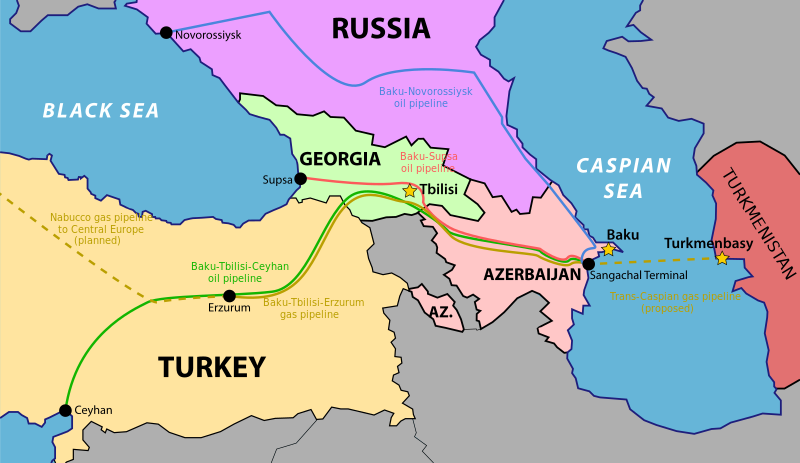
The Associated Press reports that Peres told reporters he spoke with Erdogan after the incident and that "My respect for him didn't change."Turkey is a linchpin in Israeli security strategy in the Middle East and Tel Eviv hopes to link its energy infrastructure to it as well.

12. Emily Wax at the Washington Post reports that due to lobbying by Delhi, Jammu-Kashmir has been taken off the mandate of the Administration's envoy to the Pakistan and Afghanistan, Richard C. Holbrooke. The decision has been received in India as a significant concession--a symptom of warming relations with Washington.
"'I think it is time for us -- having fobbed off Holbrooke--to sit quietly and ask where are we and how do we manage the situation,' said C. Raja Mohan, an Indian strategic analyst who served on India's national security advisory board in 2006."
13. Dexter Filkins at the New York Times reported yesterday that the Karzai administration announced it would postpone Afghani elections until August.
"[The] decision, which appeared to contravene Afghanistan’s Constitution, raised questions about the legitimacy of what could be President Hamid Karzai’s final months in office."
14. The news yesterday reported by the Guardian UK that the Obama Administration was composing a letter to the Supreme Leader of Iran (see Daily Sources 1/29 #9) appears to be false. From the State Department's daily press briefing yesterday:
"QUESTION: ... So is the State Department helping President Obama draft a letter to President Ahmadinejad, and what’s the status of that letter?

MR. WOOD: Look, what I can tell you – and I’ve had a number of conversations this morning about this issue. Nobody from the Administration has tasked anyone within the White House, the State Department, to draft any letter to the Iranians.

Now, there is a review underway, as you know, on Iran, and there are lots of ideas that are being bandied about. But until that review is completed, we’re not going to be able to outline how we’re going to go forward with regard to engaging Iran.

Could somebody in this building at some point have taken it upon his or herself to draft something? You know how large this building is. It’s hard to know. But I can tell you with certainty that no one – not the Secretary, or the President, no one has tasked anybody within the Administration to draft any kind of a letter to Iran."
15. Michael Schwirtz at the New York Times reports that Raul Castro and Dmitry Medvedev signed a "strategic partnership" during Castro's visit to Moscow this week.
"Russian officials promised the delivery of 25,000 tons of grain and a $20 million loan for the development of Cuba’s construction, energy and agriculture sectors."
Cuba's economy is estimated to have contracted by at least 60% following the interruption of subsidies provided by the former Soviet Union after its collapse in 1991. Recently there has been considerable national oil company interest in E&P efforts off the Cuban coast in the Gulf of Mexico.

16. Carlos Camacho at Platts reports that PdVSA announced on Thursday it will certify 235 billion barrels in proven reserves this year.
"PDVSA has been working with Canadian oil accountancy firm Ryder Scott, as well as several national oil companies ... to assess the Orinoco reserves carefully as part of the Magna Reserva plan which began in 2006."
When Magna Carta was launched, PdVSA announced that it thought there are 1 trillion barrels of crude in the Orinoco basin of which 20-30% is recoverable with existing technologies. Orinoco crude, however, is extremely heavy (tar essentially), and needs to be upgraded before it can even be refined. As it stands, the corporations with the most experience and technical competence in that field remain the major international oil companies.

17. Xinhua reports that the Nigerian National Union of Petroleum and Natural Gas Workers (PENGASSAN) have threatened to shut down all of Nigeria's 21 crude oil export terminals by February 11 unless the government cancels a contract with Cobalt Services Nigeria Limited as a pre-shipment agent. The union does not believe the corporation has the requisite qualifications to fulfill its contract and that Nigeria's Minister of Petroleum, Rilwanu Lukman, has a stake in the company.

18. Timothy R. Homan at Bloomberg reports that US GDP contracted by 3.8% in the fourth quarter from the year before. The number is considerably less than what most analysts I have read expected and some expect the numbers to be considerably revised, on the downside. Unadjusted for inflation, the economy shrank by 4.1% for the period considered. Consumer spending led the fall, dropping 3.5% in the fourth quarter after a 3.8% decline in the third. "For all of 2008, the economy expanded 1.3% as a boost from exports and government tax rebates in the first half of the year helped offset the deepening spending slump."

19. Calculated Risk has an analysis of the recent Census Bureau report that new home sales fell at an annual rate of 44.8% in December. The blog provides a helpful graph plotting new home sales since 1963, with past recessions marked in blue:


You should check out their graphs of months of new home supply and and new home inventory. Not good for housing prices and thus not good for household debt to equity ratios. In short, bad.

20. Barry Ritholtz at the Big Picture posts that LPS Applied Analytics announced findings showing that as of December 28% of existing option adjustable rate mortgages are delinquent or in foreclosure. That is up from 23% in September. Ritholtz provides a graph demonstrating the rise in delinquencies and foreclosures as a share of outstanding option ARMs:
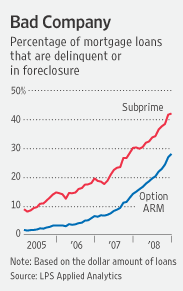


JP Morgan believes that fully 55% of borrowers with option ARMs are underwater, meaning that the nominal debt is more than their value of the home. The post doesn't estimate the share of option ARMs of the overall mortgage market.

21. In a bit of good news, Rebecca Wilder at News N Economics reports that investors are beginning to move money from low yielding treasuries to corporate bonds. She provides a graph illustrating the differential between 10 year treasuries and 10 year treasury inflation-protected securities (or TIPs which automatically adjust payout to inflation, guaranteeing no losses due to inflation):


She notes that the inflation expectation inferred from the differential is rather low given the fundamentals of the government's balance sheet, but that it is a great improvement from what we were seeing before. That said, the market is so volatile it is by no means assured that the indicator indicates long term direction. short and to the point, with several helpful illustrations--worth taking a look.

22. Jesse's Café Américain features a Reuters piece which reports that Goldman Sachs economists think that were the Obama Administration move ahead with the plan to set up a bad bank to absorb the "toxic" assets of the financial sector costs could reach $4 trillion. $4 trillion is about one third of US GDP.
"The figure far exceeds even the most pessimistic estimates of how great the loan losses might be because there is so much uncertainty about default rates, which means the government may need to take on a bigger chunk of bank debt to ease concerns.

Goldman Sachs economists said ideally the public sector would step in to remove the hardest-to-value assets, which would alleviate nagging worries about future losses and hopefully help get lending going again.

'Unfortunately, with an unprecedented meltdown in mortgage credit and a deep recession in the broader economy, there is a great deal of uncertainty about the value of almost every asset,' they wrote in a note to clients."
I'd like to say fat chance. But who knows? That said, it seems to me that there is little reason to absorb these toxic assets if they will cost the government more than purchasing the equity of the banks in question. (As Brad Setser points out in a recent post, $350 billion is enough to purchase most of the equity in the US financial system.) Clearly, much of the reason it is difficult to posit a value for any asset is because the books are cooked. Until we have an honest accounting and rating system--and a transparent market for the derivatives that are the source of the toxicity--there seems little point in buttressing the financial system.

23. Barbara Kiviat at the Curious Capitalist reports that the freelance economy is being hit by the financial crisis as well, predictably enough. She points out, however, that the stimulus bill will do little for the self-employed, as "things like extending unemployment benefits and COBRA health care coverage ... do nothing for the self-employed people out there whose incomes are getting obliterated, too." She provides a graph to illustrate how that sector is being affected:


If the Great Depression is to be our guide, historically the sector is especially vulnerable.

24. I should have linked to this earlier, but better late than never, Putin's exclusive interview with Bloomberg. In it he suggests that he is far too trusting and treats us to his mother's advice: "never complain." I have to note that the notion of a former KGB operative being too trusting is, well, odd in its conceit.

25. Another thing I should have linked to earlier, but better late than never, Obama's interview on al-Arabiya:


Wednesday, January 28, 2009

Daily Sources 1/28

1. Clifford J. Levy at the New York Times reports that a story carried by the Interfax news agency in Russia has sparked speculation that the Kremlin will scrap plans to place new nuclear armed missiles near the Polish border in a response to the initially more friendly approach toward Moscow by the Obama administration. Calls to the ministry of defense yielded no one who would confirm or comment on the speculation. However, ITAR-TASS published the remarks of an unnamed official as saying the news that Russia was pulling back from its new missile plans was nonsense. "Asked about the Interfax report, NATO said through a spokesman that if confirmed, 'It would be a positive step.'" Meanwhile, the Associated Press reports that Cuba's Raul Castro arrived in Moscow today for an eight day visit. (Typically a leader going on an overseas trip for a relatively long period of time--as in more than a few days--is a sign that he is extremely comfortable with their political position at home.)

2. Jane Morecroft at Platts reports the European Commission is expected to announce on Wednesday new plans to invest €3.5 (~$4.6) billion in European Union energy infrastructure over the course of 2009. The monies will be a part of the European Recovery Plan. Meanwhile, Nadia Rodova at Platts reports that Gazprom is considering expanding the planned capacity for the potential South Stream natural gas pipeline from 31 billion cubic meters/year (bcm/y) to 47 bcm/y.


The South stream pipeline plan is being developed in cooperation with ENI.

3. Marcus Hand at Lloyd's List reports that Neptune Orient Lines announced that from he period November 15-December 26 it saw a 24% drop in box container cargo volumes. It is a somewhat unusual time period to report on, but appears to be another confirmation of a general collapse in global trade. The Baltic Dry Index continues to show some sign of recovery, though there wasn't much room left to fall.


Meanwhile, Pete Harrison at Reuters reports that the EU will call for airline and shipping emissions regulations to be included in any successor treaty to Kyoto.

4. Yves Smith at Naked Capitalism reports that the Institute for International Finance has made the first forecast by an official international finance organization of a global economic contraction in 2009. The IIF's forecast now has the global economy contracting by 1.1% this year. Christopher Swann at Bloomberg reports that the IMF has revised downward its prediction for the global economy this year to 0.5% from 2.2% in a new publication.
"The reports signal that write downs and losses at banks totaling $1.1 trillion so far are only half of what’s to come and that contractions may deepen. Losses on that scale would leave banks needing at least $500 billion in fresh capital to restore confidence in their balance sheets ... ."
As Smith noted, official wisdom usually lags market indicators, and this is grim news.

5. Brad Setser at Follow the Money makes the point that large additional demand for sovereign debt and agencies brought on by growing receipts from export-led growth depressed yields on those instruments, thus pushing money looking for safe returns traditionally provided by sovereign debt and agencies elsewhere. Interesting read.

6. Jeff Stein at Spy Talk reports that the EU took the Mujahedin-e Khalq off its list of terrorist organizations on Monday. Having been taken off this list, assets previously frozen in Europe will become available again. This will prove a windfall to the organization, which is a darling of neocons in the US and was a pawn of Saddam Hussein in his struggle with the Islamic Republic of Iran.

7. Asif Ali Zardari, the President of Pakistan, has an opinion piece in the Washington Post where he congratulates Barrack Obama on his election and urges closer cooperation between Islamabad and DC. Zadari, known as Mr. 5% to his countrymen, urges the Administration to
"encourage Congress to pass the Enhanced Partnership with Pakistan Act. The multiyear, $1.5 billion annual commitment to social progress here would signal to our people that this is no longer a relationship of political convenience but, rather, of shared values and goals ...."
Pakistan is facing serious budgetary difficulties, and thus the call for aid is warranted, though Mr. Zadari is probably not the best messenger. He goes on to urge the Administration to focus on assisting the resolution of long-standing disputes with India:
"Much as the Palestinian issue remains the core obstacle to peace in the Middle East, the question of Kashmir must be addressed in some meaningful way to bring stability to this region. We hope that the special envoy will work with India and Pakistan not only to bring a just and reasonable resolution to the issues of Kashmir and Jammu but also to address critical economic and environmental concerns.

The water crisis in Pakistan is directly linked to relations with India. Resolution could prevent an environmental catastrophe in South Asia, but failure to do so could fuel the fires of discontent that lead to extremism and terrorism. We applaud the president's desire to engage our nation and India to defuse the tensions between us."
Zadari concludes with:
"Pakistan and the United States have much in common and should be partners in peace. This moment of crisis is an opportunity to recast our relationship. We are extending our hand in friendship."
Well worth reading.

8. Nazila Fathi and Aalan Cowell at the New York Times report that President Ahmadinejad urged President Obama to apologize to Iran for 60 years of its behavior toward Iran. The Iranian president suggested that the Administration's change could be a change in tactics as opposed to strategic ends, or even just a change in tone.
"'Change means that they should apologize to the Iranian nation and try to make up for their dark background and the crimes they have committed against the Iranian nation,' he said in the speech broadcast live on Iranian television.

The catalog of crimes, Mr. Ahmadinejad said, stretched back decades, beginning with American support for the 1953 coup that ousted the democratically elected government of Mohammed Mossadegh and installed Shah Mohammed Reza Pahlavi, who ruled until he was ousted in the 1979 Islamic revolution."
9. Emmanuel at International Political Economy Zone reports that the US has prevailed in suits in the WTO alleging intellectual property violations by China.
"# China backed down and agreed to a settlement before a case concerning export rebates given to exporters was formally investigated;
# China lost its appeal in the case concerning discrimination against foreign auto parts manufacturers;
# Now, reports suggest the US has chalked up another one against China regarding intellectual property violations. From the US Trade Representative's site -"
This has led to expressions of regret by Beijing. Worth reading.

10. Norimitsu Onishi and Mark McDonald at the New York Times report that Yasukazu Hamada, Japan's minister of defense, announced today that it would send ships to conduct anti-piracy operations off the Somalian littoral.
"'The pirates in the Gulf of Aden off the coast of Somalia pose threats to Japan and the international community and are an issue that should be dealt with swiftly,' Mr. Hamada said, according to Kyodo News. The deployment, which would be considered a police action, is not expected to be as politically sensitive as other missions in recent years."
However, a new law will still need to be passed in order to allow the ships to leave on the mission. It also was not clear from his remarks whether the Japanese ships would coordinate with the international flotilla already in the region on the same mission, though it seem awfully likely. On January 8, Lloyd's List reported that the Aso administration was considering changes to the Japanese Constitution in order to allow action against the Somali pirates. (see Daily Sources 1/8 #14.)

11. Fabiola Moura and Karla Palomo at Bloomberg report that Petrobras Chief Executive Officer Jose Sergio Gabrielli told journalists that the company would put off issuing new debt to finance its production and exploration plans, as the cost of borrowing on the international markets is too expensive. "'The market conditions nowadays in the secondary market for Petrobras are too expensive,' Gabrielli said. 'We don’t need more funds. We can wait as much as we need.'" Bloomberg posted a video of their interview of the CEO in Spanish--not Portuguese--here.

12. Michelle Boorstein at the Washington Post reports that the Pope made his first comments this morning regarding the controversy sparked by his decision to revoke the excommunication of a renegade order of Catholics, one of whom is a holocaust denier. In his remarks, he reiterated "'full and indisputable' solidarity with Jews and repudiating the idea of denying the Holocaust." He also said the Holocaust should "prompt humanity to reflect on the unpredictable power of evil when it conquers the hearts of men." Boorstein provides a fair summary of the controversy and its ideological background.

13. Sophia Kishkovsky at the New York Times reports that the Russian Orthodox Church has elected a new Patriarch, Metropolitan Kirill of Smolensk and Kaliningrad--who had also acted as interim Patriarch when Aleksy II died last month. Kirill was in charge of international affairs under Aleksy II, and has received some criticism for his ties to the Roman Catholic Church.
"As chairman of the external relations department, he oversaw the drafting of the 'social concept' of the Russian Orthodox Church, presented in 2000. It addresses church positions on social issues, including abortion, globalization and poverty. One of its most cited points allows for civil disobedience if the government violates Christian commandments."
Historically, the Russian Orthodox Church has been fairly establishmentarian, the legitimization of civil disobedience is a fairly significant move in a new direction for the church, if I understand correctly.

14. Justin Lahart at Real Time Economics reports that the conventional wisdom is that it is "all but assured" that the Fed will cut the federal funds rate to 0-0.25% in the FOMC meeting today. In a related post, Phil Izzo, also of Real Time Economics points out that since 2000 money supply growth has been negatively correlated to other economic indicators:


(Chart courtesy of the Wall Street Journal.)

15. Richard Cowan at Reuters reports that the US House of Representatives looks likely to pass President Obama's $825 billion stimulus plan today.

16. The EIA reported today that crude oil stocks for the week ended January 23 built by a whopping 6.2 million barrels to 338.9 million barrels. The amount in storage is getting close to the largest commercial stock holdings on record since 1998, which was 352.6 million barrels in July 2006. (1998 was the last time there was a super contango similar to the current strip.) That said, the historical data suggest that there should still be some storage capacity available. (And reportedly some crude is being offloaded from VLCCs which were chartered for storage purposes.)


According to a survey by Bloomberg, most analysts on Wall Street had expected a 2.8 million barrel build in crude stocks, a large build, but half of what in fact took place. Gasoline stocks fell by 100 kb, remain at the top of the historical range, and against analyst expectations of a 1.75 million barrel build. Distillate stocks also fell by 1 million barrels, but remain at the highest levels seen in recent history and well above the average. The draw down was consistent with analysts expectations of a 1.13 million barrel draw. Taken in isolation, this news should put downward pressure on the price of crude. However, at the time of this writing, the price of sweet light crude on NYMEX hasn't budget much from yesterday's close.

Meanwhile, Maher Chmaytelli reports that Abdalla el-Badri, the Secretary General of OPEC, is seeking rules to limit the number of participants in the US markets who purchase crude without any intention of using it--or "speculators.""'The speculators are still there,' el-Badri told reporters today as he arrived in Davos, Switzerland, where he is attending this week’s World Economic Forum. 'Before, they were playing a supply shortage, now they are playing too much supply. They are delaying a recovery in prices.'" And Edward Morse, managing director and chief economist at LCM Commodities and founder of the Energy Intelligence group of publications, has a piece exploring the validity of WTI as a benchmark for global sweet light crude prices at the Financial Times.
"The problem resides in the physical market of the mid-continent of the US, specifically at Cushing, Oklahoma, an obscure but crucial oil gathering hub and the pricing point for financially traded WTI on the Nymex. Often viewed as the global crude oil reference point, Cushing is really a regional, parochial crude market tenuously linked to international markets by bottlenecked pipelines from the Gulf coast. Cushing pulls oil from the Gulf coast, Canada or the mid-continent but, unless regional refiners process WTI, it becomes landlocked and decouples from global markets. As inventories build, WTI's price must fall until it sells, even if that means trucking oil south.

This physical situation is not new but the problem has worsened as Canada's tar sands production has grown nearly 500,000 b/d since 2002 and should rise another 200,000 b/d this year, most of it headed towards mid-continent, where refining capacity has fallen by 200,000 b/d. A new pipeline will soon increase flows into the region by another 100,000 b/d. WTI will continue to disconnect from world markets until new pipeline connections create a physical escape valve for oil to flow from the mid-continent to the Gulf coast.

Some believe the problem stems from market manipulation but it is the twin facts of higher storage capacity in the mid-continent and the bottleneck that provide a temptation for companies to trade around the storage, building it in weak markets and emptying it in strong markets. Weak markets discount spot sold oil to deferred oil, further encouraging storage and weakening WTI's spot price; the reverse happens when spot prices are at a premium to deferred prices, depleting storage rapidly.

Although what's happening to prices might suggest that some traders are manipulating the market, the more compelling explanation is that, because a peculiar inland market sets WTI's price, the incentive emerges to trade the WTI below its "waterborne" level in weak markets and above it in tight markets."
These are all fair points, but, in practice, as I understand it, the majority of term crude contracts actually use dated Brent or BWAVE as the reference price, not CL/WTI.

Monday, December 29, 2008

Daily Sources 12/29

1. Griff Witte at the Washington Post reports that Isreal continued bombing--for the third day--the Gaza strip on Monday as Hamas fired another round of missiles into neighboring Israeli villages. On NBC's "Meet the Press," Israeli Foreign Minister Tzipi Livni said that Tel Eviv did not intend to reoccupy the strip. Hamas leader Ismail Haniyeh vowed to never retreat in televised comments Sunday.
"The UN Security Council expressed 'serious concern' Sunday over the situation in Gaza and called for 'an immediate halt to all violence." Pope Benedict XVI also urged an end to the violence, saying 'the native land of Jesus cannot continue to be witness to so much bloodshed, repeating itself without end.'"
Israeli officials indicated that they expect military operations to last weeks at the very least. Iran's Supreme Leader, Ayatollah Ali Khamenei, on Sunday called for all Muslims to fight on behalf of the Gazans, saying that anyone who dies in this effort would be received in heaven as a martyr. More credibly, however, as Juan Cole reports, in the eyes of the Shi'a Muslim community, Grand Ayatollah Ali Sistani of Narjaf, Iraq, called on Muslims to support the Gazans with more than lip service. PressTV, an Iranian government program, translated Sistani's statement as follows:
"Condemning what is going on in Gaza and supporting our brothers only with words is meaningless, considering the big tragedy they are facing ... Arab and Islamic nations need to take a decisive stance, now more than ever, to end these ongoing aggressions and to break the unjust siege imposed on the brave people of Gaza ... ."
In the meantime, hospitals and other fundamental services and commodities--such as food--in Gaza are in short supply or being overwhelmed, given that it has been subject to an Israeli blockade for some time now. Sudarsan Raghavan and Islam Abdel Kareem at the Washington Post report that humanitarian aid groups called on Israel to allow supplies through the borders Sunday, saying that medical and food supplies are dangerously short. Both Post articles give good summaries of the situation.

2. David Rosenberg at Bloomberg reports that the Bank of Isreal reduced its benchmark interest rate by 0.75% (or 75 basis points) to 1.75%.
"The rate reduction 'will help strengthen the economy’s ability to cope with the implications of the global economic crisis,' the bank said in its statement. It added that the Gaza fighting increases 'geopolitical uncertainty' in Israel and has the potential 'to impact negatively' on the economy."
3. Robert Birsel at Reuters reports that the chairman of Pakistan's joint chiefs of staff committee, General Tariq Majid, told the visiting Chinese Vice Foreign Minister He Yafei today that New Delhi and Islamabad needed to institute reciprocal de-escalation measures and to avoid "belligerent posturing." Military officials from the two countries held an "unscheduled hotline call" this weekend as the Chinese minister arrived in Pakistan. In a related story, Rama Lakshmi at the Washington Post reports that no clear winner emerged from the election results for Jammu-Kashmir released on Sunday. The National Conference and Congress parties were the largest winners, taking 45 out of 87 constituencies combined. Indian Prime Minister Manmohan Singh, of the ruling Congress Party, welcomed the results, saying,
"I think the large turnout in Kashmir is a vote for democracy and national integration. We are all happy at the turnout, and who wins or loses is a secondary issue."
4. Jeffrey Gettleman at the New York Times reports that the President of Somalia resigned today, blaming the international community for not doing enough to shore up his government.
"Under Somalia’s transitional charter, the speaker of the Parliament will take over the presidency for one month until the Parliament elects a new president. Several moderate Islamists could be candidates.

Over the weekend, fighting broke out between moderate and radical factions in the first obvious sign of tensions within Somalia’s Islamist community.

On Sunday, a powerful, newly militarized Islamist group declared a “holy war” against the more militant Islamist factions, and it seems to have the muscle to back up its threats. The group, the Ahlu-Sunna Wal-Jama, killed more than 10 fighters from a rival Islamist faction that was known as one of Somalia’s toughest in fighting over the weekend."
Worth reading in full.

5. Brad Setser at Follow the Money has a post entitled "the collapse of financial globalization" today which shows that private inflows and outflows of capital to and from the United States have collapsed to near zero in the last few months. But, Setser shows that private inflows and outflows were closely tied to each other, and did not in fact represent an increase in net financing--of US debt. Evidently:
"I think we now more or less know that the strong increase in gross capital inflows and outflows after 2004 (gross inflows and outflows basically doubled from late 2004 to mid 2007) was tied to the expansion of the shadow banking system."
Which means that central banks have been for the past five years responsible for financing the bulk of the US deficit. Outside of Japan, the current account surplus nations were building up their reserves and sovereign wealth funds. Well worth reading in full.

6. David Oakley at the Financial Times reports that emerging markets may find it difficult to find financing as the developed economies are expected to offer as much as $3 trillion in sovereign debt in 2009.
"Mr. [Nick] Chamie[, head of emerging markets research at RBC Capital Markets,] said: 'Governments or companies that are highly rated will still be able to attract buyers, but the very large amount of issuance almost certainly means they will have to pay higher interest rates to get those investors.'"
7. Denis Maternovsky at Bloomberg reports that Bank Rossi has allowed the ruble to depreciate 1.7% against a currency basket of dollars and euros. This is the twelfth time in seven weeks that Bank Rossi has not acted to stop the ruble's fall against the basket peg, which is 55% in dollars and 45% in euros.
"Bank Rossii urged the country’s banks today to avoid buying foreign currencies in the first quarter of 2009 or risk losing access to central bank loans, Chairman Sergey Ignatiev said in a letter to banks that was posted on the central bank’s Web site today. Russian banks shouldn’t increase their holdings of 'foreign currency assets' from the average level between Aug. 1 and Oct. 25, Ignatiev said."
8. Jeffrey Ball at the blog Environmental Capital reports that Russia asked for the following, outside of permanent observer status, at OPEC's meeting in Oran, Algeria, on December 17:
a) Crude benchmarks outside of Brent and WTI,
b) A discussion of whether it would be advantageous to discard oil pricing in dollars in favor of pricing it to a basket of currencies, and
c) New futures trading markets outside of Europe and the US.
Without going too deeply into it, these are basically just whitewash remarks. There have been plenty efforts to establish other crude benchmarks, mostly which have failed because of lack of volume. (You need investors outside of commercial entities to get involved to make the futures market workable.) There are other futures trading markets outside of Europe and the US which trade crude futures, but they are unpopular for reasons of the opacity surrounding the underlying crude future and other issues of risk. Pricing oil in a basket of currencies would only serve to make price discovery that much more complicated a business--and the currency markets already price in the cost of oil.

However, the report may be evidence that market data is a primary objective of Russia at OPEC. Moscow has indicated it will wait to see whether the cartel members make good on their cuts before instituting any of their own.

9. Henry Meyer at Bloomberg reports that Russia and the Ukraine failed to reach an agreement in their natural gas dispute today, with two days left before the threatened cut off of supply by Moscow--supply to pipelines that carry a considerable portion of Europe's natural gas requirement. The Ukraine owes Moscow $1.662 billion for supplies delivered in November and December, and $450 million in fines for late payments.
"'It isn’t clear who is in charge and who is the right counterpart for Russia to talk to,' said Masha Lipman, an analyst at the Carnegie Moscow Center research group in Moscow. 'Ukraine is in political turmoil and in the midst of a serious economic crisis.'"
Still, Putin told reporters today in Moscow that the Ukraine does not want to pay for the gas. Meanwhile, as Stephen Bierman and Torrey Clark at Bloomberg report, Gazprom is assuring its European customers that it will "completely fulfill its obligations."

10. Wang Ying at Bloomberg reports that Zhang Guobao, the head of China's National Energy Administration wrote in the People's Daily today that it will encourage companies to fill their available oil storage facilities in the low price environment. "Companies will be encouraged to utilize their spare oil-storage capacity while state and commercial reserves of other 'strategic resources' will be set up ...."

11. Charles Lee at Platts reports that the South Korean Energy Ministry announced that the country will spend 6.9 trillion won (~$5.4 billion) over the next 14 years to expand its natural gas storage and distribution infrastructure. Under the ministry's plan, South Korea will transform the Donghae offshore gas field into a storage facility with capacity of 1.7 million metric tonnes of LNG by 2017. Work on the transformation should begin by 2014. The Donghae terminal would increase the country's storage capacity to 24.3% of expected annual demand in 2017.
"In September, state-run Korea Gas Corp. signed a $90 billion deal with Russia's gas giant Gazprom to import 10 Bcm of natural gas annually from Russia's Far East for 30 years beginning 2015 via a pipeline.

The undersea pipeline would reach the Samcheok terminal and the offshore Donghae terminal, the ministry said."
The plan includes increasing the total length of South Korea's natural gas pipelines from 2,739 km to 3,893 km by 2013, which should make natural gas available to 78% of all South Koreans as the infrastructure will be extended into rural areas.

12. Mriganka Jaipuriyar at Platts reports that oil product demand in South Korea was down 12% year over year in November.
"Demand for fuel oil saw the sharpest year on year slump in November, falling 30.4% from 7.1 million barrels to 4.94 million barrels. Gasoil demand fell 11.3% to 11.57 million barrels; naphtha was down 13% to 23.28 million barrels; and LPG was down 10.6% to 7.69 million barrels, KNOC's data showed."
Refining output, meanwhile, was down 6.3%. South Korea imports much more crude than it uses, exporting surplus products refined into the region.

13. Matthew Walter and Daniel Cancel at Bloomberg report that Venezuela's central bank estimates the economy grew by 4.9% in 2008, the slowest rate seen in five years. Oil accounted for 93% of the country's exports according to the bank.

14. Stephan Kueffner at Bloomberg reports that Ecuador's Social Security Institute will purchase another $500 million in government bonds. Ecuador stopped making payments on its sovereign debt on December 12. The Social Security Institute also purchased $700 million in government bonds on December 24. The Social Security Institute is barred by law from investing more than 50% of its money in the public sector and has about $1.2 billion in cash. The government plans to sell an additional $1.5 billion in bonds on the domestic market. (see Daily Sources 12/16 #3 for links on first reporting on the default, social security purchases, and potential de-dollarization of Ecuador as a result.)

15. Seth Mydans and Mark McDonald at the New York Times reports that protests have resumed in Thailand. This time it is the supporters of the party recently ousted from power--former Prime Minster Thaksin Shinawatra's organization. Protesters have surrounded the Parliament, forcing a delay in the legislature's opening under a new government. The pro-Thaksin "red shirts" are calling for the dissolution of the new government and new elections.

16. Ralph Atkins of the Financial Times reports on the paper's survey which showed that a large majority of Europeans, and 48% of Americans, polled believe that the euro will overtake the dollar in "global importance" by 2014. What this means is anyone's guess, I suppose.

17. William Tucker has an op ed at the Wall Street Journal which actually calls the next bubble--alternative energy. While I think his prognostication may well be a tad early, I think his argument for nuclear power is basically the right one.

18. Glenn Kessler on Saturday had a very interesting story in the Washington Post about how in October the International Accounting Standards Board changed its accounting rules to allow European financial institutions to rearrange their books, and fooling the markets into thinking their bottom lines were better than they are. Well worth reading in full, though I still have no idea why anyone would put any faith into any accounting corporation's estimation outside of the absence of any other alternative, at this stage. (h/t naked capitalism)

Monday, December 1, 2008

Daily Sources 12/1

1. Ambrose Evans-Pritchard at the UK Telegraph writes that a Citibank report asserts that traders are paying close attention to rumors coming out of China suggesting that Beijing is considering "boosting its gold reserves from 600 tonnes to nearer 4,000 tonnes to diversify away from paper currencies." The report predicts that gold will go to $2,000/ounce, arguing that the economic crisis is so deep and widespread, and the remedial action required of governments so radical, that we are either in for an inflation shock once economies begin to recover or for a period of instability, unrest, and international conflict. Both would traditionally be good for the price of gold. (The Telegraph is not known for the sobriety of its commentary.) In a related story, Judy Chen and Belinda Cao at Bloomberg report that today the yen fell 0.7%
"after the People's Bank of China set the daily reference rate at the weakest level since August, prompting speculation policy makers favor a depreciating currency to spur demand for Chinese goods. ... The yuan has now lost all the gains it made since the [the US and China] last held trade talks in mid June, after it advanced 6.6 percent in the first half of 2008."
Maureen Fan at the Washington Post reports that Chinese President Hu Jintao told a politburo meeting this weekend that "'External demand has obviously weakened, and China's traditional competitive advantage is being gradually weakened' as international demand is reduced." Dow Jones reports that the China Federation of Logistics & Purchasing said that China's Purchasing Managers Index fell to 38.8 in November from 44.6 in October. A reading above 50 indicates growth, anything below indicates contraction.

2. Roland Jackson at the AFP reports that OPEC decided in their meeting in Cairo on the 29th to maintain the current production quotas. The organization is looking at data to see to what extent various members are exporting at quota. Reuters reports that OPEC President Chakib Khelil told the media that the commercial inventories of the OECD will likely reach 59 days of supply if OPEC doesn't take action in the December 17 meeting. "Latest estimates are that stocks are at 55-56 days of cover and several OPEC ministers have said they would like to cut inventories to 52 days."

On Saturday, Saudi King Abdullah said in an interview published in a Kuwaiti paper that "We think that a fair price of oil is $75/b." In the meantime, Reuters reports that Riyadh has shelved plans to restart the Dammam oil field, which was expected to produce 75 kb/d and 100 million cubic feet of natural gas a day. The contract was to be awarded in the second quarter of 2009. The AFP reported that Oil Minister Gholam Hossein Nozari told journalists on Sunday: "There is oversupply of two million barrels per day on the market ...." Ladane Nasseri and Ayesha Daya at Bloomberg report that today in Tehran Secretary General Abdalla el-Badri told the media that "Everybody is in favor of a cut in the Algeria meeting - we are all gearing toward a cut."

El-Badri also said,
"We told Russia that OPEC will take action to lower output, but the burden is heavy. Mexico and Norway have a decline by themselves, but Russia promised to join OPEC in trying to solve the problem."
If Russia does decide to coordinate a production, export, or effective supply cut to the oil markets, it will represent a tectonic shift in their global strategy. Since the Soviet Union began piping natural gas to Europe in the 1980s, Moscow has geared its energy policy to integrating itself with Europe and supplying its full productive capacity. China, another large consumer, also appears to be the beneficiary of that policy. Were Russia to decide its interests were more closely bound to the producing nations than to the consuming nations, a number of long-held policies might be revisited.

In a related story, Platts reports that Moscow has given the green light for a pipeline to be built connecting the Druzhba (or "friendship") pipeline to the Baltic Sea port of Ust-Luga. Ust-Luga is a port to the west of St. Petersburg in the Luga Bay. The map below gives an idea of the path of the Druzhba pipeline and where the Baltic Pipline System 2 would be placed, though it wouldn't terminate in Primorsk, but to the south west. The pipeline would have a 1 mb/d capacity upon completion. By late 2012 it would be expected to have 600 kb/d in capacity.


Of course, exporting via pipeline to Europe means that the crude can go nowhere else. Via tanker it could have any destination outside of Russia. In another related story, Sam Fletcher at the Oil & Gas Journal writes that GCES has a report that Moscow, at the urging of Prime Minister Putin, is in the process of reconfiguring their crude export tariff system. Under the new system the export duty would be determined by the 30 day average of the price for Urals crude ending in the middle of the month prior to implementation, as opposed to the current system which determines the tariff by averaging the price seen in the previous two months every two months. Though this system would certainly be an improvement, it does not on the face of it appear to be flexible enough to prevent financial losses to either the government or the companies given current volatility.

3. Nadim Kawach at Business 24/7 reported Sunday that Saudi foreign assets grew by about SR48 billion ($12.8 billion) in October, but grew at a rate of about 30% less than that seen in previous months. The Saudi Arabian Monetary Agency announced yesterday that the foreign assets held by the kingdom's central bank stood at SR1.679 trillion (~$448 billion) at the end of October.

4. Alex Nicholson at Bloomberg reports that VTB Bank Europe published its Purchasing Managers Index for Russia fell to 39.8, its lowest level, from 46.4 in October. These indices mostly measure market sentiment.

5. Jan Cienski at the Financial Times reports that the Polish Prime Minister, Donald Tusk, told him that Warsaw has no intention of accumulating huge debt in order to combat the financial crisis. Tusk indicated that Poland had not been deeply affected by the crisis so far. His comments align Poland with Berlin in regards to the stimulus package proposed by the European Commission last week. Warsaw on Sunday announced a stimulus package of 91 billion zlotys (~ $30.6 billion), but apparently very little of those monies represent new, previously un-budgeted, spending. Well worth reading in full. Simon Kennedy at Bloomberg reports today that "[Manufacturing indexes] for Poland, Hungary, Sweden and the Czech Republic ... showed some of the steepest-ever declines as recession struck their main export markets." If I remember correctly, the zloty has been under pressure as investors have repatriated their equity. (From June 1 to November 30, the zloty lost 26.8% of its interbank value versus the dollar.)

6. Eurointelligence reports that German Chancellor Angela Merkel secured the backing of her party for her policy of delaying any tax cuts until after the election in September 2009. Finance Minister Peer Steinbruck told Der Spiegel that he thought the crisis should not be countered with government money. The papers in Germany favor the government approach. Bertrand Benoit at the Financial Times reports that Merkel told her party conference that "Germany will keep analyzing the situation. We will always keep all our options open. I repeat: all options."

7. Pradeep Rajan at Platts writes that Gibson Shipbrokers released a report showing that Shell and Koch have taken out time charters of very large crude carriers mostly for storage purposes. Both Shell and Koch have long term contracts with producers, and given the current market, much of that oil, if refined, would put further downward pressure on refined products prices. They also may be inclined to capture profits afforded by the current steep contango in crude oil prices.

8. RIA Novosti reports that the Saudi Ambassador to Kenya told reporters that the Sirius Star will be returned to Saudi Arabia within two days. He also said that no ransom would be paid. Jeffrey Gettleman at the New York Times reports that the head of a Kenyan maritime association charged with mediating between the pirates who captured the Ukrainian freighter lugging 33 T-72 battle tanks, grenade launchers and anti-aircraft guns told the media that the pirates have agreed on a ransom. The ship is expected to be released today or tomorrow and the final ransom is estimated at between $3-5 million. In the meantime, Oliver Smith at the UK Telegraph reports that Somali pirates attacked a luxury cruise liner in the Gulf of Aden yesterday. The liner possesses a "long-range acoustic device" which apparently was used to drive off the attackers.

9. Sudarsan Raghavan and Saad Sarhan at the Washington Post report that Grand Ayatollah Ali Sistani expressed on Saturday concern about the status of forces agreement the Iraqi Parliament ratified earlier in the week. Sistani thought that much of the language in the pact was a "mystery" and that he could discern no guarantee of a return of sovereignty to Baghdad.

10. Rama Lakshmi at the Washington Post reports that anger, quite understandably, is building over the attacks in Mumbai, leading to the resignation of the Indian home minister. Efforts to console the families of victims by government representatives have been met with snubs. Preliminary investigations by Indian authorities lead them to believe that the gunmen were trained in Pakistan and came to Mumbai via boats on the Arabian Sea. This has led a senior representative of the Hindu nationalist BJP to say,
"'It is time for unilateral action against the training camps in Pakistan. If the U.S. can go into Afghanistan to punish the Taliban and chase Osama bin Laden, why should India hesitate?'"
Condoleeza Rice is being sent to New Delhi on Wednesday to try and help calm tensions. An FBI team has been sent to help investigate the scene. Pakistani representatives deny any link to the terrorists, but Candace Rondeaux and Craig Whitlock report in the Washington Post today that the Lashkar-i-Taiba, the Kashmiri terrorist organization currently thought responsible for the shootings, has been operating openly in Pakistan as Jamaat-ud-Dawa.
"Jamaat-ud-Dawa was instrumental in delivering aid to victims of the 2005 earthquake in Kashmir. ... The US government classified Jamaat-ud-Dawa as a terrorist group in April 2006, calling it an 'alias' of Lashkar. But the Pakistani government has not reciprocated and allows the network to raise money, run religious schools and offer social-service programs. It hosts an extensive Web site, with versions in English and in Urdu."
11. Christopher Toothaker at the Associated Press reported yesterday that Hugo Chavez is asking supporters to petition for a national referendum to abolish term limits in the Venezuelan Constitution.
"'Last year, when we lost the referendum, I said I should accept the majority's decision,' the former paratroop commander told a crowd of red-clad government supporters at a rally in Caracas. But now, he added, 'I say you were right: Chavez will not go.'"
12. Tim Johnston at the Washington Post reports that thousands of government supporters rallied in Bangkok this Sunday. Pro-government supporters are wearing red shirts. Anti-government: yellow. So far there has been little violence between the two factions, but there is growing anxiety about the possibility of it. Given that the anti-government protesters (or members of PAD) allegedly number about 20,000, it seems odd that they have managed to shut down so many arteries of the city for so long. Considering that the pro-government supporters are urban, they should outnumber the mostly rural PAD. However, Johnston notes, "The government has only tenuous control over the army and police, which seem to be following their own agenda, allowing the [anti-government] PAD to break the law with impunity."

13. Lauren Etter at the Wall Street Journal reports that Brazil's agricultural sector is slowing down as farmers are having a hard time finding the financing they need for fertilizer, pesticide, and seed. Brazilian farmers get most of their financing from multinational agricultural firms like Cargill, as opposed to from local banks. Evidently these firms are being tighter with credit as they try to conserve cash. Worth reading in full.

14. The Associated Press reports that the Fed is widely expected to cut the federal funds rate by 50 basis points (0.5%) in their next meeting scheduled for December 15-16.

15. Timothy R. Homan at Bloomberg reports that the Institute for Supply Management’s US factory index dropped to 36.2 in November, the lowest level seen since 1982. "[T]he UK’s Chartered Institute of Purchasing and Supply’s factory index was at 34.4, the least since the survey began in January 1992."

16. Emelia Sithole-Matarise at Reuters reports that the spread on 10 year US Treasury credit default swaps has widened to 68.4 basis points (0.684%) today. Evidently the notion of a US default is slowly gaining some credence in the market. (I remain confused, though, as to how these instruments would actually provide any insurance given that the CDS is denominated in dollars .)

Friday, November 14, 2008

Daily Sources 11/14

1. Anthony Faiola and Glenn Kessler at the Washington Post report that in advance of the G20 summit Saturday:
"The United States, European countries, Japan and major developing nations are also close to a deal to create an "early warning system" to detect weaknesses in the global financial system before they reach epic proportions, according to diplomatic sources, who spoke on the condition of anonymity because plans were still being worked out."
Worth reading in full.

2. Eurointelligence reports that Der Spiegel is running the story today that the Merkel Administration appears to be behind a report authored by a group led by Otmar Issing with a variety of proposals to be put to the G20 summit in Washington, DC, tomorrow. The Issing report calls for the establishment of an EU-wide regulator for large cross-country banks--similar to a proposal by Sarkozy which was recently rejected by Merkel. The report also proposes that all financial organizations of any kind as well as all financial instruments be subject to regulatory scrutiny. "They favour a global credit register, which the report says would be very easy to establish, given that the necessary data are all available at national level." The Issing report also calls for more cooperation between the central banks and private financial institutions globally.

3. Reuters reports that French President Nicolas Sarkozy told a news conference today that he had won Moscow's support for a proposed European Union-Russia security conference, possibly via the OSCE, in the middle of 2009. He urged Russia and the United States to embargo any further developments regarding missile shields or missile deployments until the conference has had a chance to work. In a related story, Alan Cullison at the Wall Street Journal reports that Belarussian President Alexander Lukashenko is in talks with Moscow about hosting Iksander missiles--short range missiles which can carry nuclear payloads--in Belarus. Interestingly, no country of the former Soviet Union has followed Moscow's lead in recognizing the independence of South Ossetia and Abkhazia--including Belarus, the one country most likely to do so.

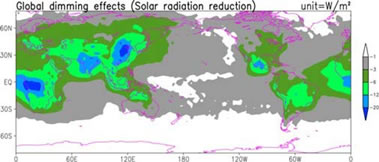
4. Andrew Jacobs at the New York Times reported yesterday that the UN released a report that day suggesting that the pollution caused by the industrialization of Southeast Asia has markedly reduced the amount of sunlight reaching the ground in the region, contributing to weather extremes and reduced harvests.
"The brownish haze, sometimes in a layer more than a mile thick and clearly visible from airplanes, stretches from the Arabian Peninsula to the Yellow Sea. In the spring, it sweeps past North and South Korea and Japan. Sometimes the cloud drifts as far east as California."
I am not especially qualified to speak to global warming issues, but this report seems like very serious news to me--it sounds quite similar to the hypothesized causes of the Little Ice Age. The geopolitical consequences of such events are sobering, to say the least.


(image h/t informed comment)

5. Henry Sanderson at the Associated Press reports that Zhang Xiaoqiang, Vice Chairman of China's National Development and Reform Commission, has announced that the country will set as a strategic priority domestic production of 95% of their grain consumption through 2020. China is a net importer of grains and recent volatility in basic food costs has alarmed Beijing. The US is a major grain exporter. The recent decision to allow the transfer of land-use rights in China should be seen as an effort to increase productivity in the agricultural sector on national security grounds. Edward Wong at the New York Times has a story on unrest being caused by factory shut downs in China. Worth reading.

6. Platts reports that Rosneft President Sergei Bogdanchikov has told Russian media that the company plans to build a refinery near the Pacific port of Nakhodka in the second half of 2009. There have been competing reports about the project's possibilities. Some reports has a 400 kb/d refinery. Some had 200 kb/d. Some had a petrochemical project. The refinery would sell products into the Asian market. (Presumably primarily China.)

7. Nadia Rodova at Platts reports that
"Kazakhstan's state-owned KazMunaiGaz and Azerbaijan's state-run Socar have signed an agreement on main principles of establishing the Trans-Caspian
project
to transport Kazakh crude to international markets via the Baku-Tbilisi-Ceyhan pipeline, KazMunaiGaz said Friday.

According to an agreement signed by Kazakhstan and Azerbaijan in August 2007, a pipeline will be built to transport crude from Iskene in western Kazakhstan to the Caspian Sea port of Kuryk, from where it will be loaded on tankers for delivery to terminals on the Azeri coast of the Caspian Sea."
Project cost estimations have run at about $3 billion. Kazakhstan plans for the system to carry about 1.12 mb/d of its crude at its peak.


8. Grant Smith and Mark Shenk at Bloomberg surveyed a number of oil analysts and found that most thought that OPEC will cut production by 1 million barrels or more in the upcoming extraordinary meeting in Cairo November 29. Ministers from Iran and Algeria have indicated to reporters since the meeting was announced that they thought cuts were necessary. The following table was adapted from Platts and gives the inferred OPEC production quotas established in the October 24 meeting.


Eric Watkins at the Oil & Gas Journal reports that the EIA released its estimate the OPEC's production was down in October, to wit:
"EIA's estimated figures for OPEC members in October 2008 includes one member with higher production, namely Angola with 1.91 million b/d, up 130,000 b/d. Holding steady production levels are Algeria with 1.44 million b/d; Ecuador, 510,000 b/d; Iran, 3.9 million b/d; Iraq, 2.32 million b/d; Kuwait, 2.6 million b/d; Libya, 1.75 million b/d; UAE, 2.6 million b/d. Down in production are Saudi Arabia, 9.3 million b/d, down 100,000 b/d; Venezuela, 2.38 million b/d, down 10,000 b/d; Nigeria, 1.96 million b/d, down 20,000 b/d; Indonesia, 850,000 b/d, down 10,000 b/d; and Qatar, 800,000 b/d, down 70,000 b/d."
Indonesia has since left OPEC.

9. Reuters reports that Jammu-Kashmir will hold a multi-phase, month and a half long, referendum on New Delhi's right to rule the region starting Monday. In the run up to the election, New Delhi has jailed much of the separatist leadership. Still, they believe that a strong turn-out will provide them with the mandate to rule, given calls for boycotts by the opposition. What's different appears to be that this time separatists have rejected violence as means of enforcing a voter boycott.

10. Takeo Kumagai at Platts reports that International Energy Agency Executive Director Nobuo Tanaka said today that $60/b is sufficient for Middle Eastern oil producing nations to make a return on new oil production investments. This is significant all net additional oil capacity has come from OPEC in the last five years, and most of that from the Middle East. It is also significant because refiners should be able to produce gasoline profitably at $60/b without the price raising to about $4/gallon, which appears to be about the point where real demand destruction sets in.

11. John Kingston at the Platts' blog The Barrel reports that according to Philip Verleger steep contangos such as the one we are currently experiencing generally mean that we are out of storage. "'One can find very few instances where forward curves have been in such steep contango in the last 22 years,' he wrote." However, as the EIA This Week in Petroleum reports suggest,
"a speaker at a meeting of the Energy Forum in New York earlier this week said he believes that tanks are not full, and the credit crunch is the reason for that; there aren't enough players who want to tie up cash to take advantage of a one-year or even four-year spread, no matter how appealing it may look. That's why it appears that tanks still have room to hold more oil."
Kingston believes that this may well mean that stocks of crude will build over the whole of the fourth quarter world wide, when ordinarily the world draws them down to meet the building heating demands of winter.

12. Sustainable Business News reports that construction of the National Ignition Facility at Lawrence Livermore National Laboratory is set to be completed this coming summer. "The lab's first ignition attempt is set for 2010, with a goal of reaching nuclear fusion in 2011." Nuclear fusion would solve most of the nuclear waste and fuel problems of nuclear power generation. As the article states, it would be a silver bullet.

13. Cordell Eddings and Sandra Hernandez at Bloomberg report that an auction of US bonds yesterday did not go as well as expected. Yields for all long-term bonds rose significantly, while the yield on the one month bill was 0.05%, near the record low. In a related story, Germany's 10 year bond auction flopped.

14. Matthew Saltmarsh at the New York Times reports that the European Union's statistical agency published data today establishing that the Euro zone has entered a recession. GDP for the region as a whole contracted by 0.2% in the third quarter from the second. Of its members, Germany and Italy experienced the largest delines, with 0.5% GDP contractions in both. "Compared with the same quarter a year earlier, G.D.P. grew 0.7 percent in the 15-member euro zone and 0.8 percent for the 27 countries of the European Union."

15. Shobhana Chandra at Bloomberg reports that the Commerce Department published its report on retail sales today which showed that they dropped in October by 2.8%--the most recorded since the Department started keeping track in 1992. Justin Fox at the Curious Capitalist points out that if you take out retail gasoline and diesel sales from the picture, you get a 1.5% decline. That suggests that nearly half of the decline seen in retails sales is simply coming from the fall in the price of oil, and thus gasoline. Car sales account for more than a third of the decline or 1%, confirming all the horrible news about the automobile sector recently. Daniel Gross in Slate pointed out yesterday that were the big three to stop production completely next year that over 3 million jobs would be lost. Even were they to continue, the general consensus appears to be that all three need to shed capacity by 40%! (Anyone who knows me knows my opinion of the general consensus, but still, wow!)

16. Andrew Taylor at the Financial Times reports that yesterday British officials announced that UK unemployment had risen to 1.82 million, the most seen since 1997. "City economists forecast a total of 2.7m by 2010, the last date Labour could hold a general election." In a related story, James Thompson at the UK Independent reports that data released by Rightmove, an online UK realtor, suggest that the housing market there is much worse than the traditional data sources would suggest. While large mortgage lenders are reporting a 15% decline from peak housing prices, Rightmove is seeing a 20-25% decline. Their data suggests that 15% of their real estate agent members have been forced out of business in the last two quarters. (h/t Yves Smith nakedcapitalism)

Wednesday, October 22, 2008

Open Sources 10/22

1. William Branigin at the Washington Post report that President Bush will host a global summit November 15th to discuss the reformation of the international financial system. G-20 members will be invited as well as the officials from the IMF, the World Bank, U.N. Secretary General Ban Ki-moon, and the chairman of the Financial Stability Forum.

2. Katrin Bennhold at the New York Times reports that President Sarkozy of France urged European leaders to establish sovereign wealth funds in order to prevent European companies from being purchased via foreign capital when they are at their lowest market value. This is kind of an odd position given Sarkozy being at the forefront of calls for an international response to the financial crisis. What this underscores is that Sarkozy, in a way consistent with a history of Gaullism, is a European-ist, and not particularly an internationalist. Germany opposed a pan-European response to the financial crisis on what appeared to be nationalist grounds--that is, they didn't want German banks to fall as other European ones soldiered on--and opposes this suggestion as well, apparently because Berlin just doesn't want to let France look like its leading the European charge. Wall Street Journal Europe's editorial board also came out against the idea today.

3. Ann Scott Tyson and Philip P. Pan of the Washington Post report that Gen. Nikolai Makarov, head of the Russian general staff, told reporters in Moscow following his meeting with his American counterpart in Helsinki that:
"We agreed that on fundamental military issues, we will periodically hold dialogues by phone and, when necessary, at personal meetings that I think will be held on a systemic and routine basis."
This followed the first visit ever by an American Chair of the Chiefs of Staff in Serbia, which perhaps should be seen as the first move in a ... much needed ... "listening tour." The establishment of routine and systemic meetings between Russian and US military establishment chiefs is a very welcome development. In a related story, the Washington Post's Thom Shanker reports that US Chairman of the Joint Chiefs of Staff Adm. Mike Mullen said the NATO was considering increasing the number of military exercises in the Baltic. Adm. Mullen said it was a response to Russia's military action in Georgia. (I suspect it might also serve as a response to military exercises off the coast of Venezuela.)

4. Eric Watkins at the Oil and Gas Journal reports that Russia and Japan have signed an accord to cooperate on oil and gas development.
"The document stressed that the Japanese government promotes participation of Japanese companies in energy projects in Russia, including the establishment of gas processing and gas chemical production facilities in eastern Russia.

The two sides also hailed the start of joint exploration for oil in eastern Siberia, which they said would help to drive the East Siberia-Pacific Ocean pipeline."
Japan has been encouraging Moscow to build a pipeline from the Caspian, essentially, to the Pacific Ocean for some time. Tokyo offered $14 billion to help build the structure, but Russia seemed to have bet on China's market at that time. Chris Buckley has a related story at Reuters, that Chinese Premier Web Jiabao will visit Moscow next weeks in an attempt to jump start plans to build pipelines to deliver Russian natural gas to China. Russia has been reluctant to divert gas away from its main customer--and region with which it wants most to integrate--Europe. (It also has plans to ship LNG to the US East Coast from gas fields in the Barents Sea.)

The Wall Street Journal reports that Iran, Qatar, and Russia agreed to form a natural gas cartel yesterday in a meeting at Tehran. Together the three countries control about 60% of the world's natural gas reserves. Natural gas is relatively difficult to sell at spot, and tends to be sold on very long term contracts given the immense capital requirements for building the requisite infrastructure. Thus there is a bit of a shrug in the oil and gas world's response (pace the response in the papers, which is sure to be shrill.) That said, the Associated Press reports that the European Commission has said it will have to rethink it's energy security policy if the three countries go ahead with plans for the gas cartel. There may be some bite to this threat as some of Europe had abandoned nuclear power and is in the process of reconsidering it. (Natural gas is burned for power generation in Europe--it isn't really used as a transportation fuel.) The most notable countries reconsidering nuclear are Germany and Italy.

Though Iran has huge natural gas reserves, how it will participate in a gas cartel for the near term, at least, is a bit of a puzzle. Just now it is barely exporting to any country, and, in fact, is importing from Turkmenistan for power generation needs. As per Siamak Adibi of FACTS Global Energy, South Pars--the largest gas field in the world (shared with Qatar)--phase 6 is scheduled to come on line this winter, and phases 7-8 next year. (The field is being developed over the course of 24 phases, the completion of phase 6 is already two years late.) But the natural gas from these phases, 3.6 bscf/d's worth, is all slated to be reinjected into oil fields in order to boost the crude oil production from it. Phases 9-10 are slated for first gas this month and December, if they are not flowing at that time, Abidi fears there will be a heating crisis in Iran this winter as there will not be enough gas to meet the energy generation needs of the country.

Also today, Amie Ferris-Rotman and Vladimir Soldatkin at Reuters report that Russian First Deputy Prime Minister in charge of oil, Igor Sechin, told an industry conference that Russia was considering building a large oil reserve in order to serve as a second swing producer. It's an interesting idea guaranteed to produce headlines. But the critical item is this:
"OPEC Secretary General Abdullah al-Badri, who arrived in Moscow on Tuesday for a two-day trip, met with Russian President Dmitry Medvedev to discuss the exchange of market data."
The thing which bedevils the oil markets the most, of course, is the horrible data. Whether or not OPEC is honest even within itself, and thus likely to be with Russia, really is inconsequential if they are simply more honest with each other, and thus with Russia, than with the rest of the world.

5. China Chon at the Wall Street Journal reports on Iraqi Ministry of Finance officials' struggles to retool the 2009 budget on the back of lower oil prices. The budget was based on a $80/b assumption for oil price, and, as you know, oil is now below that. Evidently the budget already envisioned running at a deficit as the government would only have broken even had the price of oil averaged $111/b over the course of 2009. Running a deficit may be difficult for Baghdad, but one likely consequence of the fall in price is that small operators who have secured concessions from the Kurdistan Regional Government will find financing much more difficult to secure from international financial sources. If Kurdish areas become insecure as a result of conflict, as is possible in areas like the province of Diyala, the security costs might bring up the cost of production beyond what the price of oil would bear. Given that Baghdad has an interest--and believes the Kurds have violated the Constitution by selling concessions--in asserting control over all oil resources in the Kurdish regions, Baghdad may decide to incite conflicts in the north. Larger companies will be reluctant to bail out smaller entities engaged in the Kurdish regions as they will want to maintain good relations with Baghdad and thus continue to have a shot at much more lucrative potential concessions.

6. Emad Mekay at Bloomberg reports that Shokri Ghanem, chairman of Libya's National Oil Corp, told reporters a cut of 1 million barrels will not be sufficient and that "We are in agreement that the market is flooded and oversupplied." On the other hand, Felix Onuah at Reuters reports that Nigerian Oil Minister Odein Ajumogobia told reporters it was not in Nigeria's interest to cut oil production as it needed the revenues. If, as CGES has suggested, all countries but Saudi Arabia have made the cuts that their budgets can take already, then it really is up to Riyadh. Carola Hoyos reported in the Financial Times that the only primary signal the market has had to go on
are anonymous comments published this week by Al-Hayat, the Saudi-owned paper, which appear to reflect Riyadh's more conservative thinking.

The paper quoted an unnamed source expressing "doubt that demand for oil will adjust [downwards] requiring a substantial cut in production", adding that it was still uncertain whether even 500,000-1m b/d needed to be cut.
AP reports that Venezuela's budget for 2009 is assuming an oil price of $60/b and inflation of 15%/annum.
"The budget predicts next year's economic growth will be 6 per cent and inflation 15 per cent, despite the fact inflation was estimated at 36 per cent in Caracas in September."
Budget difficulties make it difficult for the major price hawks, ie Iran and Venezuela (and Iraq), to cut supply as a bloc within OPEC, because it would cut their market share, and thus net revenues given the time it will take for prices to recover. Indeed, generally the ability of price hawks in OPEC to cut independently as opposed to allowing Riyadh to act has been their perennial decision to include high oil price assumptions in their budgets.

7. Faiza Saleh Ambah and Candace Rondeaux at the Washington Post report that Saudi Arabia hosted a meeting between Taliban and Afghan officials in Mecca last month. Saudi Foreign Minister Saud al-Faisal made the revelation after a meeting with EU Foreign Policy Chief Javier Solana in Jiddah on Tuesday. The talks centered on the deteriorating situation in Afghanistan and Pakistan.
"Abdul Salam Zaeef, the former Taliban ambassador to Pakistan, attended the meeting and said there was no discussion of peace talks. Zaeef said Karzai's government missed an opportunity when it failed to engage the Taliban in talks three years ago. Since then, he said, the Taliban has grown stronger. 'Before, the Taliban had no hope that the American rule would collapse here,' he said. 'Now, they have hope.'"
The talks included Nawaz Sharif, former Prime Minister of Pakistan and head of the largest opposition bloc in the country's Parliament. Sharif is an advocate of negotiations with the Taliban.

It is critical that Sharif withdrew the support of his party--the Pakistan Muslim League (Nawaz)--for President Zadari because Zadari refuses to reinstate former Chief Justice Chaudhry. The summary dismissal of Chaudhry was the key rallying point in the lawyers' revolt in that country, which is credited with the fall of Musharraf. I wrote an analysis of the potential benefits of supporting the lawyer revolt, and the further development of the rule of law therefore, in Pakistan previously, should you be curious. It is my view that it is a disaster for the US if their positions are conflated with the political forces in Islamabad which flout the rule of law, especially given the obvious potency of both the lawyer revolt there and sympathy for tribal sentiment in the north.

8. Emily Wax of the Washington Post reports that the trade route connecting Jammu-Kashmir with Pakistan, and thus to the most convenient port city of Kashmir, was opened after 61 years of being shut. It is only open 2 days a week and just 21 products are allowed to be transported via the route, but surely it is a step in the right direction. Especially after the commissioning of the dam in Jammu-Kashmir earlier this month has exacerbated the fuel crisis in Pakistan.

9. Mongolia Web News has the story that India is looking to source uranium from Mongolia.
"Currently, India’s nuclear power plants are only running at half their capacity due to a shortage of uranium-based fuel."
10. Re: jboss's suggestion yesterday on Follow the Money, Winnie Lee at Platts reports that Chinese oil companies PetroChina and CNPC are interested in purchasing foreign oil companies hit by the financial crisis. Angolan assets owned by Marathon were mentioned.

11. Peter Fritsch at the Wall Street Journal reports that new oil from Africa may be too expensive to be produced at current prices. The article mentions that Angolan production has gone down, and sources the country's oil minister as stating that this was a result of an accident at an offshore block. Maybe, but we knew as early as September 16th that this was going to take place--I suspect compliance with the OPEC directive at the September 9th meeting. But the article cites many other issues--exogenous from the technical issues of the geology--most especially security, which has been an endemic issue throughout the continent. Some new oil is inland, which requires the construction of pipelines, which are especially expensive to build and maintain ... providing for their security is notoriously difficult (see all the speculation regarding the BTC recently.) Also, in the absence of a strong national state structure, oil wealth tends to exacerbate difficulties in securing the King's Peace further. Fritsch mentions a case in Uganda where the E&P company, UK's Tullow Oil, analysis has the project--which would require a 750 mile pipeline--profitable only at $80/b or more. (h/t Gregor.us)

12. Chris Giles and Neil Dennis at the Financial Times report that the Governor of the Bank of England, Mervyn King, said that the UK was entering a recession likely to be prolonged. The rate setting committee of the Bank of England also announced it had voted unanimously to reduce the benchmark lending rate by 50 basis points to 4.5%. Mr. King said, “The age of innocence – when banks lent to each other unsecured for three months or longer at only a small premium to expected policy rates – will not quickly, if ever, return.”

13. Lisa Baertlein at Reuters reports that an analysis released by Wal-Mart shows that purchases are spiking around the time shoppers receive their paychecks. This appears to be the case even for baby-formula, which suggests that increasing numbers of people are finding it hard to pay for food. Eduardo Castro-Wright, Wal-Mart's CEO, said that the company's most recent poll of shoppers found that personal financial security was the number one issue for the vast majority--80%. (h/t Yves Smith, Naked Capitalism)

14. Meena Thiruvengadam at Real Time Economics reports that the Federal Reserve will increase the interest rate it will pay on funds deposited at the bank in excess of the deposit insurance requirement from 0.75% below the Federal Funds Rate to 0.35% below. The passage of the emergency financial stabilization bill allowed the Fed to pay interest on excess deposits immediately. Apparently this was ahead of schedule, as the Fed was slated to begin doing so come 2011. The linked post includes the full statement from the Fed. Neil Irwin at the Washington Post reports that yesterday the Fed established a program which will make up to $540 billion available to buy assets from money market funds so as to prevent the funds from experiencing any cash crunches and thus being short squeezed.

15. Eric Dash at the New York Times reports that Wachovia reported a $23.9 billion loss today.

16. The EIA reported that stocks of crude oil were up 3.2 million barrels, somewhat above the historical average. Stocks of gasoline were up 2.7 million barrels and distillate were up 2.2 million barrels, both now at about the bottom of the historical average. Analysts expected a 2.9 million barrel build in crude stocks, according to Platts' survey Tuesday. Taken in isolation, this would put downward pressure on prices.