"In announcing the ban, which is in force from Aug. 15 to Dec. 31, Prime Minister Vladimir V. Putin said that Russia had sufficient stockpiles of grain but that blocking exports was an appropriate response to the worst drought in decades.
'We need to prevent a rise in domestic food prices, we need to preserve the number of cattle and build up reserves for the next year,' he said during a televised cabinet meeting, according to The Associated Press. 'As the saying goes: reserves don’t make your pocket heavy.'"
3. PEMEX REDUCES ACTIVITIES IN NORTHERN MEXICO DUE TO DRUG VIOLENCE
"Michael McNamara, Vice President, Research and Analysis for SpendingPulse, observes 'Overall, retail sales continued to tread water, following the pattern set with June's sales when consumers demonstrated a reluctance to make larger purchases, and instead, traded down. Particularly, we are noticing some weakness in industry sectors that rely on higher priced ticket items such as furniture and discretionary areas such as luxury and jewelry. We are also seeing this pattern echoed in the restaurant business, where we have seen consumers shift from full-service restaurants and particularly fine dining, to limited-service and quick-service outlets.'"
Note that prices are in the range where they begin to affect driving behavior in the US, or $2.50/g. They are just short of $3.00/g where prices will have a strong effect on driving behavior.
2. PBOC'S MONETARY REPORT INDICATES EASY CREDIT POLICY TO CONTINUE, MINISTRY OF HUMAN RESOURCES WARNS EMPLOYMENT SITUATION GRAVE, ELECTRICITY DATA SHOWS STEEP FALLS IN CONSUMPTION, BANKS LEND LESS IN JULY CONTRA PBOC REPORT, AND BP SAYS GDP DATA MORE OR LESS TRUSTWORTHY
"'China's economy is now in a critical period of stabilization and recovery, and maintaining stable and rapid economic growth is still the most important task we face ... . Although the general trend of stabilization in the [global] economy has been basically established, the process of recovery may be slow and tortuous.'
With global demand for China's exports still weak, a solid rebound depends on domestic consumption and investment, the central bank said. Chinese companies may be more willing to ramp up production now that inventories have been reduced.
Sentiment among private-sector businesses remains weak, it said, and consumers' worries about future income could crimp spending. 'The foundation of the economic recovery is not yet stable,' it said, echoing other agencies' recent comments."
"China Tuesday warned of a 'grave' situation in the jobs market with millions of graduates and migrant workers yet to find work as companies continue to struggle with the effects of the global slump...
'China's current employment situation is still grave and the pressure for job creation remains large,' said Wang Yadong, a senior official at the Ministry of Human Resources and Social Security's employment section."
She also notes that:
"First-half electricity use by small and medium-sized enterprises fell almost 50% year-on-year, as these companies were more exposed to the economic downturn, the National Bureau of Statistics said on August 3.
SMEs saw power consumption plunge 48.9% year-on-year, against a 5.9% industry-wide drop."
And in contrast to the affirmation of the People's Bank of China in its quarterly report mentioned above:
"China's big state-owned commercial banks extended around 168 billion yuan worth of new loans in July, down sharply from the 497 billion issued in June, banking sources told Caijing on August 4."
And she picks up on the story in the FT yesterday that if you add up the output numbers of the various provinces, they are 10% more than overall national output as reported by Beijing. And to muddy the waters further, Sheetal Nasta at Platts reports that the chief Asia economist of BP, Chi Zhang, said at an event at the British Chamber of Commerce in Shanghai Wednesday that
"'in general, [the] data reflects economic growth reality,' given that China is 'very manufacturing intensive and there has been a lot of industrialization and an urbanization process is going on.'
While he admitted the Chinese have been likely 'taking advantage of low energy prices,' he retreated from the notion that government stockpiling was inflating prices.
Speaking of the oil price spike in 2008, he said data from BP's annual statistical review, issued earlier this year, shows that the 'big spike' in (price) coincided with related economic activity, primarily supply-side constraints due to investment shortfalls, geopolitical issues and few technological breakthroughs."
The continuing incredulity regarding official output growth numbers in China was driven by the disparity between the electricity consumption numbers, which are no longer published--see Daily Sources 6/8 #6--later reinforced by skepticism expressed in the May report by the International Energy Agency which suggested that oil demand would have been stronger than reported if it were to reconcile with the GDP numbers and suggested the possibility that "Real GDP data aren’t accurate and shouldn’t be taken at face value"--see Daily Sources 5/14 #2.
3. GERMAN FINANCE MINISTER SAYS FINANCIAL SECTOR RETURNING TO 'CASINO CAPITALISM', ECB MAINTAINS BENCHMARK RATE AND INDICATES THERE WILL BE NO ADDT'L STIMULUS
"Rates are 'appropriate' and policy makers are 'satisfied' with their asset-purchase program and measures to improve the flow of credit, he said."
"The ECB currently predicts the euro-region economy will contract about 4.6% this year and 0.3% in 2010. Inflation will average about 0.3% this year and 1% in 2010. The bank aims to keep inflation just below 2%."
4. BANK OF ENGLAND TO EXPAND QUANTITATIVE EASING, LONDON TO REPLACE SHORT HAUL AVIATION WITH HIGH SPEED RAIL
"The increase required the bank to get special permission from the UK Treasury, which had previously capped the program at £150 billion.
The expansion of the program suggests policy makers are still worried about the long term outlook for the UK economy despite a recent spate of positive data pointing to recoveries in house prices, manufacturing and services."
"While banks' reserves of cash have more than tripled since the central bank launched the program back in March, one broad measure of lending in the economy--M4 money supply excluding certain financial intermediaries--has hardly budged. In the second quarter, the measure was up just 3.1% from the same period a year earlier, the weakest expansion since 1999.
Beyond that, rising unemployment and peoples' efforts to pare down heavy debt loads are likely to weigh on consumer spending, by far the largest driver of demand in the UK economy. As of May, the UK unemployment rate stood at 7.6%, the highest level in 12 years."
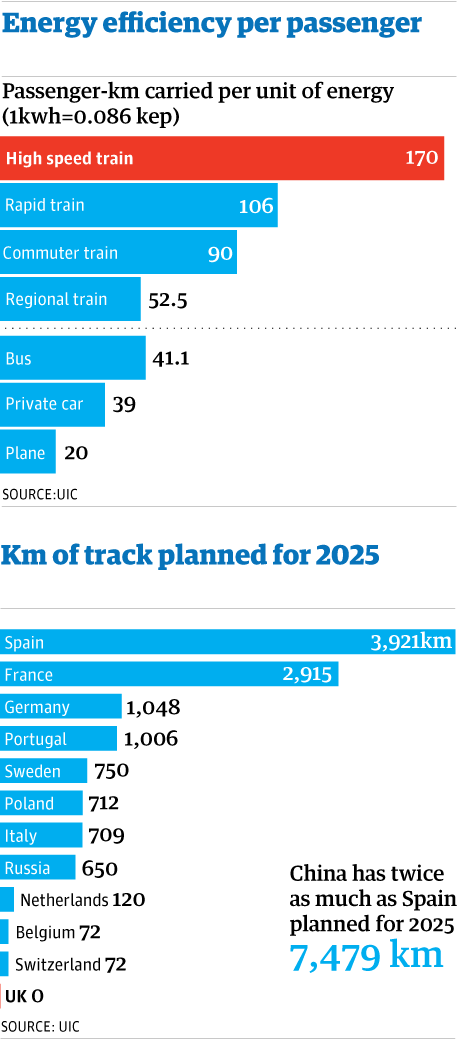
"The transport secretary, Lord Adonis, said switching 46 million domestic air passengers a year to a multibillion-pound north-south rail line was 'manifestly in the public interest'. Marking a government shift against aviation, Adonis added that rail journeys should be preferred to plane trips.
'For reasons of carbon reduction and wider environmental benefits, it is manifestly in the public interest that we systematically replace short-haul aviation with high-speed rail. But we would have to have, of course, the high-speed network before we can do it,' he said."
5. GEORGIAN AND RUSSIAN OFFICIALS TRY TO CALM WORRIES ABOUT NEW FIGHTING BREAKING OUT, SAAKASHVILI LAYS BLAME FOR 2008 CONFLICT ON MOSCOW IN OP ED
"The deputy chief of Russia's general staff says Georgia is too weak after the war that devastated its military and caused an estimated $1 billion damage to the struggling country.
Georgia's national security adviser, however, says the danger of new fighting appears low because of 'preventive diplomacy' and because Russia knows a new war would undermine its influence among neighbors and rapprochement with the West."
"Russian provocations have not stopped; snipers in Russian-controlled areas have killed 28 Georgian policemen. In recent days, Moscow has engaged in a series of provocative acts and statements, echoing its prelude to last year's invasion. Even as the world watches, Moscow has vetoed monitoring missions from the United Nations and the Organization for Security and Cooperation in Europe. In violation of the cease-fire, Russia also denies European Union monitors access to the occupied territories.
Despite all this, and contrary to some expectations, Georgia has rebounded. Our democratic institutions are growing. Foreign investors are returning. The world should recognize that the kind of behavior Russia exhibited last August threatens not only Georgia but our entire region."
6. TURKISH PM MEETS WITH HEAD OF LARGEST TURKISH KURD PARTY, ANKARA SIGNS ON TO SOUTH STREAM
"[M]any analysts say the new Kurdish opening is qualitatively different from anything that came before.
'For the first time ever, Turkish state institutions are working in synch to solve the problem,' said Henri Barkey, a Turkish expert at the Carnegie Endowment for International Peace, a Washington-based think tank.
The main catalyst for Turkey's new sense of urgency is Washington's announcement that it plans to pull its soldiers out of Iraq, Turkey's southern neighbor, by 2011.
The planned withdrawal has speeded up a rapprochement between Turkey and Iraqi Kurds, whose relations have been blighted for years by the PKK's use of Iraqi Kurdish mountains for its military bases."
"'There is an economic side to the rapprochement. "Turkey wants to use northern Iraqi gas for Nabucco,' says Bayram Bozyel, a Turkish Kurdish politician, referring to a pipeline project that the US and EU hope will help break a Russian stranglehold on European natural-gas supplies. 'And the [Iraqi] Kurds want to pump gas north.' That would be risky in the midst of a guerrilla war. The PKK claimed responsibility last year for a bomb attack on a major oil pipeline that passes through the same region."
"'The South Stream pipeline is a much needed project that is particularly important in the context of ensuring the energy security of the whole of Europe and the development of a broad range of ties between Russia and Turkey,' Putin said. 'Our negotiations showed that we can find solutions, together with the Turkish leadership, that open the way to new, large-scale energy projects.'"
7. IRAN LOWERS OFFICIAL PRICE OF OIL SOLD TO ASIA, QATAR LOWERS OFFICIAL PRICE OF OIL, FOLLOWING SAUDI ARAMCO REDUCTION ON PRICE TO ASIA
"[NIOC] will set Iranian Light for September at 9 cents a barrel above the average of Persian Gulf benchmarks Oman and Dubai grades, based on a quarterly formula tied to prices set by Saudi Arabian Oil Co. The premium will be down $1.75, or 95%, from August and will be the smallest in seven months."
"The state-owned company cut its July price of Qatar Land crude oil to $65.50/b, down $5.60 from June, the official Qatar News Agency said on its Web site. The July price of Qatar Marine grade was reduced by $5.38 to $64.72/b. The cuts are the first in five months."
Earlier this week, Saudi Aramco cut its official selling price of Arab Light into Asia--see Daily Sources 8/3 #6. (The middle eastern national oil companies have different official prices for different regions of the world.)
8. DUBAI'S PROPERTY PRICE COLLAPSE SHARPEST IN WORLD
"Dubai prices have dropped 32% in the last year and 40% in the last quarter, according to the latest edition of the Knight Frank Global House Price Index, released today.
Along with Dubai, Latvia (36%) and Singapore (23.8%) saw the largest declines since the first quarter of 2008, the property firm reports."
9. MEND LEADER INDICATES MOST NIGER DELTA MILITANTS WANT TO TAKE ADVANTAGE OF AMNESTY PROGRAM WHICH OFFICIALLY BEGAN TODAY; ANALYSTS DOUBT DIRE NIGERIAN PRODUCTION NUMBERS
"A government panel set up last year recommended raising the share of revenue going to states in the oil region to 25% from the current 13%. MEND wants the oil region to control 100% of oil revenue and pay a tax to the central government, according to the group’s spokesman, Jomo Gbomo.
'Whatever the people are demanding is also what I want,' Okah said, declining to commit to a figure.
The MEND leader said militant commanders in the oil region are divided between those who want money in exchange for weapons, as offered by the government, and those who want their political demands met.
'Personally I want a situation where weapons will be surrendered without cash,' Okah said. 'Because people can submit their weapons and buy new ones.'"
"Officials said gunmen who accept amnesty would be given 65,000 naira ($433; £255) a month for food and living expenses during the rehabilitation program, which runs from 6 August to 4 October.
But the main rebel group in the region, the Movement for the Emancipation of the Niger Delta (MEND), has not yet said it will take part in the amnesty.
'When we choose to disarm, it will be done freely, knowing that the reason for our uprising which is the emancipation of the Niger Delta from neglect and injustice has been achieved,' the group said in statement e-mailed to the AFP news agency.
The group, which called a temporary ceasefire last month after one of its leaders was freed from jail, is in talks with senior officials about the terms of any possible amnesty."
"On Wednesday afternoon, a Nigerian oil executive speaking in private snorted at the idea that production could be so low, suggesting 1.6m b/d was more accurate. Stewart Williams, principal sub-Saharan Africa analyst at energy consultancy Wood Mackenzie, puts production at 1.5m b/d to 1.6m b/d.
Why the discrepancy? Analysts with a cynical streak (easily acquired in a country so riddled with corruption and electoral violence) remark that it is in the state’s interest to create a sense of crisis as it tries to force through a comprehensive reform of the oil sector.
That the bill has merits--including the promise of greater transparency and restructuring the hopelessly ineffective state company--misses the point. Oil companies and the delta’s influential governors, who stand to get less cash as a result, are united in opposition to it.
The oil companies, too, are making data scarce at the moment. Like the government, they may have an interest in uncertainty as the negotiations continue."
10. BRAZILIAN SENATE'S INVESTIGATION INTO PETROBRAS TAX EVASION AND CORRUPTION CHARGES BEGIN TODAY, LULA INDICATES THAT HE BACKS FULL CONTROL OF PRE-SALT FOR PETROBRAS
"An 11-member Senate committee, led by a member of [Brazilian President Luiz Inacio Lula da Silva's], Workers’ Party, is investigating the allegations. [CEO Jose Sergio] Gabrielli told Petrobras’s 74,000 employees in a July 14 letter that the company fired three employees after an internal investigation, and cooperated with the prosecutor’s office and federal police, into the bidding process for oil platforms.
Gabrielli, Chief Financial Officer Almir Barbassa and Haroldo Lima, the head of Brazil’s petroleum regulator, are among officials the committee in charge of the probe will invite to testify, according to a list senators handed to reporters during a session of the probe committee held today.
The officials will not be legally summoned or required to speak under oath, and the hearings will be arranged at their convenience, Senator Romero Juca said today in Brasilia. Juca, the head of the government coalition in the Senate, is responsible for leading the probe and writing its reports. Fired Petrobras executives will not be called to testify, he said."
"Since Lula first took office in January 2003, lawmakers have set up 25 committees to investigate everything from health insurance plans to piracy of industrial goods and corruption, according to CAC Consultoria Politica, a Brasilia-based political consultancy. While some ended without any conclusion, a 2005 investigation into allegations the Workers’ Party paid bribes to legislators in exchange for votes in Congress led to the resignation of Lula’s chief of staff, Jose Dirceu."
"'We're going to buy several battalions of Russian tanks,' Chavez said ...
Chavez's government has already bought more than $4 billion worth of Russian arms since 2005, including helicopters, fighter jets and Kalashnikov assault rifles.
The socialist leader called Colombia's plan to host more US soldiers a 'hostile act' and a 'true threat' to Venezuela and its leftist allies. He warned that a possible US buildup could lead to the 'start of a war in South America,' but gave no indication that Venezuela's military is mobilizing in preparation for any conflict."
"Cuban ex-President Fidel Castro supported Chavez in a column published Wednesday on the Cubadebate Web site, saying that 'Venezuela isn't arming itself against the sister nation of Colombia, it's arming itself against the (US) empire.'
'The threat ... is directed at all the countries' of South America, Castro wrote."
"Chávez said ... that Colombia’s increased cooperation with the US to fight guerrillas and drugs is part of the US’s long- term plan to invade Venezuela and seize the Orinoco Belt."
"Ecopetrol was one of 19 companies that paid $2 million apiece for detailed information on the Carabobo block in the Orinoco Belt."
12. 24% OF OWNER-OCCUPIED HOMES UNDER WATER IN US, PERSONAL SAVINGS RATE INCREASE AHISTORICAL IN FACE OF REDUCED FEDERAL TAX RECEIPTS, AND AS UNEMPLOYMENT LOOKS SET TO CONTINUE TO RISE
"That number rises to 32% when looking at the share of homeowners with mortgages that don’t have equity left in their homes.
Overall, 16 million homeowners are 'upside-down' on their mortgages, up from 10 million, or 15% of owner-occupied homes, one year ago.
Nearly 10% of owner-occupied homes now have mortgage debt with loan-to-value ratios of at least 125%, and roughly half of those homes have mortgage debt with loan-to-value ratios of 150% or more."
"This is the most up-to-date macroeconomic information out there, as most of the reports are 1-2 months old at the time of release. And the implication of this DTS is: that personal income and spending, which just released this week for June ... are likely to be weak into July."
"Services providers are busy redesigning their strategies for coping with the ongoing economic crisis. To take the appropriate decisions, they need predictable future market access in services. Meanwhile, as many services are still highly protected, opening services markets would deliver large benefits to consumers impoverished by the crisis."
"Is there any appetite for services negotiations now? Yes. The July 2008 Signalling Conference held under the aegis of the Doha Round showed a substantial number of participants expressing strong interests in most services, offers and requests in mode 3 in many services (foreign direct investment), and even a willingness to include mode 4 (movement of natural persons, by far the most contentious part of any service negotiations) in some services.
Such a willingness to negotiate appears particularly strong in three services: business, communication, and distribution services. Together, these three services in the EC, US, and top eight countries represent almost one-third of the world GDP, a size so huge that negotiators could work on deals within as well as between these services sectors. The three services face high levels of regulatory constraints, ensuring huge economic gains in case of market opening. Finally, negotiations are made easier by the fact that business and communication services are resilient to the current crisis, while the inflationist pressures to come should make governments eager to have distribution services as competitive as possible.
Last but not least, the foreign policy dimension of the whole endeavour is crucial for Europe. Many US decision-makers are looking to Asia for good reasons (Bergsten, 2009) while Europeans have not yet fully grasped the growing importance of Asia nor captured its attention, as illustrated by the disappointing June 2009 Asia Europe Ministerial meeting on energy."
2. EUROZONE UNEMPLOYMENT UP TO 9.4% IN JUNE, CONSUMER PRICES FELL AT ANNUAL RATE OF 0.6%
"The European Union’s statistics office also said on Friday that inflation in the euro area had moved much further into negative territory than forecast in July, with consumer prices falling at an annualized rate of 0.6%.
The drop raised worries about deflation and heightened expectations that the European Central Bank will maintain its loose monetary policy."
"Assistant Secretary of State Philip Gordon told US lawmakers Tuesday during the House International Relations Committee hearing that the United States would consider Russian membership in NATO."
Gordon said:
"[I]f Russia meets the criteria and can contribute to common security, and there is a consensus in the alliance, it shouldn't be excluded."
Bendersky points out that some in Eastern Europe might be cold to the idea. Given that membership would freeze, so to speak, the current borders by militarily integrating the members, it may arguably provide superior protection than the current relationship. It certainly would make adventurism a much more complicated affair.
4. NIPPON OIL IN TALKS WITH SK ENERGY TO BUILD NEW REFINERY IN VIETNAM
"'We’ve been in talks with SK and have agreed on the need for participating in a refining project' in Asia, Nippon Oil Chairman Fumiaki Watari said in an interview in Tokyo yesterday. Vietnam is a potential location for the first venture between Japan and South Korea’s biggest refiners, and the plant may process 200-300 kb/d of crude oil, he said.
Seo Young Joon, a spokesman at SK Energy in Seoul, said he couldn’t immediately comment. Idemitsu Kosan Co., Japan’s second-largest refiner, and Mitsui Chemicals Inc. plan to spend $5.8 billion to build a 200 kb/d plant in Vietnam."
"'We know that about 25% of Japan’s refining capacity will be unnecessary in the next five years.' Watari said."
Vietnam inaugurated its first refinery this year with capacity of 148 kb/d and which is poised to supply about 30% of Vietnam's product requirement--see Daily Sources 7/28 #8. The EIA projects its total petroleum demand was about 288 kb/d in 2008. Hanoi projects GDP will grow by 5.5% in 2009, adding perhaps as much as 10 kb/d in demand this year.
5. INDIAN FIELD BEGINNING PRODUCTION TO UP INDIAN CRUDE PRODUCTION BY 25%
"'We are operationally ready to commence oil production in August,' Cairn India CEO Rahul Dhir said. In its various filings to the government, Cairn has indicated that production will quickly touch 30 kb/d by the end of third quarter this year and reach a plateau of 175 kb/d (8.75 million tonnes a year) in 2011. Goldman Sachs, however, has pegged the peak output at 190 kb/d (9.5 million tonnes a year)."
Using EIA projections, Indian crude production in 2008 was 693.7 kb/d. Its imports came in at 2.056 mb/d, so the Mangla field at 175 kb/d would represent about 8.5% of its import requirement. However, some of those imports are reexported as products, for example to the US--Reliance is set to restart its old Jamnagar refinery shortly, bringing another 660,000 kb/d of nameplate capacity on line. It is expected to double Reliance gasoline exports to about 170 kb/d.
6. PAKISTANI SUPREME COURT REJECTS PETITION TO TRY MUSHARRAF ON TREASON CHARGES
"The court had asked him to explain his decision in 2007 to invoke emergency rule and suspend the constitution.
It has now ruled that parliament is the place to debate Mr Musharraf's actions.
Chief Justice Iftikhar Mohammed Chaudhry rejected a petition to launch a treason case against the former president.
Mr Chaudhry was himself removed from his position as a result of President Musharraf's imposition of emergency rule, but was reinstated after he resigned in August."
For more on the lawyers revolution in Pakistan, I wrote a long piece on it early last year--see The Law in Pakistan.
7. 40 DAY CYCLE OF PROTESTS IN IRAN MIRROR 1979 REVOLUTION, PRESS REPORTS OF CHINESE-IRAN MOU ON SOUTH AZADEGAN FIELD DENIED BY CNPC, US SENATE TO BAR THOSE SELLING PETROLEUM PRODUCTS TO IRAN FROM PARTICIPATION IN SPR
"However, a CNPC manager based in Beijing told Reuters today that the MoU was actually signed earlier this year and there has been no real breakthrough in talks with the oil ministry since then.
'The MoU is not a binding contract, and we are still negotiating with NIOC about specific details,' the CNPC source, who declined to be named because he was not authorized to speak to the media, told the news agency."
"At least three companies fit that bill, Glencore, Shell Trading and Vitol, according to the Foundation for Defense of Democracies. In January, the three were named by DOE as suppliers to the SPR for deliveries this year. While it could not be immediately confirmed whether any of the three currently sell refined products to Iran, all of them are known active traders in oil markets throughout the world."
In June, Reliance--a private oil company in India--halted gasoline exports to Iran, apparently because they expected difficulties for their exports to the US--see Daily Sources 6/4 #8. The UAE provides about 80% of Iranian product requirements, IIRC.
8. BAHRAIN CENTRAL BANK SEIZES TWO BANKS HELD BY SAUDI CONGLOMERATES
"The central bank said in a statement on Thursday it had assumed control of Awal Bank, owned by Saad Group and The International Banking Corporation, a unit of the Ahmad Hamad Algosaibi and Brothers conglomerate.
The central bank said an investigation at both banks had shown a substantial shortfall in assets compared with their liabilities and that it would appoint an external administrator to identify creditors' claims and manage the distribution of the remaining assets."
9. NIGERIAN PRESIDENT ENTERS TALKS WITH 6 NIGER DELTA GOVERNORS TO PREVENT THREATENED BOYCOTT OF MILITANT AMNESTY PLAN
"The governors of southern Akwa Ibom, Bayelsa, Edo, Delta, Cross River and Rivers states last week said they would pull back their involvement in the amnesty deal for Delta militants in protest of the federal government's plan to relocate the petroleum training college in Delta state to northern city of Kaduna.
'There is a serious misunderstanding about some of the issues raised, but the president is very concerned and has been talking with the Niger Delta governors individually,' Presidential spokesman Olusegun Adeniyi in a statement. 'The president has respect for the Niger Delta region. He did not approach the crisis in the area as a Northerner.'
The governors also had grouse against a provision in the oil sector reform bill, which they said takes away royalties due Delta communities."
Earlier this week, the Nigerian Joint Revolutionary Council--an umbrella group of militants in the Niger Delta which includes MEND--warned a company linked to a current oil minister to stop operations to express their displeasure with the plan to locate the petroleum university in the north--see Daily Sources 7/28 #9.
10. US ENVOY FOR SUDAN RECOMMENDS TAKING KHARTOUM OF TERRORIST LIST
"'There is no evidence in our intelligence community that supports [Sudan] being on the state sponsors of terrorism list,' Gration said. 'It's a political decision.'"
"'We are actually hurting the very development things we need to do help the south become ... if they chose to secede, a viable economic state,' Gration said, noting that Washington could not bring in heavy equipment to build roads and railways.
'At some point we are going to have to unwind some of these sanctions so that we can do the very things that we need to do to ensure a peaceful transition and a state that's viable in the (south) should they choose to do that,' he added.
In its latest report, the State Department described Sudan as 'a cooperative partner in global counterterrorism efforts.'"
11. CHÁVEZ PROPOSES LAW GIVING GOVT ARBITRARY POWER TO CONTROL MEDIA
"The proposed law ... includes all media and applies to not only owners and publishers but also reporters, freelancers and anyone making a statement that could be interpreted as (my translation) 'any person who manipulates or distorts the news, creating a false perception of facts... as long as there is damage to social peace, national security, public order, or the mental health or public morals.'
The charge carries a compulsory 2-4 year prison sentence."
Wertz includes a link to the text of the law. She notes that the UN has registered its worries regarding the proposed legislation, but projects the protest will have little affect upon the administration's decision-making process ... correctly in my view.
12. RESEARCHERS FIND THAT EFFORTS TO HALT OVERFISHING ARE SUCCESSFUL
"The authors observed: 'Some of the most spectacular rebuilding efforts have involved bold experimentation with closed areas, [fishing] gear restrictions and new approaches to catch allocations and enforcement.'
But they warned that the signs of recovery should not be interpreted by policymakers as a sign that all was well beneath the waves.
The majority of fisheries were still in trouble, and were not being managed or regulated properly.
But Dr Worm said that the team's 'watershed paper' offered a blueprint for sustainable fishing.
'It clearly shows what needs to be done to not only avoid fisheries collapse, but to actually rebuild fish stocks and ecosystems.'"
"Down 1.5% was the consensus expectation. But Q1 was revised down to minus 6.4% from 5.5%. The GDP Deflator for Q2 came in at 0.2%, which shows that disinflation risks tipping into deflation still. The dollar is weaker and the short end of the treasury curve is up massively on these data and revisions.
Also ... the 2008 numbers were revised down. Q1 2008 was revised from positive 0.9% to negative –0.7%. Q2 2008 was revised way down as well from 2.8% to 1.5%. Q3 2008 was also very negative, now –2.7%. This confirms the December 2007 recession call.
There was a $140 billion reduction in inventories in Q2. I have been saying for some time that this would set us up for lots of upside come Q3 and Q4 as the inventory purge dissipates. So, we will get a technical recovery in my opinion. The question is whether there is any underlying demand uptick behind the inventory changes. In the data ... from the BEA website, you can clearly see ... that consumers are not even spending on basic items. Spending on non-durable goods was down 2.5% annualized. That is not good."
"Inventories remained extremely lean, falling to 25.4 from 34.2, the lowest since 1949 and is the perfect set up for a sharp contribution to GDP from this area in the 2nd half of the year, led by auto’s and related sectors. The employment index rose 6.4 points to 35.3, well below 50 but at the highest level since Dec ‘08. Prices paid fell a touch. Bottom line, the data confirms the backdrop for an improvement in GDP. The degree and sustainability of the recovery will however remain in the hands of end demand, aka, predominantly the US consumer."
"Households have been 'delevering' for a longer time period than previously thought--as recent as 2008 Q1, the saving rate that was reported to be essentially zero, 0.2%, is now 1.2%."
Her chart of the US savings rate (with revisions as of today):
"The BEA has 'found' that households have been in fact saving roughly 1% of their disposable income per quarter since 1995, 0.9% per quarter in 2008."
1. THE EU SUGGESTS IT IS COMFORTABLE WITH $70/B BUT NOT $80/B, OPEC SUGGESTS $80/B IS REQUIRED; BUNDESBANK ADDS TO LIST OF ECONOMIC ANALYSIS BLAMING OIL FOR PART OF CURRENT CRISIS; VERLEGER SAYS OIL TO GO TO $20/B BY DECEMBER
"For the fragile world economy, $80 could be alarming, but representing the European Union, Energy Commissioner Andris Piebalgs said a price approaching $70 was not damaging. 'What we also discussed in our meeting is that $70 per barrel, the current price, definitely does not impede the recovery of the economy,' he said. 'We really believe the current situation has some good stability. If it continues it will be a chance for (economic) recovery and also guarantee that upstream investments will continue.'"
"FT Deutschland quotes from a Bundesbank study that apart from the financial crisis, the sharp rise in oil prices was an important contributing factor for the recession. For Germany, the costs of energy imports to from 1.8% of GDP in 2004 to 3.4% in 2008. The shock would have been much harder had it not been for the appreciation of the euro and the increase in energy saving and efficiency. The Bundesbank report also explained that the auto crisis in the US was caused in part by an oil-price induce switch to smaller and medium sized cars, which are mostly produced outside the US."
"The $20/b claim is one not just to 'stand out and be different,' but Verleger believes that continuously rising inventories might have something to do with it and points to data released last week by the Energy Information Group.
'[G]lobal supply has been running ahead of global demand since March 2007,' Verleger said. 'Over the first five months of 2009, supply exceeded demand by 1.7 mb/d. The 14-month build in inventories has caused the stock accumulation to approach the peak last record by EIG in 1997.'
Verleger believes that the monthly inventory builds have to stop soon because global consumption will increase or global supply will decline.
'My guess is it will be production, not consumption that falls,' Vergler notes. 'Oil producers will find themselves in the same predicament as natural gas producers today. In the case of gas, output is shut in because there are no buyers.'"
Other bears include Fereidun Fesharaki, who in the beginning of June suggested that there would be a $20/b drop in price in the middle of Summer due to the inventory build-up--see Daily Sources 6/1 #2--and Takayuki Nogami, a senior economist at Japan Oil, Gas and Metals National Corporation, who suggested that oil was likely to fall to $45/b by the end of July after economic optimism evaporates in the face of large inventories--see Daily Sources 5/28 #6.
2. EUROZONE STILL CONTRACTING, BUT AT SLOWER RATE; GERMANY DOING WORSE, FRANCE DOING RELATIVELY BETTER; SARKOZY REJECTS AUSTERITY; HOUSEHOLD SAVINGS RATES IN DEVELOPED WORLD SPIKING; ECB INDICATES IT WILL NOT LOWER RATES FURTHER; FALL IN PRIVATE FINANCIAL FLOWS TO AND FROM THE US FROM 2007 SHARPER THAN FALLS IN TRADE FLOWS
"[T]he flash reading on the composite purchasing managers index (which covers both industry and services) for the 16 nation euro area [rose] to 44.4, fractionally above the 44 registered in May."
(Readings below 50 indicate contraction; above 50 indicates expansion.) He notes that the German private sector contracted slightly in May,
"The flash estimate for the manufacturing PMI index rose to 40.5 from 39.6 in May, but the flash services PMI reading fell to 44.3 from 45.2 last month. And in the manufacturing sector the ratio of new orders to stocks of finished goods fell back to 1.12 after rising to 1.18 in May. Which effectively means inventories started to rise again."
"Sarkozy focused mostly on cushioning the effects of the recession rather than presenting a reinvigorated reform agenda. No tax rise and no austerity policies ('since these have always failed,') but more investment into the future: Reindustrialisation, support for the young and unemployed, universities and schools, etc., as the way out of the crisis.
In his speech Sarkozy distinguished between 'good' (cyclical and 'bad' (structural) deficits and a third type of deficit that would be 'reabsorbed by allocating the proceeds of growth'
He announced a new public bond to raise money for 'priority investments'. In the next three months the government will hold vast consultations with different stakeholders to identify priority investments (Les Echos has more details) Jean Francis Percresse writes that such a public bond could reunite the nation behind a growth strategy while at the same time accepting reforms such as the rise in the pensions age. But this was not a new strategy for France. The old policies had led to the present accumulation of debt."
"The wealth effects have been smaller in Germany and Canada ... but the impact on household saving has been very similar. This suggests that the wealth effect is (likely) a dominant determinant of saving patterns. Deleveraging may only be secondary, suggesting that renewed economic growth and a stabilization of asset values may cap the US saving rate below a German-style saving rate, 10%-12%."
"the past has shown that an overly generous provision of liquidity in global financial markets in connection with a very low level of interest rates promotes the formation of asset price bubbles."
"One thing though is sure: the scale of the collapse in private financial flows the experienced during this crisis is entirely unprecedented. There were a few instances in the past when private flows (excluding flows into Treasuries) were slightly negative. But outflows of 5% of GDP in a quarter are entirely unprecedented. And now that the US data has been revised to reflect the survey, adding private purchases of Treasuries back in doesn’t change all that much …"
Well worth reading in full.
3. PETTIS ARGUES THAT CHINESE GDP GROWTH WILL BE CAPPED BY CONSUMPTION GROWTH AS US SAVINGS RATE GROWS
"Now that the US is raising its saving rate, this means among other things that the growth in US consumption will be lower than the growth in US GDP. If the US GDP grows slowly, consumption will be flat. If it contracts, consumption will contract sharply. In either case the US trade deficit should continue declining except in the very unlikely event that US investment grows by more than the increase in savings.
Since the balance of payments must balance, if US GDP growth exceeds US consumption growth, China’s consumption growth must exceed China’s GDP growth, and Chinese savings must decline. Chinese savings can decline because consumption rises, or they can decline because GDP declines, but they must decline.
That implies that Chinese GDP growth, rather than be constrained on the bottom by consumption growth (i.e. GDP must grow faster than consumption), will now be constrained on the top by consumption growth. China’s growth in GDP, in other words, will be less than its growth in consumption unless there is a surge in investment. There has, of course, been a fiscally induced surge in investment, but with rising debt and collapsing corporate profitability, I think this can at best continue for a year or two, and probably much less.
So what does that mean for future Chinese growth? When China was growing at 11-13% a year, Chinese consumption was growing by 9% a year. The rapid reversal in the earlier decline in US savings might cause Chinese GDP growth to grow by at least 1-2% below consumption. So if we assume that Chinese consumption continues growing at 9%, this initially suggests GDP growth rates of 7-8%.
But hold on. If GDP growth rates of 11-13% translate into 9% consumption growth rates, is it reasonable to assume that GDP growth rates of 7-8% will still result in 9% growth rates in consumption? I doubt it. My guess is that the growth in Chinese consumption will also slow. This suggests that while the US is adjusting, China’s annual growth rate must be significantly below 7-8%, perhaps 5-6%, or even lower. The key is the rate of Chinese and US fiscal expansion, in the former case to permit the rise in Chinese savings rates not to constrain domestic growth, and in the latter case to slow down the contraction of the US trade deficit."
Really should be read in full. (h/t Yves Smith at naked capitalism, whose comments on the piece are also worth reading.)
4. JAPAN BANK FOR INTERNATIONAL COOPERATION TO REVIEW LOANS TO VENEZUELA FOR REFINERY EXPANSIONS, NIPPON EXPORT AND INVESTMENT INSURANCE CONSIDERING ENDING COVERAGE FOR PROJECTS IN VENEZUELA ALTOGETHER
"Planned Japanese investments in Venezuela include $10 billion in liquefied natural gas projects, $8 billion in petrochemicals and $1.5 billion for the refineries, Chávez said while visiting Japanese Prime Minister Taro Aso in April."
Chávez signed the loan agreement with JBIC in Toyko in April--see Daily Sources 4/1 #8. Last week the the Lloyd’s and London company insurance markets’ Joint War Committee has reacted to Chávez's renewed nationalization drive by placing the country on its list of most risky places for shipping--see Daily Sources 6/15 #10.
"unconstitutional and against the economic interests of the Iraqi people. ... The regional government of Kurdistan has made clear progress in increasing Iraq's oil exports and oil revenues in a short time. This progress has been made by focusing on exploration and not on existing fields, in line with the best practices of international markets, and in accordance with the principles of the Constitution of Iraq. The regional government regrets that it cannot say the same thing on the procedures taken the Federal Ministry of Oil of Iraq."
(h/t Juan Cole at Informed Comment, who sees the conflict over oil concessions as an emerging constitutional crisis.)
6. PALESTINIAN PM CALLS FOR STATE WITHIN TWO YEARS, JUDT IN NY TIMES SAYS DISTINCTION BETWEEN SETTLEMENTS "SPECIOUS"
"There is no pluralism in security. The Palestinian Authority is solely responsible. We have to put a stop to this senseless argumentation. I call upon you all to line up on the project of state-building, good government and proper management so the Palestinian state can be a reality."
He also promised peace with Israel, saying
"We hope to embody our state next to your state through a meaningful peace. We do not wish to build walls but bridges."
"But if I am right, and there is no realistic prospect of removing Israel’s settlements, then for the American government to agree that the mere nonexpansion of 'authorized' settlements is a genuine step toward peace would be the worst possible outcome of the present diplomatic dance. No one else in the world believes this fairy tale; why should we? Israel’s political elite would breathe an unmerited sigh of relief, having once again pulled the wool over the eyes of its paymaster. The United States would be humiliated in the eyes of its friends, not to speak of its foes. If America cannot stand up for its own interests in the region, at least let it not be played yet again for a patsy."
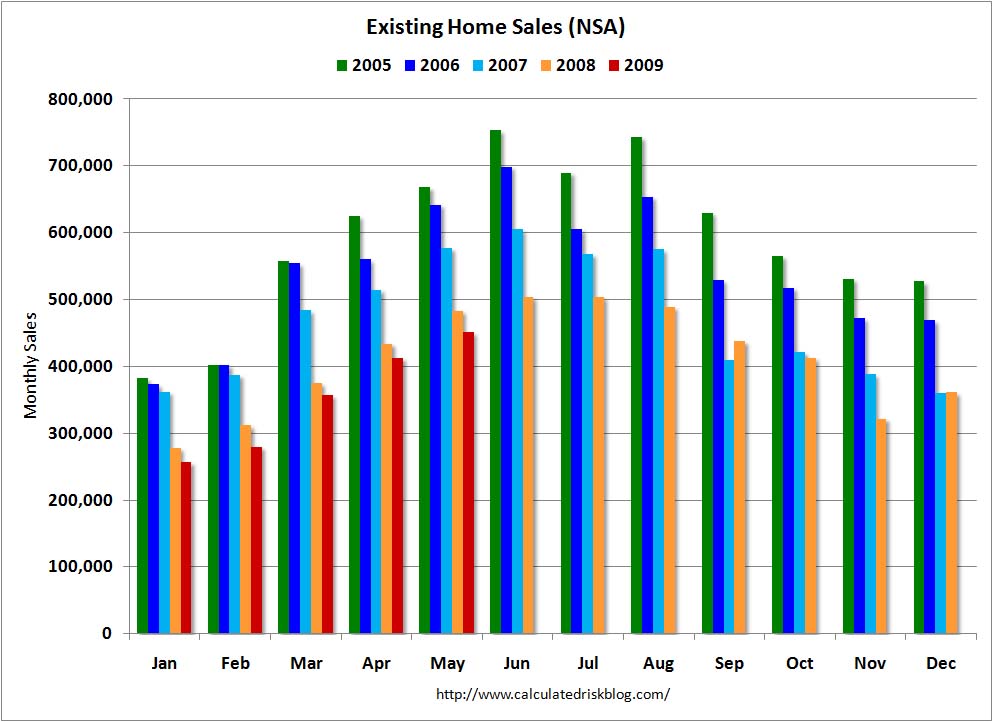
7. MAY EXISTING HOME SALES DOWN 3.6%; MOODY'S SAYS US SOVEREIGN DEBT Aaa RATING SOLID
"Sales in May 2009 rose 2.4% from April to 4.77 million. Note that these are apple and orange comparisons--revised to unrevised numbers. Once again, the prior monthly number was revised downwards (4.68 million down to 4.66 million)."
He links to a chart plotting monthly existing home sales from 2005 from Calculated Risk:
"'Although the US is losing altitude in the Aaa range, it is starting from a very strong base,' Cailleteau, who is chief international economist at Moody’s, said in Tokyo today. The economy is resilient enough to recover and the government is committed to raising taxes and cutting spending, he said."
8. BLOG COMPARING NEWS HEADLINES FROM GREAT DEPRESSION TO CURRENT CRISIS
1. ECB FINANCIAL STABILITY REPORT SUGGESTS EUROZONE FINANCIAL SECTOR MAY LOSE ANOTHER $238 BILLION BY THE END OF 2010; EU SUMMIT THIS WEEK TO PROVIDE ADDITIONAL FUNDING TO IMF
"'There is no room for complacency because the risks for financial stability remain high, also bearing in mind that the credit cycle has not yet reached a trough,' ECB Vice President Lucas Papademos said at a press briefing in Frankfurt today. 'Policy makers and market participants will have to be especially alert in the period ahead.'"
"The article says the unexpected increase in IMF funds suggest that governments expect more countries to get into financial difficulties. The papers talks about large credits to the Baltic Republics, but also to Poland. The summit text also explicitly rules out any additional stimulus packages."
"Saakshvilki's opposition continues to blame him in mismanaging the country's politics and resources. On June 12, Georgian opposition leader David Gamkrelidze accused Mikhail Saakashvili that he sold to Russia the country's only main railroad. Speaking at a meeting held in front of the Parliament of Georgia, Gamkrelidze said: 'What other crime can the country's main official do? We already have a divided territory, strategic objects are sold to Russia...the country lost investments because of President's actions....' Gamkrelidze also noted that the contract for the sale of the rail road has not yet been signed, due to the fact that protests continue in Tbilisi. According to the Interfax News Agency, Chairman of the 'Russian Railroads' Vladimir Yakunin is due to arrive in Georgia, with one of the possible topics for his visit to be the discussion over the sale of the Georgian railway. The representatives of 'Georgian Railways' Joint Stock Company, denied information on the planned visit by Mr. Akunin."
"Beginning June 6, Russia banned a list of around 1,200 Belarussian milk and dairy products, saying they violated new packaging rules imposed last year. The ban dealt a crushing blow to Belarus’s dairy industry, which sends 95% of its exports to Russia."
Uzbekistan also declined to become a formal member of the alliance at this time.
4. FDI INTO CHINA CONTINUES TO FALL, STIMULUS NOT TRANSLATING INTO INCREASED DEMAND FOR IMPORTS
"Actual FDI in China's western and central regions fell more than 30% in the January-May period from a year earlier, sharper than the drop for the overall country. Yao [Jian, spokesman for the Commerce ministry,] said the disparity is because the financial crisis is prompting foreign companies--many of which are based in the more developed coastal regions--to increase their existing investments in China, rather than attract new companies to invest in the country.
Referring to deepening export declines in May, Mr. Yao said the government will double short-term export-credit insurance to $84 billion this year from $43.2 billion in 2008, providing insurance coverage for around 15% of total exports, up from 6.5%. He added the ministry is working to improve trade financing for the export of heavy machinery."
"As the outlook of the global economy remains unclear and external demand continues to decline, the recovery of our economy is not firmly rooted yet. We must not underestimate these difficulties."
"Lets do some very rough ballpark math. I’ll start by assuming that about 40% of China’s industrial production--pre-crisis--was exported. I think that is about right, but I don’t have the actual number. Help here would be appreciated. If industrial production for export was 40% of total production and if it fell by around 25%, the 60% of industrial production that is far domestic use would need to be up around 30% to generate 9% y/y growth.
That is a big increase. And it isn’t totally implausible. Lending and investment are way up. So are stimulus driven auto sales. But it also raises the question of why it took China so long to really stimulate domestic demand if it had such latent capacity to grow without relying on exports."
Setser notes that if such domestic demand is supporting industrial production, then it hasn't spilled over into demand for the world's goods, plotting a graph of South Korean and US exports to the country--both of which are down:
Well worth reading in full.
5. SOUTH KOREA TO ASK US FOR WRITTEN DECLARATION OF NUCLEAR PROTECTION
"Lee and Obama, in what will be their second meeting, will also discuss a free trade agreement between their two countries.
It was signed in 1997, but has not been ratified by the Senate, primarily because of concerns about imports of South Korean cars into the United States and strict limits in South Korea on imports of US beef."
6. IRANIAN LEADER OF THE REVOLUTION CALLS FOR INVESTIGATION INTO ELECTION, TNES OF THOUANDS DEFY BANS ON PROTESTS, MOUSAVI CALLS FOR CALM, AHMADINEJAD SEEKS TO LINK UNREST TO FOREIGN INFLUENCE
"Pro-reform candidate Mir Hossein Mousavi attended the rally at Tehran's Revolution Square on Monday afternoon, making his first public appearance since the election. Another opposition candidate, Mehdi Karroubi, also planned to attend.
Thousands of Mousavi's supporters went ahead with the demonstration despite an Interior Ministry ban. There was virtually no police presence in the area as the protesters marched from Revolution Square, along Azadi Street to Freedom Square. They chanted slogans against Ahmadinejad, denounced what they charged was vote rigging and vowed to keep protesting. They also appealed to police monitoring the demonstration to join them."
The Old Guard clearly will notice similarities. How it will play out is awfully difficult to see, but I believe that the situation may get out of hand if the regime is unable to reassert legitimacy under the Iranian Constitution ... I will try and post on that a little later today.
"But he firmly rejected American demands for a complete freeze on Israeli settlements in the West Bank, the subject of a rare public dispute between Israel and its most important ally on an issue seen as critical to peace negotiations.
And even his assent on Palestinian statehood, given the caveats, was immediately rejected as a nonstarter by Palestinians.
In a half-hour speech broadcast live in Israel, Mr. Netanyahu, the leader of the conservative Likud Party, laid out what he called his 'vision of peace': 'In this small land of ours, two peoples live freely, side-by-side, in amity and mutual respect. Each will have its own flag, its own national anthem, its own government. Neither will threaten the security or survival of the other.'
But Mr. Netanyahu insisted on 'ironclad' guarantees from the United States and the international community for Palestinian demilitarization and recognition of Israel’s Jewish character."
"We must recognize that depressed oil prices are not only detrimental to the economies of petroleum producing nations but also to the interests of consuming countries. That may seem counterintuitive, but consider that sustained and timely investments in petroleum projects and infrastructure are essential for maintaining future supplies at adequate levels.
Current oil prices do little to encourage the necessary massive investments, and without them we may experience supply shortages once demand picks up in the future. Unfortunately, our industry may already be sowing the seeds for future problems. If others do not begin to invest similarly in new capacity expansion projects, we could see within two to three years another price spike similar to, or worse than, what we witnessed in 2008."
Well worth reading in full.
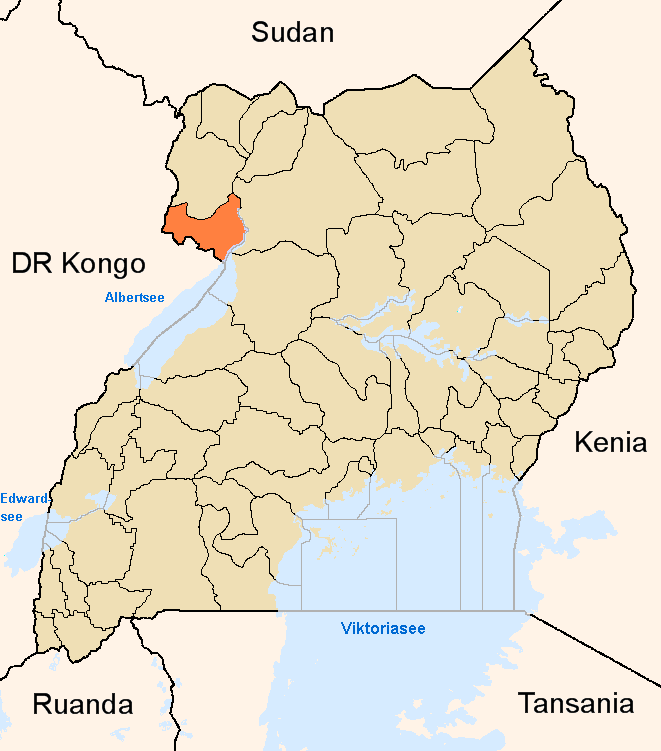
9. UGANDAN OFFICIAL OIL RESERVES UPPED TO 2 BILLION BARRELS, WORRIES ABOUT POTENTIAL CONFLICT WITH THE DEMOCRATIC REPUBLIC OF CONGO
"amid concerns about a military confrontation between Uganda and its neighbor, Congo (former Zaire).
According to newswire reports, Congo has established a border post in the disputed region of Goli near the northwestern Ugandan district of Nebbi, near Lake Albert and along the oil-rich Albertine rift.
'I believe this is just aggression,' said Betty Adima, commissioner for Nebbi district. 'It is provocation. That is the simplest way I can put it,' Adima told the Agence France Presse.
The Ugandan government has sent a protest note to Congo over the incursion, but has no plans to deploy troops of its own in the disputed region at the moment, according to a spokesman for the Ugandan defense ministry."
10. GLOBOVISIÓN CALLS FOR DIALOGUE WITH CHÁVEZ, LLOYD'S LIST PUTS VENEZUELA ON LIST OF MOST RISKY COUNTRIES FOR SHIPPING
"The president should know that if he wants to talk we are ready. We should have a dialogue like in any civilized country. Our door is always open, now it is up to the president to decide. ... The president has called and told us to behave correctly or he'll close us down, but what is behaving correctly? Not informing people?"
"[Neil] Roberts [the Lloyd’s Market Association-based secretary of the JWC, said]: 'The US has also raised its fears over the substandard implementation of the International Ship and Port Facilities Security Code.'
Most of the world’s marine hull war risk insurance business is written out of London, and Venezuela’s new status will mean shipowners operating in the country could face new terms and conditions and/or additional premiums.
'Ultimately, this is an advisory note and it up to underwriters to decide how they wish to act on this decision,' added Mr Roberts.
The JWC’s decision covers the whole of Venezuela, including all of its offshore installations stretching 200 nautical miles off the coast that as part of its international law of the sea Exclusive Economic Zone."
"Between 2005 and 2007, this ratio averaged a whopping 6.2. During the period 2005-2007, tangible asset values fell almost 1%, while financial assets grew a huge 16%! Liabilities likewise grew almost 18%, mostly on accumulated mortgage debt. Oh man."
I am not an insider, and so I read the papers, watch the networks (more like Jon Stewart, but OK), and poke about on the internet to get my news.
Just like most folks, I make my judgments about what's going on in the world on the basis of this information. This blog is an attempt to record some of them.
Because I've had some experience in international affairs, I might have a few counterintuitive reads on things that others might find interesting--or at least I hope so.
But, caveat emptor, since I have no inside information, the best I can do is assume:
a) that the actors being analyzed are behaving rationally, and
b) that the facts as they are reported in open sources are pretty much the facts.
"All sciences are now under the obligation to prepare the ground for the future task of the philosopher, which is to solve the problem of value, to determine the true hierarchy of values."









 Posts
Posts

