"Under the deal, state-owned Power Grid Corporation of India Ltd. will invest and construct 50 miles of transmission line, which it will own, operate and maintain. PGCIL will recover the construction costs under a fixed rate over 35 years."
"'Business investment remains the bright spot in an otherwise dull economic outlook,' said Jay Feldman, an economist at Credit Suisse in New York. 'Corporations have actually underinvested quite dramatically in recent years and, to some extent, we are catching up.'"
"'It's very alarming that as the first anniversary of the Russian aggression against Georgia comes close, Russia and its puppets are deliberately inciting tensions and behave defiantly,' the Georgian Foreign Ministry said.
But South Ossetia's spokeswoman Irina Gagloyeva told The Associated Press that the border move was legitimate and rejected any land-grabbing ambitions.
'Let the Georgians relax about their territory. We don't need a single centimeter of their soil,' Gagloyeva said."
3. CHINESE CRUDE STOCKS FALL 2.7% IN JUNE FROM MAY, REFINERIES PRODUCED 7.77 MB/D
"The agreement called for CNPC to purchase a 63% stake in the $2.5bn project from NIOC, leaving the Iranian state oil company with a 27% interest and Japan’s Inpex with 10%."
5. INDIA AND CHINA TO COOPERATE ON MONITORING HIMALAYAN MELTING GLACIERS
"Jairam Ramesh, India's environment minister, said academic research bodies on both sides would share information. He also told the FT that New Delhi was also open to a dialogue about water resources with Beijing, saying the two countries had shared concerns."
6. SAUDI ARAMCO TO CUT PRICES, OPEC PRODUCING SLIGHTLY MORE IN JULY FROM JUNE
"according to a survey of refiners from South Korea, Japan, Singapore and India. The company is expected to set new official levels this week. Extra Light may fall by $1.40/b, said the traders who asked not to be identified, citing confidentiality agreements.
Saudi Arabian Oil, known as Saudi Aramco, last month raised Arab Light by 10 cents to a premium of $1.50/b to the average of Persian Gulf benchmark’s Oman and Dubai. That was the highest price since July 2008. Asian refiners have been reducing their output as falling consumer demand has cut their so-called crack spreads, or profit margins."
"Iran, the member that’s least compliant with output limits, according to the survey, expects oil prices to reach $80/b by the end of the year on 'optimistic' signs in the market, the country’s OPEC Governor, Mohammad Ali Khatibi, said.
Angola increased production by 20,000 barrels to 1.81 mb/d. The gain left output 293,000 barrels above the nation’s target, the second-biggest excess in the group. Output in the African country surpassed Nigeria’s for the first time since June 2008.
Venezuela raised output by 10,000 barrels to 2.21 mb/d. The South American country pumped 224 kb/d above its target of 1.986 million last month, the survey showed."
7. 100 IRANIAN POLITICIANS PUT ON TRIAL FOR FOMENTING UNREST IN COOPERATION WITH FOREIGNERS, LOTR FORMERLY INAUGURATES AHMADINEJAD'S SECOND TERM
"Analysts say the confessions read at the trials are meant to lift the morale of hard-liners upset by coverage by reformist news outlets and Persian-language news channels abroad as well as to frighten opponents and take the wind out of the sails of the protest movement.
But as night fell, Tehran, the capital, erupted in angry cries of 'Allahu Akbar!' or 'God is great!' in what has become a daily rooftop ritual of protest."
"Relatives of the late Ayatollah Ruhollah Khomeini, who led Iran's 1979 Islamic revolution, also failed to show up. According to pro-opposition Web sites, Hassan Khomeini, a grandson who usually attends such ceremonies, left for Pakistan some days ago. Other prominent absentees were two Friday prayer leaders from the Shiite holy city of Qom, the Parlemannews Web site reported."
"The good news is that Nigeria has boundless agricultural potential. Of the 3.14 million irrigable hectares of land in the country, the World Bank says only 7% is currently being utilized. And though large tracts of farmland have been lost to desertification, more than half the country's estimated 98 million hectares of arable land currently lie fallow.
'The opportunities for our farmers are enormous if only they were to get the right institutional support,' said Sabo Nanono, the head of Kano state's commercial farmers association. 'We could feed the entire West African region; we could produce enough rice in just two or three [of Nigeria's 36] states to feed the nation and even to export.'
Somehow, the supply chain that feeds 140 million people keeps cranking along. The country has not seen a major famine for nearly four decades, since the Biafran civil war. But Nanono warned that it wouldn't take much to send this vulnerable country--and region--over the edge.
'The reality is that if the rains are bad throughout the region or the price of inputs became unaffordable, there could be massive food shortages, and neither the government nor any other institution stands ready to help,' he said. 'Then only God could save us.'"
"Manufacturing output, which makes up 15% of the economy, fell 17.1% in May from a year ago, after dropping a record 21.8% in the previous month, the statistics office said on July 9. Production has dropped every month since October 2008."
10. SETSER AND ZIEMBA ESTIMATE MAJOR SOVEREIGN WEALTH FUNDS HOLD ABOUT $1.5 TRILLION IN FOREIGN ASSETS, DOWN FROM $1.8 TRILLION LAST YEAR
"$1.5 trillion is lot of money. But it is substantially less than $7 trillion or so held as traditional foreign exchange reserves."
The post includes an extremely interesting table of estimated assets held by each major sovereign wealth funds at the bottom.
11. 1.5 MILLION TO EXHAUST INITIAL UNEMPLOYMENT INSURANCE IN THE NEXT FEW MONTHS, 1-IN-3 GROCERY SHOPPERS NOW ONLY PURCHASE ITEMS ON SALE
Barry Ritholtz has a pair of posts looking at the rate of people who have exhausted their unemployment insurance. In the first, he notes that the New York Times estimates that about 1.5 million more people will have exhausted their unemployment insurance over the course of the next few months. He links to a helpful graph from the NY Times:
In the second, he notes, as have others such as Rebecca Wilder at News and Economics, that there are additional unemployment programs available after one exhausts the initial unemployment insurance:
"[T]he Emergency Unemployment Compensation (EUC) which is good for 20 weeks. Then, there is the Supplemental EUC, which depending upon what your state thinks of the Federal largesse of handing out money to the recently unemployed, ranges anywhere from 13 to 20 more weeks."
Evidently, as of July 11, the number of people who have exhausted their initial unemployment insurance and are now on EUC or supplemental EUC, has gone from 127,000 a year ago to 2.66 million. The worry is that given that 70% of the economy is based on household consumption, growing unemployment will undermine any nascent recovery. In that vein, Credit Bubble Stocks notes that Information Resources Inc. has published market research which concludes that now
"about 1 in 3 [grocery] shoppers buy exclusively items on sale, twice as many as 18 months ago."
"'By the end of the year, we will not have a single gas land-rig running,' George Kirkland, Chevron’s executive vice president for global upstream and gas said in a conference call."
"Services providers are busy redesigning their strategies for coping with the ongoing economic crisis. To take the appropriate decisions, they need predictable future market access in services. Meanwhile, as many services are still highly protected, opening services markets would deliver large benefits to consumers impoverished by the crisis."
"Is there any appetite for services negotiations now? Yes. The July 2008 Signalling Conference held under the aegis of the Doha Round showed a substantial number of participants expressing strong interests in most services, offers and requests in mode 3 in many services (foreign direct investment), and even a willingness to include mode 4 (movement of natural persons, by far the most contentious part of any service negotiations) in some services.
Such a willingness to negotiate appears particularly strong in three services: business, communication, and distribution services. Together, these three services in the EC, US, and top eight countries represent almost one-third of the world GDP, a size so huge that negotiators could work on deals within as well as between these services sectors. The three services face high levels of regulatory constraints, ensuring huge economic gains in case of market opening. Finally, negotiations are made easier by the fact that business and communication services are resilient to the current crisis, while the inflationist pressures to come should make governments eager to have distribution services as competitive as possible.
Last but not least, the foreign policy dimension of the whole endeavour is crucial for Europe. Many US decision-makers are looking to Asia for good reasons (Bergsten, 2009) while Europeans have not yet fully grasped the growing importance of Asia nor captured its attention, as illustrated by the disappointing June 2009 Asia Europe Ministerial meeting on energy."
2. EUROZONE UNEMPLOYMENT UP TO 9.4% IN JUNE, CONSUMER PRICES FELL AT ANNUAL RATE OF 0.6%
"The European Union’s statistics office also said on Friday that inflation in the euro area had moved much further into negative territory than forecast in July, with consumer prices falling at an annualized rate of 0.6%.
The drop raised worries about deflation and heightened expectations that the European Central Bank will maintain its loose monetary policy."
"Assistant Secretary of State Philip Gordon told US lawmakers Tuesday during the House International Relations Committee hearing that the United States would consider Russian membership in NATO."
Gordon said:
"[I]f Russia meets the criteria and can contribute to common security, and there is a consensus in the alliance, it shouldn't be excluded."
Bendersky points out that some in Eastern Europe might be cold to the idea. Given that membership would freeze, so to speak, the current borders by militarily integrating the members, it may arguably provide superior protection than the current relationship. It certainly would make adventurism a much more complicated affair.
4. NIPPON OIL IN TALKS WITH SK ENERGY TO BUILD NEW REFINERY IN VIETNAM
"'We’ve been in talks with SK and have agreed on the need for participating in a refining project' in Asia, Nippon Oil Chairman Fumiaki Watari said in an interview in Tokyo yesterday. Vietnam is a potential location for the first venture between Japan and South Korea’s biggest refiners, and the plant may process 200-300 kb/d of crude oil, he said.
Seo Young Joon, a spokesman at SK Energy in Seoul, said he couldn’t immediately comment. Idemitsu Kosan Co., Japan’s second-largest refiner, and Mitsui Chemicals Inc. plan to spend $5.8 billion to build a 200 kb/d plant in Vietnam."
"'We know that about 25% of Japan’s refining capacity will be unnecessary in the next five years.' Watari said."
Vietnam inaugurated its first refinery this year with capacity of 148 kb/d and which is poised to supply about 30% of Vietnam's product requirement--see Daily Sources 7/28 #8. The EIA projects its total petroleum demand was about 288 kb/d in 2008. Hanoi projects GDP will grow by 5.5% in 2009, adding perhaps as much as 10 kb/d in demand this year.
5. INDIAN FIELD BEGINNING PRODUCTION TO UP INDIAN CRUDE PRODUCTION BY 25%
"'We are operationally ready to commence oil production in August,' Cairn India CEO Rahul Dhir said. In its various filings to the government, Cairn has indicated that production will quickly touch 30 kb/d by the end of third quarter this year and reach a plateau of 175 kb/d (8.75 million tonnes a year) in 2011. Goldman Sachs, however, has pegged the peak output at 190 kb/d (9.5 million tonnes a year)."
Using EIA projections, Indian crude production in 2008 was 693.7 kb/d. Its imports came in at 2.056 mb/d, so the Mangla field at 175 kb/d would represent about 8.5% of its import requirement. However, some of those imports are reexported as products, for example to the US--Reliance is set to restart its old Jamnagar refinery shortly, bringing another 660,000 kb/d of nameplate capacity on line. It is expected to double Reliance gasoline exports to about 170 kb/d.
6. PAKISTANI SUPREME COURT REJECTS PETITION TO TRY MUSHARRAF ON TREASON CHARGES
"The court had asked him to explain his decision in 2007 to invoke emergency rule and suspend the constitution.
It has now ruled that parliament is the place to debate Mr Musharraf's actions.
Chief Justice Iftikhar Mohammed Chaudhry rejected a petition to launch a treason case against the former president.
Mr Chaudhry was himself removed from his position as a result of President Musharraf's imposition of emergency rule, but was reinstated after he resigned in August."
For more on the lawyers revolution in Pakistan, I wrote a long piece on it early last year--see The Law in Pakistan.
7. 40 DAY CYCLE OF PROTESTS IN IRAN MIRROR 1979 REVOLUTION, PRESS REPORTS OF CHINESE-IRAN MOU ON SOUTH AZADEGAN FIELD DENIED BY CNPC, US SENATE TO BAR THOSE SELLING PETROLEUM PRODUCTS TO IRAN FROM PARTICIPATION IN SPR
"However, a CNPC manager based in Beijing told Reuters today that the MoU was actually signed earlier this year and there has been no real breakthrough in talks with the oil ministry since then.
'The MoU is not a binding contract, and we are still negotiating with NIOC about specific details,' the CNPC source, who declined to be named because he was not authorized to speak to the media, told the news agency."
"At least three companies fit that bill, Glencore, Shell Trading and Vitol, according to the Foundation for Defense of Democracies. In January, the three were named by DOE as suppliers to the SPR for deliveries this year. While it could not be immediately confirmed whether any of the three currently sell refined products to Iran, all of them are known active traders in oil markets throughout the world."
In June, Reliance--a private oil company in India--halted gasoline exports to Iran, apparently because they expected difficulties for their exports to the US--see Daily Sources 6/4 #8. The UAE provides about 80% of Iranian product requirements, IIRC.
8. BAHRAIN CENTRAL BANK SEIZES TWO BANKS HELD BY SAUDI CONGLOMERATES
"The central bank said in a statement on Thursday it had assumed control of Awal Bank, owned by Saad Group and The International Banking Corporation, a unit of the Ahmad Hamad Algosaibi and Brothers conglomerate.
The central bank said an investigation at both banks had shown a substantial shortfall in assets compared with their liabilities and that it would appoint an external administrator to identify creditors' claims and manage the distribution of the remaining assets."
9. NIGERIAN PRESIDENT ENTERS TALKS WITH 6 NIGER DELTA GOVERNORS TO PREVENT THREATENED BOYCOTT OF MILITANT AMNESTY PLAN
"The governors of southern Akwa Ibom, Bayelsa, Edo, Delta, Cross River and Rivers states last week said they would pull back their involvement in the amnesty deal for Delta militants in protest of the federal government's plan to relocate the petroleum training college in Delta state to northern city of Kaduna.
'There is a serious misunderstanding about some of the issues raised, but the president is very concerned and has been talking with the Niger Delta governors individually,' Presidential spokesman Olusegun Adeniyi in a statement. 'The president has respect for the Niger Delta region. He did not approach the crisis in the area as a Northerner.'
The governors also had grouse against a provision in the oil sector reform bill, which they said takes away royalties due Delta communities."
Earlier this week, the Nigerian Joint Revolutionary Council--an umbrella group of militants in the Niger Delta which includes MEND--warned a company linked to a current oil minister to stop operations to express their displeasure with the plan to locate the petroleum university in the north--see Daily Sources 7/28 #9.
10. US ENVOY FOR SUDAN RECOMMENDS TAKING KHARTOUM OF TERRORIST LIST
"'There is no evidence in our intelligence community that supports [Sudan] being on the state sponsors of terrorism list,' Gration said. 'It's a political decision.'"
"'We are actually hurting the very development things we need to do help the south become ... if they chose to secede, a viable economic state,' Gration said, noting that Washington could not bring in heavy equipment to build roads and railways.
'At some point we are going to have to unwind some of these sanctions so that we can do the very things that we need to do to ensure a peaceful transition and a state that's viable in the (south) should they choose to do that,' he added.
In its latest report, the State Department described Sudan as 'a cooperative partner in global counterterrorism efforts.'"
11. CHÁVEZ PROPOSES LAW GIVING GOVT ARBITRARY POWER TO CONTROL MEDIA
"The proposed law ... includes all media and applies to not only owners and publishers but also reporters, freelancers and anyone making a statement that could be interpreted as (my translation) 'any person who manipulates or distorts the news, creating a false perception of facts... as long as there is damage to social peace, national security, public order, or the mental health or public morals.'
The charge carries a compulsory 2-4 year prison sentence."
Wertz includes a link to the text of the law. She notes that the UN has registered its worries regarding the proposed legislation, but projects the protest will have little affect upon the administration's decision-making process ... correctly in my view.
12. RESEARCHERS FIND THAT EFFORTS TO HALT OVERFISHING ARE SUCCESSFUL
"The authors observed: 'Some of the most spectacular rebuilding efforts have involved bold experimentation with closed areas, [fishing] gear restrictions and new approaches to catch allocations and enforcement.'
But they warned that the signs of recovery should not be interpreted by policymakers as a sign that all was well beneath the waves.
The majority of fisheries were still in trouble, and were not being managed or regulated properly.
But Dr Worm said that the team's 'watershed paper' offered a blueprint for sustainable fishing.
'It clearly shows what needs to be done to not only avoid fisheries collapse, but to actually rebuild fish stocks and ecosystems.'"
"Down 1.5% was the consensus expectation. But Q1 was revised down to minus 6.4% from 5.5%. The GDP Deflator for Q2 came in at 0.2%, which shows that disinflation risks tipping into deflation still. The dollar is weaker and the short end of the treasury curve is up massively on these data and revisions.
Also ... the 2008 numbers were revised down. Q1 2008 was revised from positive 0.9% to negative –0.7%. Q2 2008 was revised way down as well from 2.8% to 1.5%. Q3 2008 was also very negative, now –2.7%. This confirms the December 2007 recession call.
There was a $140 billion reduction in inventories in Q2. I have been saying for some time that this would set us up for lots of upside come Q3 and Q4 as the inventory purge dissipates. So, we will get a technical recovery in my opinion. The question is whether there is any underlying demand uptick behind the inventory changes. In the data ... from the BEA website, you can clearly see ... that consumers are not even spending on basic items. Spending on non-durable goods was down 2.5% annualized. That is not good."
"Inventories remained extremely lean, falling to 25.4 from 34.2, the lowest since 1949 and is the perfect set up for a sharp contribution to GDP from this area in the 2nd half of the year, led by auto’s and related sectors. The employment index rose 6.4 points to 35.3, well below 50 but at the highest level since Dec ‘08. Prices paid fell a touch. Bottom line, the data confirms the backdrop for an improvement in GDP. The degree and sustainability of the recovery will however remain in the hands of end demand, aka, predominantly the US consumer."
"Households have been 'delevering' for a longer time period than previously thought--as recent as 2008 Q1, the saving rate that was reported to be essentially zero, 0.2%, is now 1.2%."
Her chart of the US savings rate (with revisions as of today):
"The BEA has 'found' that households have been in fact saving roughly 1% of their disposable income per quarter since 1995, 0.9% per quarter in 2008."
"After nearly three years of discussing the matter in depth both internally and at its advisory meetings, METI was set to introduce the national oil products stockpile this year, with one or a combination of light and middle distillates, equivalent to one day's consumption of the particular product or products chosen, Platts reported earlier.
METI has chosen to start the products stockpile with kerosene because it would affect consumers living in northern Japan during the country's winter demand season, the official said. Kerosene is used as heating oil in Japan, with demand typically peaking over December-February."
2. CHINA'S OFFICIAL PMI UP TO 53.2, CLSA'S CHINA PMI UP TO 51.8; CHINA TO BAN IMPORTS OF US CHICKEN
"The new export orders component of the PMI rose to 51.4 in June from 50.1 in May. June was the second consecutive month where the export-order subindex has remained above 50, suggesting a deterioration in exports in the past several months is abating.
But the inventory subindex of the PMI fell to 45 in June from 46.2 in May. [Moody's] Economy.com's [analyst] Sherman Chan said that drop suggests manufacturers remain cautious about building up inventories amid an uncertain global economic outlook.
'If the external environment doesn't improve, it will be difficult for the government to sustain its fiscal spending for a long time,' she said."
"The potential ban could be a big blow to the US chicken industry, which has been struggling with high grain prices and a price-depressing oversupply of chicken. Exports had been a bright spot for the industry, and last year China surpassed Russia as the largest destination for US chicken, according to the USA Poultry & Egg Export Council."
"[I]n 2007 lawmakers inserted a provision in the 2008 fiscal-year spending bill that prohibited the USDA from allowing chicken processed in China to be imported. The same prohibition was included in the spending bill in the next two fiscal years.
Trade tension between China and the US heightened earlier this week when the US International Trade Commission recommended imposing punitive duties of as much as 55% on low-cost Chinese tire imports because they are disrupting the US market, in a move that could sharply increase costs for consumers. GITI Tire, China's largest tire manufacturer, has called the move 'decidedly protectionist' and said it would take its case to President Barack Obama.
Last week, the House approved legislation to curb US greenhouse-gas emissions that includes a provision to impose tariffs on goods from countries that don't match US efforts to combat climate change."
Last week the US and EU lodged a WTO complaint alleging that China was blocking the export of raw materials--Daily Sources 6/24 #2.
3. ASHGABAT INVITES MEDVEDEV FOR VISIT TO DISCUSS GAS PURCHASES
"Russia, the main buyer of Turkmen gas, halted its imports in April after a pipeline explosion.
The pipeline has been repaired but the two sides cannot agree on new terms of sales as Russia's Gazprom needs less gas than in the past."
The move comes after China sealed a deal to increase its gas imports from Turkmenistan by 30% last week--see Daily Sources 6/25 #3. Ashgabat publicly suspected that Gazprom had engineered the explosion at the pipeline in order to stop paying the $340/tcm (~$9.61/MMBtu) price it had reportedly contracted to pay for Turkmen gas on December 31, 2008--see Daily Sources 4/14 #7.
4. INDIAN OIL REFINERS NERVOUS ABOUT DELAYED MONSOON EFFECT ON DIESEL PURCHASES
"[W]hile [oil demand] growth figures for May are negative ... , diesel consumption at 4.748 million tonnes ... was otherwise normal and has not fallen in absolute terms.
Another reason for this was due to a continuous decline in the industrial sector’s use as diesel-direct sales showed negative growth of 4.7% in May.
It was the sixth successive month when industrial sales of diesel showed negative growth, coinciding with the onset of the economic recession in the second half of 2008-09. While economics dictated the pace of diesel consumption so far, the weather patterns could change the pattern, fear experts.
However, the consumption trend for diesel seems to be changing in June, with the eastern region recording a 45% growth, with Bihar alone registering nearly 65%."
5. MALAYSIA TO PULL BACK MALAY-PREFERENTIAL POLICY
"'The world is changing quickly, and we must be ready to change with it or risk being left behind,' he said Tuesday.
The change would leave some ethnic preferences intact and come with caveats. But it would dilute one of the most important components of what is known as the New Economic Policy, introduced in 1971: the requirement that companies listing on the stock exchange sell 30% of their shares to ethnic Malays.
That requirement was scrapped for companies already listed on the stock exchange and reduced to 12.5% for initial public offerings. The requirement will remain in place for 'strategic industries' like telecommunications, water, ports and energy.
Mr. Najib also said he would lower barriers for foreign investors. The government would eliminate a special vetting process for foreign companies wanting to invest in, merge or take over a Malaysian company, he said."
6. IMF EXPECTED TO AUTHORIZE $150 ISSUANCE OF SDR-DENOMINATED DEBT TODAY
"The IMF is also considering making them tradable between all central banks from countries that are IMF members, said a G- 8 official, who spoke on condition of anonymity. It would stop short of allowing them to trade on the open market, he said."
7. SARKOZY TELLS NETANYAHU TO GET RID OF LIEBERMAN
"'We are shocked by the activities of our sons considering the recent [press] release by MEND [saying] they have vandalized Shell platforms in Forcados,' the IYC said.
'If the purported sabotage was actually true we in the Ijaw Youth Campaign for Peace hereby condemn it in all facets,' the group stated.
The group said the continued sabotage of oil installations 'will present our people as not actually fighting for a genuine cause, but personal gain, which the government can see as armed robbery and criminality.'"
The story also notes reports that the amnesty offer has hit a snag as the heavy military presence in the region has made militants leery of going to areas designated as arms collection centers.
12. OAS GIVES HONDURAS ULTIMATUM, UN CALLS FOR ZEYALA'S RETURN, ARGENTINA'S FERNANDEZ TO TRAVEL TO HONDURAS TO NEGOTIATE SOLUTION, CHAVEZ SAYS VENEZUELA MAY CEASE ALL CRUDE EXPORTS TO HONDURAS--ALL 0 KB/D OF THEM
"Diplomats said they had rarely seen the OAS unite so solidly behind a common cause, and that it was the first time the group had invoked its so-called Democratic Charter since it was adopted in 2001 as a clean break with the region’s history of authoritarian rule."
"OAS Secretary General Jose Miguel Insulza said yesterday he wanted to return to the Central American nation with Zelaya to demand his reinstatement. Argentine President Cristina Fernandez de Kirchner will accompany the mission, Buenos Aires newspaper Infobae reported.
As protests against Zelaya swell, a showdown is imminent. [Interim Honduran President Roberto] Micheletti said that Zelaya faces arrest and 20 years in prison should he attempt to return to Honduras, Central America’s third-poorest country.
The country’s Supreme Court, congress and business groups have also expressed support for Zelaya’s removal, over concerns he was seeking to retain power beyond his original mandate by ignoring court rulings and changing the constitution through a referendum on term limits.
Approval for the Zelaya government fell to 30 percent in February from a high of 57 percent in January 2007, according to a nationwide poll by CID-Gallup. The former cattle rancher lost support over the past two years as he strengthened ties with Chavez ... ."
"For Fernandez, accompanying Zelaya gives her a chance to play a popular role in world politics that might offer a distraction from her own political problems at home."
That's a fair amount of political capital. The poll includes ratings for Putin (somewhat oddly), Ban Ki-Moon, Merkel, Brown, Sarkozy, Hu Jintao, and Ahmadinejad. (h/t Greg Scoblete at the Compass.)
14. KC FED CHIEF SAYS THE GOVT HAS INSTITUTIONALIZED "TOO BIG TO FAIL", ST. LOUIS FED CHIEF SAYS FED RATES LIKELY TO STAY UNCHANGED FOR "FORESEEABLE FUTURE," SF FED CHIEF TAKES AIM AT INFLATIONISTAS, SAYING DOWNTURN LIKELY TO BE PROLONGED
"'The current crisis has made it clear that the group of systemically important firms that might be deemed worthy of special consideration by policy-makers is larger than previously thought,' Hoenig said in a Tuesday speech at New York University."
"The Obama administration's overhaul of financial rules is only a start of a dialogue on the issue, Hoenig commented. 'The most important part of any plan ... will be the requirement that public authorities resolve such institutions by taking them into receivership and restructuring them to emerge under new and more careful management and ownership,' without exceptions."
"'liquidity programs', such as efforts to support the commercial paper market or money market mutual funds, are on track to end next year 'if financial conditions continue to improve."
He further indicated that the Fed may reevaluate its purchases of mortgage-backed securities in its next meeting in August. In a story which has received wide coverage in the econoblogosphere, Jon Hilsenrath at Real Time Economics reports that Janet Yellen, President of the Federal Reserve Bank of San Francisco, took aim at the inflationistas, saying:
"We are far from the kinds of unemployment rates that would make inflation a danger. ... The very weak economy is, if anything, putting downward pressure on wages and prices ...
In past deep recessions, the Fed was able to step on the accelerator by cutting the federal funds rate sharply, causing the economy to shoot ahead. This time, we already have our foot planted firmly on the floor. We can’t take the federal funds rate any lower than zero. I believe that the Fed’s novel programs are stimulating the flow of credit, but they simply aren’t as powerful levers as large rate cuts, so this time monetary policy alone can’t power a rapid recovery. ... I also think that a massive shift in consumer behavior is under way—one that will produce great benefits in the long run but slow our recovery in the short term. 4 American households entered this recession stretched to the limit with mortgage and other debt. The personal saving rate fell from around 8 percent of disposable income two decades ago to almost zero. Households financed their lifestyles by drawing on increasing stock market and housing wealth, and taking on higher levels of debt. But falling house and stock prices have destroyed trillions of dollars in wealth, cutting off those ready sources of cash. What’s more, the stark realities of this recession have scared many households straight, convincing them that they need to save larger fractions of their incomes. In the long run, higher saving promises to channel resources from consumption to investment, making capital more readily available to retool industry and fix our infrastructure. But, in the here and now, such a rediscovery of thrift means fewer sales at the mall, and fewer jobs on assembly lines and store counters."
"Ford said this week that it was increasing production in the third quarter, which starts Wednesday, to match the rise in demand its dealers were seeing. The company now plans to build 67,000 more vehicles, a 16% increase, than it did in the third quarter of 2008. ... Over all, industry sales are expected to be down at least 25% compared with June 2008. Though dismal by any measure, it could be the first time since September that total sales fell by less than 30 percent on a year-over-year basis, a positive sign.
June could also be the first month this year in which new vehicles sold at an annualized rate of at least 10 million. For most of the last decade, auto sales in the United States were around 17 million a year before plummeting in 2008. Fewer than 5 million vehicles were sold in the first half of 2009, a decrease of nearly 37%."
16. CRUDE STOCKS SHARPLY DOWN, BUT PRODUCTS STOCKS SHARPLY UP ... REFINING UTILIZATION SLIGHTLY DOWN
"The OECD said it now expects China's economy, the world's third largest, to grow 9.3% in 2010, up from its previous projection of 8.5%. Still, it cautioned that 'the outlook for 2010 is more uncertain and depends on the extent to which private consumption and business investment react to the stronger economic situation, as both the fiscal and monetary stimulus will be easing.'"
The OECD stood by its projection that the consumer price index in China would fall by 1% in 2009 versus the projections coming out of Beijing of an 4% increase.
2. CONSUMER SENTIMENT UPTICK IN JAPAN, BUT BOJ SEEMS TO BE DISCOURAGING TOO MUCH OPTIMISM
"In its Monthly Report of Recent Economic and Financial Developments the BOJ revised its basic view of the economy upwards for the second consecutive month. In April, the Bank were saying that “Japan’s economic conditions have deteriorated significantly”, but this was revised in May to the view that 'Japan’s economic conditions have been deteriorating, but exports and production are beginning to level out', and in June to the view that 'Japan’s economic conditions, after deteriorating significantly, have begun to stop worsening'.
This has been widely seen as an indication that the BOJ has revised its view on the economy upward, but the BOJ itself has been trying to discourage this interpretation. At the press conference, Governor Shirakawa said that the BOJ’s view on the current state of the economy was in line with the forecast made in the Outlook for Economic Activity and Prices report published on 30 April, namely that 'the pace of deterioration in economic conditions will likely moderate gradually and start to level out', thus emphasizing that the BOJ has not changed its view. To reinforce this point, using the analogy of a weather forecast, he said that if the weather forecast for the following day turns out to have been right, this does not mean that the forecast has been revised."
Well worth reading in full.
3. CHINA AND TURKMENISTAN INK DEAL FOR ADDITIONAL 30% SUPPLY OF NAT GAS, CHINA AGREES TO $4 BILLION LOAN ON PREFERENTIAL TERMS
"Chinese Vice Premier Li Keqiang met with his Turkmen counterpart Wednesday to sign the contract, which increases gas deliveries to 40 billion cubic meters (52 billion cubic yards) annually, the state-run newspaper Neutral Turkmenistan reported.
Work on a 7,000-kilometer (4,300-mile) pipeline from Turkmenistan to China is expected to be finished by the end of the year.
'This agreement is very important for ensuring a stable, long-term and adequate supply of gas for this pipeline,' Li said at an official signing ceremony, according to the newspaper.
China has also committed to lending Turkmenistan's state gas company $4 billion on preferential terms, the newspaper reported."
4. JAPAN STRIKES DEAL WITH ADNOC TO INCREASE ITS STRATEGIC PETROLEUM RESERVE
"According to analyst Global Insight, two pipeline options between Russia and South Korea are currently being evaluated: an overland route via North Korea and a direct subsea line.
'The first option suffers from severe geopolitical risks while the second option presents partners with formidable technological and financial challenges,' GI said, adding, 'A drawn-out negotiation and planning process for the project…can be assured in either scenario.'
Underlining that point, Russian officials also have been courting Japanese investors into joining the SKV pipeline project."
In televised comments during his visit to Tokyo in May, Prime Minister Vladimir Putin said,
"Japanese partners could take part in projects to develop pipelines and other transport infrastructure. I mean from Sakhalin Island to Khabarovsk to Vladivostok." (see Daily Sources 5/12 #4.
6. IRAQI MINISTRY CONSIDERING HOW TO RESPOND TO SINOPEC'S BID FOR ADDAX
"The Oil Minister hasn’t yet decided, a ministry spokesman said by telephone today. The Chinese company, also known as Sinopec Group, is among more than 30 oil producers short-listed by Iraq to bid for development rights on June 29 and 30.
The government hasn’t received official notification of the agreement between Sinopec and Addax, said Abdul Mahdy al-Ameedi, deputy director general of the Oil Ministry department running the bid rounds.
'They can participate so far,' he said of Sinopec. 'There are some days until the bidding process,' he said, adding the government would be reviewing the deal."
7. OPEC SAYS WORLD OIL MARKET IN "DELICATE AND PRECARIOUS" STATE
"A commentary in the latest issue of the OPEC Bulletin said oil prices were now 'closer to levels that could support sound investment plans for future production' but were not justified by fundamentals of supply and demand.
It noted that OPEC's own crude basket, which had stood at $44/barrel at the start of the March 15 ministerial meeting, had climbed above $70/b since the most recent conference on May 28 despite supply continuing to be greater than demand and OECD commercial stocks remaining well above five-year average levels."
8. RUMORS OF SAUDI-SYRIAN-LEBANESE 'GRAND BARGAIN'
"To sum it all up before I start linking: Syria is going to accept the idea of Sa‘d Hariri as Prime Minister in Lebanon. In turn, Saudi Arabia is going to patch up its relations with Syria. King ‘Abdullah will then visit Damascus. And if the Lebanese can smooth out the outlines of a unity government of some sort, Syria won't stand in the way."
"To cut off the rebels' weapons and supplies, the United States has stepped up pressure on Eritrea, and foreign warships patrolling Somali waters to combat piracy have begun blocking cargo ships heading to the rebel-held port of Kismaayo in southern Somalia.
African diplomats have also proposed a no-fly zone over Somalia to prevent weapons from being flown in from Eritrea to the rebels, but it is unclear whether that idea will gather necessary support at the United Nations."
10. MEND ATTACKS IN NIGERIA FORCE CLOSING OF TWO REFINERIES, GAZPROM AGREES TO JV WITH THE NIGERIAN NATIONAL OIL COMPANY, GAZPROM TO BEGIN CONSTRUCTION ON TRANS-SAHARAN PIPELINE NEXT YEAR, TOTAL OFFERS TO COOPERATE WITH GAZPROM--ESPECIALLY IN AFRICA
"Nigeria's main militant group earlier Thursday said it sabotaged a Shell oil pipeline in the Delta today, the latest in a slew of attacks against facilities in Africa's biggest oil producing country.
The Movement for the Emancipation of the Niger Delta (MEND) said in an emailed statement it had attacked the Billie-Krakama pipeline in Rivers state in the Niger Delta.
'Cawthorne Channel 1, 2 and 3 flow stations feeding the Bonny export terminal have been effectively put out of service,' it said."
"President Umaru Yar'Adua on Wednesday expressed hope he could resolve the Niger Delta crisis this year.
'I am hopeful and confident that by the end of this year, we will have a secure and stable environment in the Niger Delta,' he told a news conference with [Russian President] Medvedev [who was in Nigeria yesterday to pursue energy cooperation initiatives.]
Yar'Adua is Thursday expected to unveil details of an amnesty package for militants who cease hostilities as part of efforts to end the unrest and save the crucial oil and gas industry."
BBC reported last week that one militant leader took advantage of the amnesty offer--see Daily Sources 6/17 #9. Meanwhile, Medvedev's visit evidently bore fruit as Gazprom announced that they have started a 50-50 JV in oil, gas, gas processing and transportation. Gazprom also announced it plans to begin construction of the Trans-Saharan pipeline next year.
"If you’re a human being who speaks French, you’re more likely to be African than European. La Francophonie’s demographic center of gravity is now somewhere around Bamako, Mali. ... Demographic growth plus the slow-but-steady rise of literacy rates in most of Africa means that by the next decade, most literate Francophones will be African too. ... [T]he Academie Francaise has always allowed non-French citizens to be members; by 2050, I’d expect these members to be approaching a majority. ... If you’re a human being who speaks French, and is also a practicing Catholic, you’re almost certainly African--like, ten-to-one odds. Plenty of people have already pointed out that Catholicism, slowly retreating in Europe, is growing like crazy in Africa, so I won’t go into that here.
But: French is now one of the major languages of Islam. "
"Continued claims, which gauge how many Americans were still on jobless rolls after an initial week of claims, rose 29,000 to 6.738 million in the week ended June 13, the latest period for which the data was available."
12. ANOTHER STUDY LINKING US RECESSIONS TO PRICE OF OIL
"From his research, then, it seems there are three rules by which to avoid recession caused by oil prices:
- Crude oil expenditures should not exceed 4% of GDP.
- Oil prices should not increase by more than 50% year-on-year.
- Oil price increases should not be so great that a potential demand adjustment should have to reach 0.8% of GDP on an annual basis, as shedding demand at this rate has generally been associated with recession."
Kotis' piece graphs nominal and inflation-adjusted crude prices from 1970-2009, shading the periods of US recession.
"The so-called Ichimoku cloud is an area bound by two predictive lines on a general-overview chart, the investment banking arm of Barclays Plc said. Crude breached the lower boundary of this cloud at around $70.35 a barrel in New York on June 19, and oil may consequently be dragged towards a support layer around $66 and fall below that, the bank said.
'You still want to be looking to sell,' Barclays analyst MacNeil Curry said in a telephone interview from New York. 'In the sessions ahead, we look for a break of trend-line support at $66.83 to reignite the downtrend,' the bank said in a report."
This analysis comes from a different team, if I understand aright, than the one led by Paul Horsnell in London, which correctly predicted in May that prices were set to breach $70/b--see Daily Sources 5/14 #9.
1. ECB FINANCIAL STABILITY REPORT SUGGESTS EUROZONE FINANCIAL SECTOR MAY LOSE ANOTHER $238 BILLION BY THE END OF 2010; EU SUMMIT THIS WEEK TO PROVIDE ADDITIONAL FUNDING TO IMF
"'There is no room for complacency because the risks for financial stability remain high, also bearing in mind that the credit cycle has not yet reached a trough,' ECB Vice President Lucas Papademos said at a press briefing in Frankfurt today. 'Policy makers and market participants will have to be especially alert in the period ahead.'"
"The article says the unexpected increase in IMF funds suggest that governments expect more countries to get into financial difficulties. The papers talks about large credits to the Baltic Republics, but also to Poland. The summit text also explicitly rules out any additional stimulus packages."
"Saakshvilki's opposition continues to blame him in mismanaging the country's politics and resources. On June 12, Georgian opposition leader David Gamkrelidze accused Mikhail Saakashvili that he sold to Russia the country's only main railroad. Speaking at a meeting held in front of the Parliament of Georgia, Gamkrelidze said: 'What other crime can the country's main official do? We already have a divided territory, strategic objects are sold to Russia...the country lost investments because of President's actions....' Gamkrelidze also noted that the contract for the sale of the rail road has not yet been signed, due to the fact that protests continue in Tbilisi. According to the Interfax News Agency, Chairman of the 'Russian Railroads' Vladimir Yakunin is due to arrive in Georgia, with one of the possible topics for his visit to be the discussion over the sale of the Georgian railway. The representatives of 'Georgian Railways' Joint Stock Company, denied information on the planned visit by Mr. Akunin."
"Beginning June 6, Russia banned a list of around 1,200 Belarussian milk and dairy products, saying they violated new packaging rules imposed last year. The ban dealt a crushing blow to Belarus’s dairy industry, which sends 95% of its exports to Russia."
Uzbekistan also declined to become a formal member of the alliance at this time.
4. FDI INTO CHINA CONTINUES TO FALL, STIMULUS NOT TRANSLATING INTO INCREASED DEMAND FOR IMPORTS
"Actual FDI in China's western and central regions fell more than 30% in the January-May period from a year earlier, sharper than the drop for the overall country. Yao [Jian, spokesman for the Commerce ministry,] said the disparity is because the financial crisis is prompting foreign companies--many of which are based in the more developed coastal regions--to increase their existing investments in China, rather than attract new companies to invest in the country.
Referring to deepening export declines in May, Mr. Yao said the government will double short-term export-credit insurance to $84 billion this year from $43.2 billion in 2008, providing insurance coverage for around 15% of total exports, up from 6.5%. He added the ministry is working to improve trade financing for the export of heavy machinery."
"As the outlook of the global economy remains unclear and external demand continues to decline, the recovery of our economy is not firmly rooted yet. We must not underestimate these difficulties."
"Lets do some very rough ballpark math. I’ll start by assuming that about 40% of China’s industrial production--pre-crisis--was exported. I think that is about right, but I don’t have the actual number. Help here would be appreciated. If industrial production for export was 40% of total production and if it fell by around 25%, the 60% of industrial production that is far domestic use would need to be up around 30% to generate 9% y/y growth.
That is a big increase. And it isn’t totally implausible. Lending and investment are way up. So are stimulus driven auto sales. But it also raises the question of why it took China so long to really stimulate domestic demand if it had such latent capacity to grow without relying on exports."
Setser notes that if such domestic demand is supporting industrial production, then it hasn't spilled over into demand for the world's goods, plotting a graph of South Korean and US exports to the country--both of which are down:
Well worth reading in full.
5. SOUTH KOREA TO ASK US FOR WRITTEN DECLARATION OF NUCLEAR PROTECTION
"Lee and Obama, in what will be their second meeting, will also discuss a free trade agreement between their two countries.
It was signed in 1997, but has not been ratified by the Senate, primarily because of concerns about imports of South Korean cars into the United States and strict limits in South Korea on imports of US beef."
6. IRANIAN LEADER OF THE REVOLUTION CALLS FOR INVESTIGATION INTO ELECTION, TNES OF THOUANDS DEFY BANS ON PROTESTS, MOUSAVI CALLS FOR CALM, AHMADINEJAD SEEKS TO LINK UNREST TO FOREIGN INFLUENCE
"Pro-reform candidate Mir Hossein Mousavi attended the rally at Tehran's Revolution Square on Monday afternoon, making his first public appearance since the election. Another opposition candidate, Mehdi Karroubi, also planned to attend.
Thousands of Mousavi's supporters went ahead with the demonstration despite an Interior Ministry ban. There was virtually no police presence in the area as the protesters marched from Revolution Square, along Azadi Street to Freedom Square. They chanted slogans against Ahmadinejad, denounced what they charged was vote rigging and vowed to keep protesting. They also appealed to police monitoring the demonstration to join them."
The Old Guard clearly will notice similarities. How it will play out is awfully difficult to see, but I believe that the situation may get out of hand if the regime is unable to reassert legitimacy under the Iranian Constitution ... I will try and post on that a little later today.
"But he firmly rejected American demands for a complete freeze on Israeli settlements in the West Bank, the subject of a rare public dispute between Israel and its most important ally on an issue seen as critical to peace negotiations.
And even his assent on Palestinian statehood, given the caveats, was immediately rejected as a nonstarter by Palestinians.
In a half-hour speech broadcast live in Israel, Mr. Netanyahu, the leader of the conservative Likud Party, laid out what he called his 'vision of peace': 'In this small land of ours, two peoples live freely, side-by-side, in amity and mutual respect. Each will have its own flag, its own national anthem, its own government. Neither will threaten the security or survival of the other.'
But Mr. Netanyahu insisted on 'ironclad' guarantees from the United States and the international community for Palestinian demilitarization and recognition of Israel’s Jewish character."
"We must recognize that depressed oil prices are not only detrimental to the economies of petroleum producing nations but also to the interests of consuming countries. That may seem counterintuitive, but consider that sustained and timely investments in petroleum projects and infrastructure are essential for maintaining future supplies at adequate levels.
Current oil prices do little to encourage the necessary massive investments, and without them we may experience supply shortages once demand picks up in the future. Unfortunately, our industry may already be sowing the seeds for future problems. If others do not begin to invest similarly in new capacity expansion projects, we could see within two to three years another price spike similar to, or worse than, what we witnessed in 2008."
Well worth reading in full.
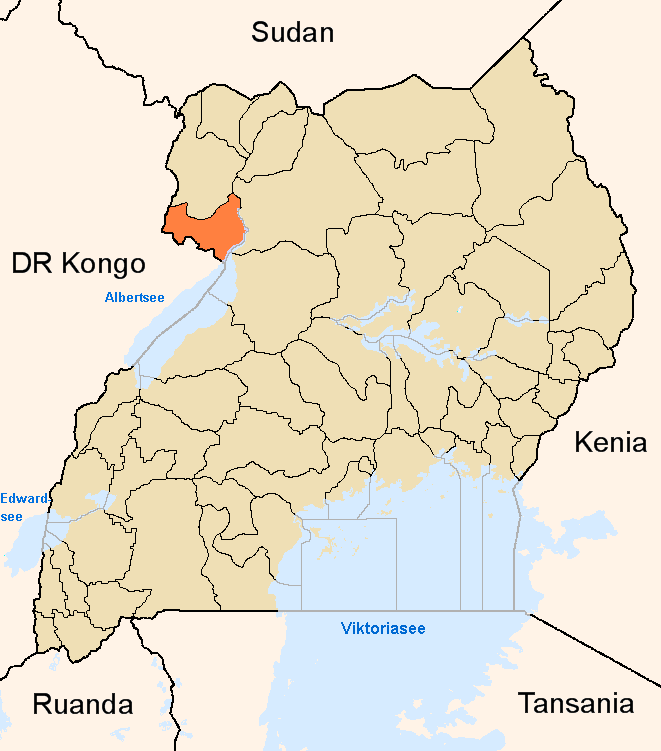
9. UGANDAN OFFICIAL OIL RESERVES UPPED TO 2 BILLION BARRELS, WORRIES ABOUT POTENTIAL CONFLICT WITH THE DEMOCRATIC REPUBLIC OF CONGO
"amid concerns about a military confrontation between Uganda and its neighbor, Congo (former Zaire).
According to newswire reports, Congo has established a border post in the disputed region of Goli near the northwestern Ugandan district of Nebbi, near Lake Albert and along the oil-rich Albertine rift.
'I believe this is just aggression,' said Betty Adima, commissioner for Nebbi district. 'It is provocation. That is the simplest way I can put it,' Adima told the Agence France Presse.
The Ugandan government has sent a protest note to Congo over the incursion, but has no plans to deploy troops of its own in the disputed region at the moment, according to a spokesman for the Ugandan defense ministry."
10. GLOBOVISIÓN CALLS FOR DIALOGUE WITH CHÁVEZ, LLOYD'S LIST PUTS VENEZUELA ON LIST OF MOST RISKY COUNTRIES FOR SHIPPING
"The president should know that if he wants to talk we are ready. We should have a dialogue like in any civilized country. Our door is always open, now it is up to the president to decide. ... The president has called and told us to behave correctly or he'll close us down, but what is behaving correctly? Not informing people?"
"[Neil] Roberts [the Lloyd’s Market Association-based secretary of the JWC, said]: 'The US has also raised its fears over the substandard implementation of the International Ship and Port Facilities Security Code.'
Most of the world’s marine hull war risk insurance business is written out of London, and Venezuela’s new status will mean shipowners operating in the country could face new terms and conditions and/or additional premiums.
'Ultimately, this is an advisory note and it up to underwriters to decide how they wish to act on this decision,' added Mr Roberts.
The JWC’s decision covers the whole of Venezuela, including all of its offshore installations stretching 200 nautical miles off the coast that as part of its international law of the sea Exclusive Economic Zone."
"Between 2005 and 2007, this ratio averaged a whopping 6.2. During the period 2005-2007, tangible asset values fell almost 1%, while financial assets grew a huge 16%! Liabilities likewise grew almost 18%, mostly on accumulated mortgage debt. Oh man."
I am not an insider, and so I read the papers, watch the networks (more like Jon Stewart, but OK), and poke about on the internet to get my news.
Just like most folks, I make my judgments about what's going on in the world on the basis of this information. This blog is an attempt to record some of them.
Because I've had some experience in international affairs, I might have a few counterintuitive reads on things that others might find interesting--or at least I hope so.
But, caveat emptor, since I have no inside information, the best I can do is assume:
a) that the actors being analyzed are behaving rationally, and
b) that the facts as they are reported in open sources are pretty much the facts.
"All sciences are now under the obligation to prepare the ground for the future task of the philosopher, which is to solve the problem of value, to determine the true hierarchy of values."






 Posts
Posts

