"World Bank estimates show that China possesses only one-fourth the global average amount of water per capita. As more and more of its people move to cities, household demands will grow. Professor Wang estimates that Beijing’s water use has grown 150 percent in just the last decade. China’s power sector is extremely water-intensive, and steeply rising energy use is also driving water demand."
"To subject a sovereign head of state to a warrant of arrest is undermining African solidarity and African peace and security that we fought for for so many years."
"The discovery well found about 174 net feet of "high-quality" oil pay in two zones, the company said. The oil appears to be light crude between 33 and 36 degrees API."
"Sales of new single-family houses in June 2010 were at a seasonally adjusted annual rate of 330,000 ... This is 23.6 percent (±15.3%) above the revised May rate of 267,000, but is 16.7 percent (±10.9%) below the June 2009 estimate of 396,000."
HOUSEHOLD NET WORTH AS A PERCENTAGE OF DISPOSABLE INCOME BACK TO LATE 80S EARLY 90S LEVELS
“The core inflation rate is right around 1%,” he said. “Given the amount of substantial excess capacity that we have in the economy, there is some risk of further disinflation. And I would say the risk of deflation has gone up and is more of a risk than I would like to see at this point.”
"Asked if, in the current crisis, it is better for Ireland to be part of the EU, an overwhelming majority of 79 per cent to 10 per cent say Yes, with a very small number of undecided voters at 11 per cent.
There is a substantial majority in favor of the EU among all social classes, age groups and party supporters.
Not surprisingly, Sinn Féin supporters are easily the most negative about the EU, although a decisive majority are still in favor.
What is surprising is that the most enthusiastic supporters of the EU are Green Party supporters, followed by Fianna Fáil, Fine Gael and Labour in that order."
The largest trend spotted by the survey was a softening of the stance of women toward the treaty, where a significant percentage switched from "No" to "I Don't Know." Dublin registered the largest majority in support of the treaty. (h/t Eurointelligence.)
3. EU ENERGY COMMISSIONER GIVES CREDENCE TO PEAK OIL THEORY
"The world is aware that the production of the existing oil wells is decaying and that new discoveries are more scarce and more expensive. Some experts consider that global oil production may have peaked at [84] million barrels a day. The current economic crisis can make the situation worse. The lower prices that we are enjoying now can be in fact bad news. At this price oil producers have been forced to postpone many necessary investments in new production capacity. These investments take decades to be accomplished. In consequence, if the current economic crisis finished and demand recovers we could be facing huge shortage of supplies that can lead to extremely high prices."
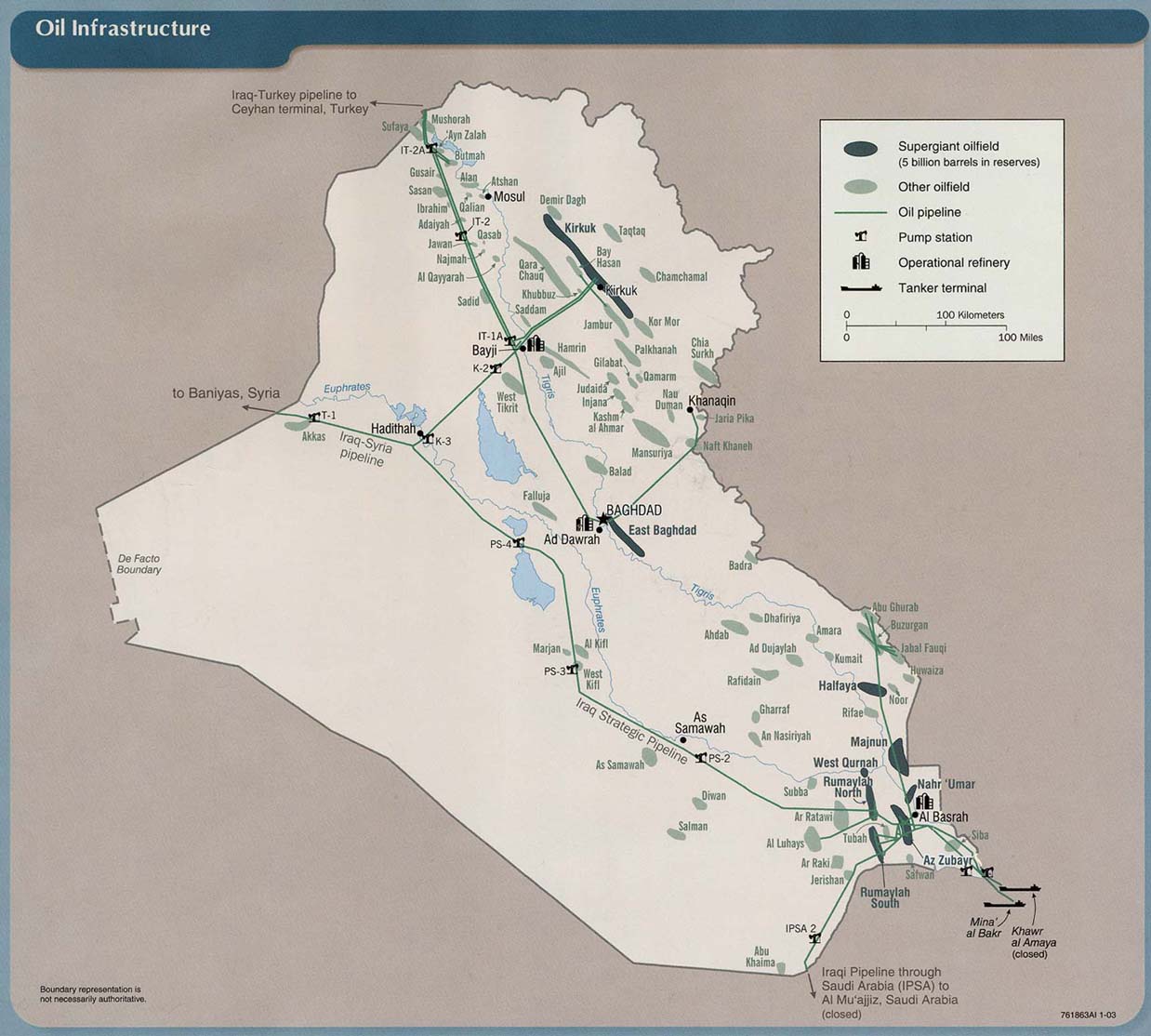
4. BAGHDAD-KRG DISPUTE HEATING UP FURTHER ON KURDISH INDEPENDENT OIL EXPORTS, KRG BECOMES LINKED TO BATTLE BETWEEN THE NABUCCO AND SOUTH STREAM PIPELINE ALTERNATIVES, RUSSIA STRENGTHENS LINKS TO KEY TRANSPORT AND DELIVERY NATIONS--ITALY, AUSTRIA, HUNGARY
"In the beginning, consensus was necessary for us. In this last period, we all embraced consensus and everyone took part together. We needed calm between all sides and political actors. But if this continues it will become a problem, a flaw, a catastrophe. The alternative is democracy, and that means majority rule ... From now on I call for an end to that degree of consensus."
"The strategic partnership is expected to boost gas output in Iraq's ... northern Kurdistan province from the current 90 million standard cubic feet of gas per day to a potential 3 billion by 2014 and help meet the growing energy demand in the region and beyond."
Part of the notion touted by OMV and MOL is to find gas supply for the Nabucco pipeline. However, in March Gazprom signed a deal with MOL to establish a 1.3 billion cubic meters storage facility in Hungary--see Daily Sources 3/18 #4. And Euroactive today reports that Russian oil company Surgutneftgas recently took a 21.2% stake in MOL, for €1.4 billion (~ $1.86 billion at the interbank exchange rate of the time.) OMV had launched a failed takeover bid for MOL in 2007, which led to it selling its stake to Surgutneftgas in March. Surgutneftgas is thought to be close to Prime Minister Vladimir Putin.
"The call for a summons came in a statement read out by an official from the speaker's office on Iraq's Al-Sharqiya satellite television channel. The official said the request was signed by 140 of parliament's 275 members."
"Paolo Scaroni, Eni chief executive, said South Stream would improve Europe's energy security. "What is the meaning of this capacity extension of South Stream? It means 1 billion cubic meters more here will be 1 billion cubic meters less gas crossing Ukraine.""
It is interesting in this context that Iran appears to be arguing at this time for the Pars Pipeline, and now has it moving not through Turkey, but through Iraq and Syria to the Mediterranean, which could potentially thread it through Iraqi Kurdistan. Iran has its own concerns about its Kurdish minority, and has an interest in maintaining strong relations with a Shia-dominated government in Baghdad, so the fact that such a move has even been placed on the table is of some interest.
5. RUSSIAN ANALYSTS SAYING MOSCOW SHOULD FOLLOW THE US AND TURN TO THE FAR EAST
"So whats for Russia in all of this? At present, we stand on the sidelines of the revolutionary transformation of the economic world order. We pray for high oil prices. Why? So that once again we can accumulate dollar reserves and invest in the United States? What for? At the same time, Russia does not belong to any serious economic bloc.
The world will be divided into three main regions: the Americas, Europe and the East, warn the economists. United States will lose some of its power, the leadership will shift towards Asia. That is why America is in a hurry to make friends with China, in order to prevent the creation of a powerful Asian bloc. Where is Russia in the new structure of the world? The East, of course, is closer to us. Already, 96% of Russia's far eastern exports are geared for consumption by the neighboring Asian countries. We need to unite with them--especially in an era of globalization."
"Today the People’s Liberation Army Daily carried a front-page article ... on the directive, pledging more stringent controls over mid-level and senior military officers, emphasizing accountability and party loyalty."
7. BRAZILIAN PRESIDENT IN BEIJING TO TRY AND MAKE FINANCING DEALS REALITIES
"If Lula’s plans pan out, he’ll return with a $10 billion credit for Petroleo Brasileiro SA, an $800 million loan for the state development bank, and financing for ports and waterways. He expects he’ll be able to open China to Brazilian poultry."
(In February, Petrobras announced it had signed a $10 billion loan agreement with China’s Development bank--see Daily Sources 2/19 #1.)
"China, according to central bank figures, has invested $141.6 million in Brazil since Nov. 12, 2004 when Lula, with Hu beside him, said Brazilians could look forward to $7 billion of Chinese financing.
'Given the potential of both economies, the investments both ways could be much bigger,' China’s ambassador to Brazil, Qiu Xiaoqi, told reporters May 7 in Brasilia when asked why the plans hadn’t materialized.
The biggest Brazilian project announced by the Chinese, a joint venture of Baosteel Group Corp. and Vale to build a $3.6 billion steel-slab plant, was canceled in January.
'The Chinese have made Africa their priority,' said Sandra Rios, coordinator of Brazil-China Observatory, a study group created by Brazil’s Industrial Confederation. 'They expect to have a bigger political influence in that region than in Brazil.'"
8. INDIAN ELECTIONS STRENGTHEN THE MODERATE CONGRESS PARTY
"Going forward, these results augur well for Indian economic policy reform. The Congress will be numerically strong enough not to have to rely on partners for political support and will be able to push through new policy initiatives.
Another likely consequence is that the Nehru family will probably provide India, not immediately but within the next couple of years, with its fourth Prime Minister—Rahul Gandhi, son of Rajiv Gandhi, grandson of Indira Gandhi, and great grandson of India’s first Prime Minister Jawaharlal Nehru.
These results are surprising for two reasons. Indian elections have traditionally been characterized by the phenomenon of anti-incumbency: ruling politicians get routinely thrown out of power. This government is the first in over 40 years that has been re-elected after a full term in office."
Subramanian notes that part of the reason for the Congress Party's success has been that India has been weathering the financial crisis relatively well. Well worth reading in full.
9. US SENATE TOLD PAKISTAN RAPIDLY ADDING TO NUCLEAR ARSENAL
"This was one of the purposes of a secret trip to Israel three weeks ago by CIA Director Leon Panetta, foreign diplomatic sources said.
Ostensibly, the CIA chief came to share information on Iran's nuclear program with Israeli intelligence officials and find out how serious the new Israeli government was in its stated position that Jerusalem cannot allow Iran to become a nuclear power.
Panetta was hosted by Mossad chief Meir Dagan and intelligence officials, but also met with Netanyahu and Defense Minister Ehud Barak."
Worth reading in full.
11. MALAYSIAN STATE TO SET UP NEW SOVEREIGN WEALTH FUND ON OIL REVENEUS
"The Terengganu Investment Authority, the first sovereign wealth fund set up by a Malaysian state, said it will manage the long-term oil revenue of the state, located on the east coast of peninsular Malaysia."
"MEND claimed Sunday to have blown up two major oil and gas pipelines in the state. Sources told Platts that one belonged to the state-owned Nigerian National Petroleum Corp. and supplied crude to the 110,000 b/d Kaduna refinery, while the other was a gas pipeline operated by Shell that fed natural gas to power plants in the region. The extent of the damage was unclear."
13. AL-SHABAAB OFFENSIVE APPEARS TO BE MAKING HEADWAY AGAINST CENTRAL GOVT IN SOMALIA, ERITREAN SUPPORT ALLEGED
"Momentum has been swinging back and forth between the government and rebels for days, but on Sunday it seemed to be with the rebels, who include several leaders who US officials have said maintain ties to al-Qaeda. In a major blow, they took a key government stronghold, Ahmed's home town of Jowhar, about 50 miles north of the capital, giving them control of major routes to the north."
Apparently as al-Shabaab has scored military successes, fighters who had switched allegiances to Ahmed have switched back again.
"The Somali government and the United States accused Eritrea of supporting the group by flying cargo planes full of AK-47 assault rifles, rocket-propelled grenades and other weapons to a sandy airstrip outside the capital just before the rebel advance began. Eritrea has denied the allegations."
I am unclear on why it would be in the interests of Eritrea to support a hard line Islamist group's ascent in Somalia, given that it is 98% Orthodox Christian and Sunni Muslim (more or less even divided.) It's longstanding enmity with Ethiopia may account for some sympathy for any organization at odds with Addis Ababa, perhaps Asmara believes that al-Shabaab is the only organization capable of truly creating a state which will impose law and order in Somalia. Still, having done so, it seems that al-Shabaab's ties with al-Qaeda would mean that that would simply result in a state which would seek to export instability to the region.
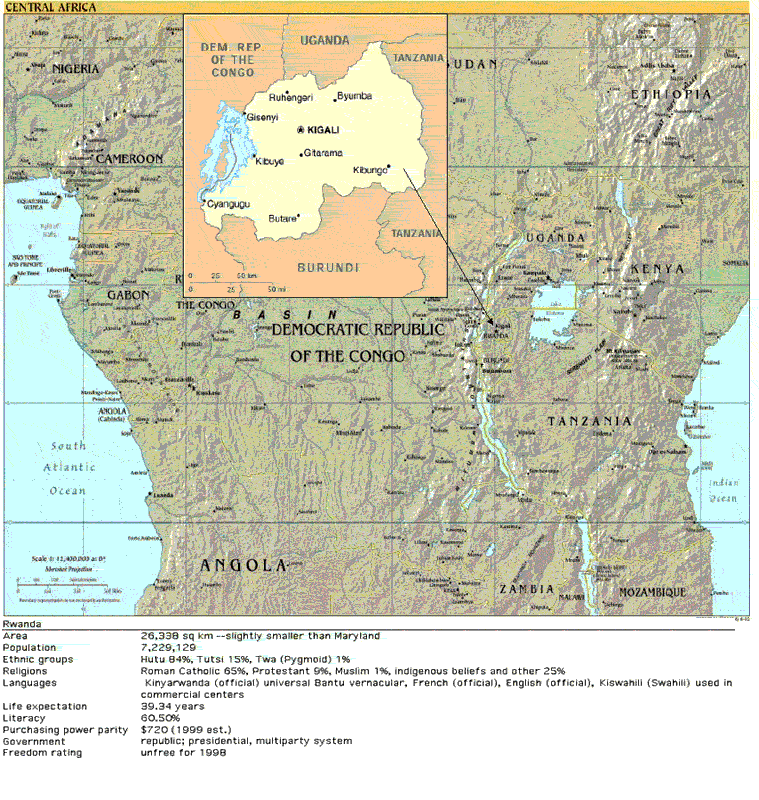
14. RWANDA TELLS SECURITY COUNCIL TO PUT THE KIBOSH ON FOREIGN FINANCING OF REBEL ACTIVITY IN EASTERN CONGO
"There are movers and shakers (of the [Hutu opposition group FDLR]) in Europe and the rest of the world. We believe they should be sanctioned, we believe they should be dealt with, if we are to support the peace process in Congo."
Rwandan forces joined the Congolese in a joint military action against rebel Hutu forces in eastern Congo in late January--see Daily Sources 1/23 #9. In that offensive, a rebel Rwandan Powell reports that in 2006 the US imposed sanctions on businessmen and "warlords" who were allegedly financing instability in eastern Congo, near the Rwandan border.
In November, Angola had reportedly sent troops to help Congolese forces combat rebels in the region, but it apparently took the active cooperation of the Rwandan government to make any serious progress--see Daily Sources 11/10 #8.
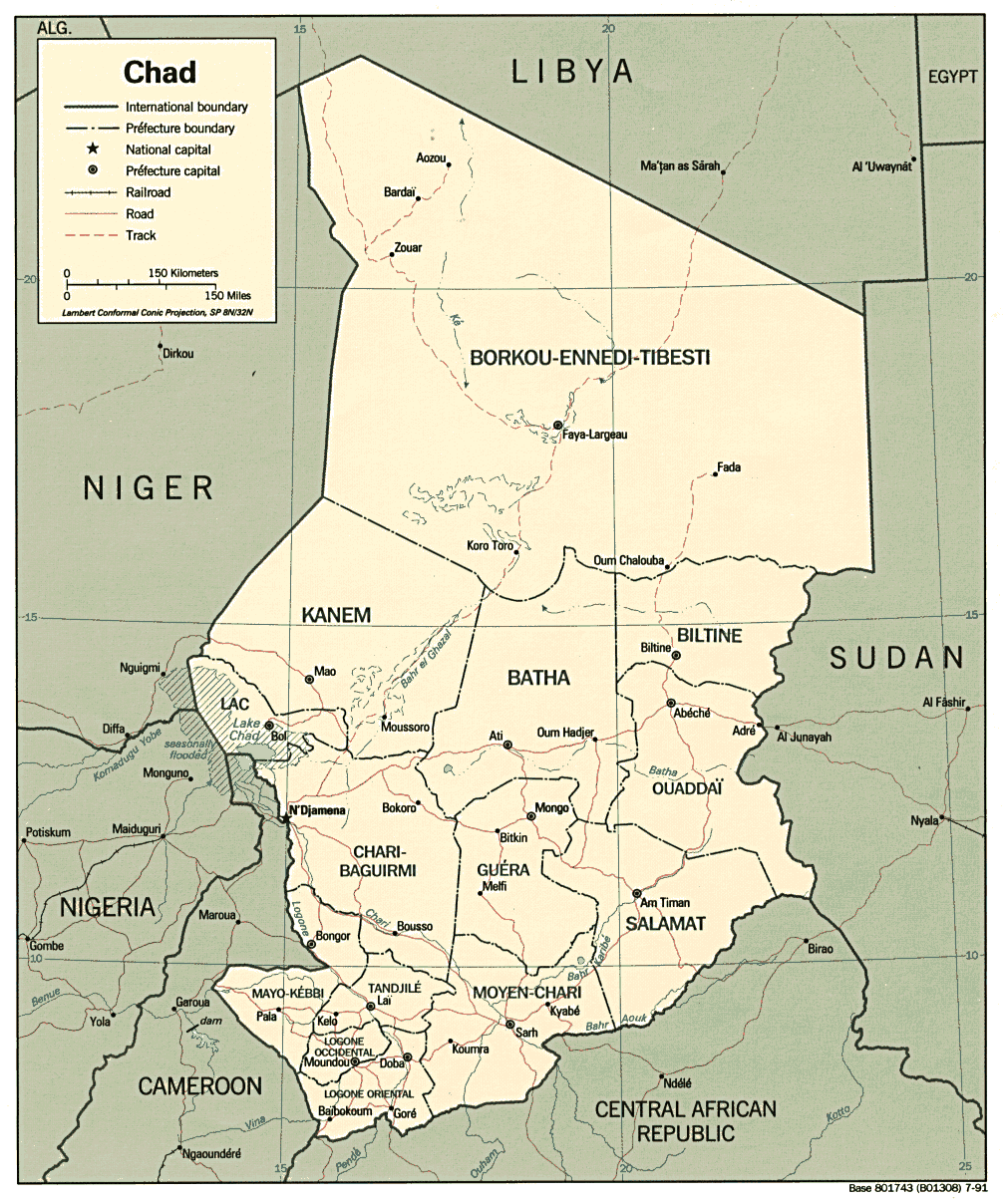
15. CHAD ENDS AIR STRIKES INTO SUDAN, SUDANESE REBEL APPEARS BEFORE THE ICC
"Our target was not the Sudanese government and less so the general population. Our objective was the Sudanese mercenaries wherever they were to be found, without causing any collateral damage."
The recent air attacks were the first attacks into western Sudan proper, where rebels have allegedly been operating, and whom N'Djamena has alleged Khartoum supports.
"Eastern Chad is a temporary home to about 300,000 refugees who have fled Sudan's Darfur conflict. The region also has camps for 187,000 Chadians displaced by fighting locally and in Darfur."
Mr. Abu Garda has since left JEM to form his own rebel movement, the United Resistance Movement. A spokesman for Mr. Abu Garda has argued that the charges against him are the result of fall out between him and JEM. The President of Sudan, Omar Hassan al-Bashir was charged with war crimes by the ICC in March and promptly expelled aid groups working in the Darfur region in response--see Daily Sources 3/6 #5.
16. NORWEGIAN PARLIAMENTARY VOTE ON CANADIAN OIL SANDS PARTICIPATION PUT OFF
"The oil sands issue has put the government in a bind four months before a general election, with political opponents saying state support for the oil sands project was hypocritical given the cabinet's self-professed environmental ambitions."
17. OBAMA ADMINISTRATION TO PROPOSE NEW NATIONAL CAFE STANDARDS
"Under the new standard, the national fleet mileage rule for cars would be roughly 42 miles a gallon in 2016. Light trucks would have to meet a fleet average of slightly more than 26.2 miles a gallon by 2016."
This is a big deal. Transportation accounts for about 60% of US oil consumption.
18. INDUSTRIAL REVOLUTION CAUSED BY CHEAP ENERGY, EXPENSIVE LABOR
"The famous inventions of the Industrial Revolution were responses to the high wages and cheap energy of the British economy. These inventions also substituted capital and energy for labor."
It was difficult to transfer the technologies to places where either coal was expensive or labor was cheap. A must read. Note, just now many analysts expect the West, and the world, to enter a period where energy is expensive and labor is cheap.
"'Beijing's stimulus policies are having a longer-lasting effect than expected,' said Qin Xuwen, an analyst with Orient Securities. 'As long as volume continues to grow, which is quite likely given the records in March and April, and there is no sudden spike in commodity prices, bottom lines of automakers will improve this year.'"
Which is an issue, oil prices are perking up, to say the least.
2. AND MORE CARS = MORE OIL DEMAND, SO THE NDRC PUBLISHES MORE DETAILS ON ITS NEW FUEL PRICING POLICIES, WHICH ARE MORE RESPONSIVE TO GLOBAL PRICES
"China would adjust domestic fuel prices when global crude prices reported a daily fluctuation band of more than 4% for 22 working days in a row.
The commission said refiners would enjoy 'normal' profit when global crude prices are below US$80/b, but would face narrower profit margins when the crude prices rise above US$80/b.
However, fuel prices would not go further up, or only be raised by a small margin, when crude prices rise above US$130/b, and fiscal and tax tools would be used to ensure supplies, the NDRC said."
"The government has forecast GDP to expand 8% in 2009, Zheng said at a conference today in Singapore. This equates to China’s oil-product demand growing between 4.8% and 5.6% this year, according to Bloomberg calculations based on Zheng’s speech."
3. WHILE COMMODITIES PRICES APPEAR TO BE SPIKING (ON CHINESE STIMULUS) CAUSING CORPORATIONS TO HEDGE, CAUSING MORE PRICE RISES LIKELY TO UNDERMINE STIMULUS GIVEN WEAK OVERALL DEMAND
"The head of metals trading at a bank in London said: 'Consumers are being dragged to hedge, even if their demand is not strong, because they are afraid of the rapid price increase in some markets.'
Bankers pointed to hedge examples such as Delta, the world's largest airline, which has boosted its fuel hedge to 75% of this year's needs, from less than a third late last year.
Cargill and Louis Dreyfus, two of the world's largest agricultural trading houses, last week secured a hefty position in the sugar market, pushing prices higher, to supply India, the world's largest consumer."
The bright spot, from the perspective of oil bulls, seems to be localized in China, as even the stimulus program there does not appear to have especially heartened representatives of the steel sector there. Reuters reports that Mr Shan Shanghua, secretary general of the China Iron and Steel Association said,
"'We are still aiming at a yearly production of 460 million tonnes. Whether we can make it or not depends on exports and domestic demand. But I am sure that if we remain at that high production rate and do not cut output, it will be a disaster.'
Mr. Shan said the Chinese, led in the negotiations by Baosteel, should be able to get a price below the spot market, which would mean a cut of more than 30%. He said that 'There is a common sense that wholesale prices should always be lower than those for retail.'"
(h/t Yves Smith at naked capitalism.) The Baltic Dry Index, though off its lows, isn't recovering at a rate that would make me all that optimistic:
4. GERMAN EXPORTS DOWN 16 Y-O-Y IN MARCH, OWEN HUMPAGE SAYS EURO MORE LIKELY ALTERNATIVE TO DOLLAR THAN SDRS
"German industrial production remained flat in March, following a year long decline, data released by the Economics Ministry also showed on Friday.
'Recent positive impulses came from the car industry that has benefited from economic stimulus measures at home and abroad,' the ministry said in a statement, referring in part to the German 'scrapping bonus' scheme which pays a bonus to drivers junking an old car and buying a new one.
Meanwhile, German manufacturing orders released on Thursday, unexpectedly jumped just over 3% between February and March. The rise, its first in seven months, also fueled hopes that the worst of the recession may have passed."
"These currencies’ official reserve rankings parallel their status in international commerce more generally. This correlation should be of no surprise. Why hold a currency that no one uses? According to a 2007 BIS survey, roughly 88% of daily foreign exchange trades involve dollars. Again, the euro is a distant second, with the British pound and Japanese yen trailing."
He concludes that at its core the SDR notion is based on inflation concerns, which would be more easily met by switching to the euro than SDRs. Worth reading in full.
5. PAKISTANI PM TELLS COUNTRY ALL BETS ARE OFF IN SWAT, CHINESE AMBASSADOR TO ISLAMABAD COMPLAINS OF US PRESENCE IN REGION
"signaled the final collapse of a fragile peace accord between the government and Taliban forces in the Swat region. It also represented the civilian government's formal green light for a full-fledged offensive by the military, which until now has been fighting sporadically."
"‘These are issues of serious concern for China,’ he said, adding that China was concerned over the US policies and the presence of a large number of foreign troops in the region.
He said that US strategies needed some ‘corrective measures’ to contain terrorism. However, he added, terrorism was a serious issue and required cooperation between countries in the region to counter it."
6. FMR ASST SECY OF DEFENSE ARGUES AFGHAN MILITARY SHOULD BE GIVEN LARGER GOVERNANCE ROLE
"But as long as Pakistan is a sanctuary, US forces here will be on the strategic defensive, no matter how skillful their military tactics. We can't stay forever. The basic question is: How to consolidate the battlefield gains? That depends upon how the mission is defined. President Barack Obama has avoided promising to build a vibrant democratic nation. 'The achievable goal,' he said recently, 'is to make sure it [Afghanistan] is not a safe haven for terrorists.' Such a minimalist policy can be achieved in one of two ways.
The first is to apply the classic counterinsurgency model: After the military push the enemy from a populated area, the police take over, while government appointees provide honest governance and basic services. This approach pursues the expensive nation-building that Mr. Obama has not endorsed. It requires thousands of additional police trainers and hundreds of civilian advisers in the districts. These advisers also serve as watchdogs against corruption, acting as a shadow government to restrain officials prone to skimming and payoffs. It's a sound approach that is slow and expensive.
The second option is to expand the role of the Afghan army to act as the facilitators and watchdogs of governance. Today, American commanders like Capt. Howell routinely participate in shuras or councils. They can gradually hand off such governance-related tasks to Afghan officers."
Worth reading in full.
7. KRG LETTER SUGGESTS THAT A DEAL HAS BEEN STRUCK WITH BAGHDAD ON STATUS OF KURDISH CONTRACTS WITH OIL COMPANIES
Key excerpt from the letter which Energy Source reproduces in full:
"The exported crude oil from both fields will be marketed by SOMO [Iraq's State Oil Marketing Organization] and the revenue will be deposited to the federal Iraq account for the benefit of all Iraqi people. The average API gravity of the crude oil mix at a combined rate of 100,000 barrels per day will be around 35 degrees. Once the Taq-Taq pipeline is laid and further upgrades are made to the Tawke pipeline, the combined exports from these two fields will reach 250,000 barrels per day, with the average API gravity of around 39 degrees. These higher API gravity oil mixes will improve on the overall quality of the present Kirkuk oil mix which is only around 31 degrees API."
Though the letter clearly implies that a deal has been struck with the central government regarding the validity of the licenses the Kurdish Regional Government has granted various E&P firms in the region, the Iraqi Oil Ministry denied to reporters at Reuters that any such deal had been struck. The companies involved also indicated surprise when approached by reporters. McNamara adds:
"While no expected the power struggle between Iraq’s central and regional governments to end any time soon, many many players involved in the Kurdistan oil industry said in recent weeks that the two sides were closer than ever to an agreement over Kurdish oil exports and were hammering out the final details of revenue-sharing."
8. POPE VISITS HOLY LAND, BRZEZINSKI URGES LARGER, MORE PROACTIVE--AND MORE BALANCED--APPROACH BY OBAMA ADMINISTRATION IN PALESTINE PEACE PROCESS
"On Monday, Benedict lands in Tel Aviv for four intense days in Israel that will include visits to the Western Wall, holy to Jews; and, sacred to Catholics, the Church of the Holy Sepulcher and the hall where Jesus is believed to have had the Last Supper. In Jerusalem he will visit the religious compound in the Old City known to Muslims as the Noble Sanctuary and to Jews as the Temple Mount.
The Vatican’s Jewish interlocutors say they hope the trip will mend fences, while Israeli officials hope it will boost Christian tourism to the region.
The trip is an important opportunity for the pope 'to demonstrate visually,' that the relationship between Jews and Catholics 'has continued to flourish since the visit of John Paul II,' said Rabbi David Rosen, chairman of International Jewish Committee on Interreligious Consultations."
"If the new president is to avoid in the Middle East not only the gross errors of his immediate predecessor but also the much too long-lasting passivity of the Clinton years, he truly has to lead. Admittedly, making matters more difficult for him is the legacy of the last 16 years, when a subtle shift took place in the US approach to the Israeli-Palestinian conflict: the United States moved from being a genuine mediator seeking to nudge both sides toward peace to holding a posture of thinly veiled partiality in favor of one of the parties to the conflict. The result has been detrimental to the prospects for peace--for without engaged and genuinely forthright US mediation, the two parties to the conflict have shown themselves to be unable to reach a genuine compromise.
To make matters worse, Islamist extremism is gaining ground among a growing number of Palestinians, and Israeli politics are currently moving in an increasingly intransigent direction. In the months to come, the next Israeli prime minister may try to prod the United States to go to war with Iran, while arguing disingenuously that the Palestinians must first become economically more developed before an Israeli-Palestinian peace can be seriously considered. The argument regarding the Palestinian issue, in effect, will be for leaving things as they are, notwithstanding the danger that the prolonged stalemate (with its periodic violence and the relentless expansion of the settlements that it allows) is already poisoning the prospects for a two-state solution."
9. SUDAN TO ALLOW NEW HUMANITARIAN GROUPS INTO DARFUR
"'I think what we're hearing... is that new NGOs with new names, new logos, if necessary, can come in,' [UN humanitarian chief John Holmes] was quoted as saying by Reuters news agency.
'That means there's an opportunity to exploit some of that expertise and experience that is there and I think that is a welcome degree of flexibility about how it might happen in the future.'"
Sudan's President Omar al-Bashir expelled most aid agencies from Sudan and the Darfur region following his indictment in the International Criminal Court in March--see Daily Sources 3/6 #5. Bashir also responded to the decision by releasing from prison a prominent critic of his regime, Hassan al-Turabi, the foremost Islamist in Sudan who had ties to Osama bin Laden--see Daily Sources 3/10 #15. Turabi was originally imprisoned by Bashir in part because Turabi had come out in favor of the ICC's indictment of the President, which makes more sense, I suppose, in light of recent conjecture that it might indict former US officials for their actions in prosecuting the second Gulf War. Foreign Affairs hosted a Q&A session on Sudan with Andrew Natsios, Professor of Diplomacy at Georgetown University, where he was asked what "are the United States' key national interests with regard to the Sudan crisis?" His response:
"The central US national interest in Sudan is humanitarian. The cooperation between the Sudanese and US government on counterterrorism has been exaggerated and overemphasized as a motivating force in US policy--it is useful but not central to the relationship."
This is code. It is in the interests of US elected officials and other American political associations to address Sudan primarily in terms of Darfur, because the US is primarily a Christian country and to openly address it in a hard-headed fashion would be bad for the political future of either. If I were to take a stab at what the US national interest is in Sudan, it would be:
A) The establishment of a stable government, capable of policing its constituents, and thus with which meaningful negotiation can take place; B) So that a policy within Sudan which actively discourages militant Islamists from setting up base there; C) Which probably could only take place when the civil war is brought to an end, which leaks instability into neighboring countries, most significantly via panicked migration flows, all of which are unable to provide basic services to their own citizens or subjects, much less to foreign migrants, one of which, at least, is a key US ally;
D) Meaning that the consolidation of rebel movements into a single coalition with which the central government can come to an agreement with; and E) Additional supply of oil and gas to the global market, not only from Sudan, but also from Chad, which has been drawn into the conflict, as the additional crude theoretically mitigates price on the global market, and thus the share gasoline and diesel takes from the average American's pocket book.
"'Tomorrow, we will start to recuperate assets and goods that will now belong to the state, as social property, as they should always have been,' Chavez said, adding that thousands of workers would be taken on by state oil company PdVSA.
But members of a Zulia business group that represents local oil firms told Reuters soldiers seized the installations of 20 companies on the eastern side of [Lake Maracaibo] late on Thursday."
"companies re-injecting natural gas and or water to sustain oil production--a means that sustains one-sixth of all Venezuelan production--are the main intended targets of the new law, as well as companies providing E&P barge services."
Reports began surfacing in March that Caracas was having a tough time meeting its obligations to foreign contractors in the country--see Daily Sources 3/19 #5.
11. SWINE FLU CASES RISE, BUT REMEMBER THAT TB KILLS TENS OF THOUSANDS MORE DAILY
"Basically, the report offers a little bit of backing for the 'job market is turning' story that some other more timely but less reliable indicators have been hinting at, but not much. These numbers will be revised over the next couple of months as more data come in, and by then they may tell a somewhat different story. One thing that the revisions won't change: This employment downturn is now clearly much, much worse than those of 1981-1982 and 1973-1974."
"The Presidents decided to begin bilateral intergovernmental negotiations to work out a new, comprehensive, legally binding agreement on reducing and limiting strategic offensive arms."
President Obama told reporters after the meeting that he plans to visit Moscow in July.
"The statement reflects a desire by both nations to put more pressure on Iran to end its pursuit of nuclear weapons. While giving a nod toward Iran's claim that it is developing a civilian nuclear program, the document puts the Russians on the record calling on Iran to implement UN Security Council resolutions regarding the confirmation of its nuclear capabilities and intentions.
'Iran needs to restore confidence in its exclusively peaceful nature' the document says."
"'Stocks of unsold goods declined which, combined with a sluggish contraction of the new business sub-index, suggest that the headline index may keep rising into the second quarter,' Dmitri Fedotkin, a VTB economist, said in the statement. Still, 'no sharp recovery' in the index is to be expected."
"This week we must attach the same sense of urgency to the regulation of financial markets. World growth will be all the stronger for being sustained by a stable, efficient financial system and by the kind of renewed confidence in the markets that would enable resources to be better allocated, encourage lending to pick up again and foster the return of private investment capital to developing countries.
We agreed in November that not one financial player, institution or product could be beyond the control of a regulatory authority. This rule must be applied to credit rating agencies, speculative investment funds and tax havens. On the latter point, I want us to go far indeed, adopting a resolution that identifies tax havens and that details the changes we expect from them and the consequences should they fail to respond. The debate on tax havens initiated by the Washington summit has begun to bear fruit, particularly in Europe.
We must reform the required disclosure standards and levels of prudential oversight for financial firms. Sadly, in many countries, this issue has not been getting the attention it deserves."
"Because of the experience of the past 15 years, we know what is necessary, whilst countries like the US and European countries may be facing this sort of situation for the first time. I think there are countries that understand the importance of fiscal mobilization and there are some other countries that do not–-which is why, I believe, Germany has come up with their views."
"Both sides reaffirm the high importance of Sino-French relations and are willing to strengthen the all-round strategic partnership on the basis of mutual respect and paying attention to each sides basic interests. ... On the basis of this spirit and the principle of not interfering in internal affairs, France refuses to support any kind of 'Tibet independence'."
"Today I talked to al-Bashir and I asked him what risks does he run when he travels around here. I invited him to Caracas but told him, 'I hope you don't have any problems over there'."
"The state-owned Kuwait News Agency reported March 24 that the country’s 99 investment companies lost nearly $32 billion between August and January, a third of what those companies once owned.
Global and Investment Dar have faced some of the biggest challenges. Global has been in negotiations with creditors for several months after announcing in December that it had defaulted on about $3 billion in debt."
"Monetary policy will continue to be expansionary until there are signs of inflation. We’re doing very expansionary things now, and we’re going to have to be prepared to undo them when the economy starts recovering."
The bank expects Israeli GDP to contract by 1.5% in 2009.
"Mexican Finance Minister Agustin Carstens, speaking at a news conference today in London, said the lending facility would 'bullet proof' the country’s financial position."
The government is seeking the credit line as a measure of insurance, and may choose not to use it.
"A chart of central bank purchases of Treasuries against reserve growth shows that central bank purchases of Treasuries soared even as dollar reserve growth fell. That can only go on for so long."
"The provision of stable, reliable and viable dollars may be subordinated to short-term US interests, posing a risk to global monetary stability. In the long term, America may seek to resolve its economic mess by devaluing the dollar at best and a default at worst. This is depicted in a Chinese proverb: 'Drinking poisonous liquid to quench thirst.' History points to examples such as the collapse of the Bretton Woods system in the early 1970s. It is the foreign holders of US obligations denominated in dollars that would end up paying."
Qiao suggests that a solution to this dilemma is to take Asian dollar savings and use them to invest in US businesses, and presumably, real estate. But, given a lack of familiarity with "cultural, legal and regulatory issues in US businesses" and market turbulence, Asian investors are reluctant to enter the market. Qiao suggests that Asian nations could pool a proportion of their treasury holdings to convert them into equity investments in the US. The US would be called upon the guarantee the investment and the Fed would arrange a special account to ensure the Asian pool has liquidity. Qiao concludes,
"Conventional Keynesian policies – fiscal and monetary expansion on a national basis–-cannot solve the problem but will make it worse."
"The headline purchasing managers index only needs to top 41.2 to indicate expansion of the overall economy (beyond manufacturing). So the improvement in new orders, if it remains on track, would suggest that the economy stops contracting and returns to growth sometime in the third quarter. Could forecasters’ expectations for a mid-2009 turnaround actually be right?"
"There is now no better forum than G20. Essentially, it will act as a 'steering committee for the world economy', as Barry Eichengreen aptly said, and this forum should now replace the G7 or G8 for good."
Soesastro appears to regard the preoccupation with the expanded Chiang Mai Initiative as parochial and not broad enough to really address the economic concerns in the Asia Pacific. Worth reading.
"In yet another possible hint of deflation, an index of real estate prices in 70 Chinese cities also fell in February, inching down 0.3% from January and down 1.2% from a year ago."
"[Mr. Zhang] added that agencies such as China's National Oil Reserves Centre should be allowed to issue foreign exchange bonds to obtain money from China's forex reserves for overseas purchases."
"'A three percent in appreciation would attract more foreign capital into China to help us acquire assets overseas,' said Wang. 'We should take advantage of the low prices and use reserves to buy more commodities, oil fields and valuable assets in the US.'"
"Exports, which are equivalent to about 70% of GDP, fell 37.2% over the first two months of 2009, the largest decline on record. China and the US are Taiwan's biggest overseas markets.
The economy contracted 8.36% in the fourth quarter, pushing the island into its first recession since the technology bubble burst in 2001. The jobless rate climbed to a seven-year high of 5.33% in January. ... Taiwan's shipments to China fell 32.6% compared with a 63.5% plunge in January. Exports to the U.S. declined 24.7% from a year earlier and sales to Europe fell 34.7%, more than January's 32.6% decrease."
February's export decline was Taiwan's sixth consecutive month of exports contraction.
"The Dalai Lama said China's Communist government had subjected Tibet and its people to 'untold suffering and destruction' over the past five decades, turning the Himalayan region into 'hell on earth.' He also called for 'meaningful autonomy' for Tibetans."
"Today, the religion, culture, language and identity, which successive generations of Tibetans have considered more precious than their lives, are nearing extinction."
China's foreign ministry spokesman responded to the criticism by dismissing it as lies and claiming that Beijing's policies are "blazing a new path for Tibet's prosperity."
"January’s plunge was the sixth consecutive monthly decline in industrial output, the longest continuous contraction in the 29-year old statistic series."
"'This is a tussle between the banks and the NBU,' said Dmitry Gourov, a Ukraine economist in Vienna at UniCredit SpA, Italy’s largest bank. 'The central bank could easily make a scapegoat of one particular bank, there’s always that risk.'"
The hryvnia has fallen 39% versus the dollar in the past six months.
"'The Saudis seem to have avoided a deeper reduction in April supplies to Japan, hinting that the kingdom may oppose an additional reduction,' said Ken Hasegawa, a commodity derivatives sales manager at Newedge in Tokyo."
"[The] Moroccan announcement breaking relations also spoke of Iranian attempts to 'alter the religious fundamentals of the kingdom, to attack the roots of the Moroccan people's ancestral identity.' Iran called the charges baseless, but it seems the Moroccans are alleging direct interference with their internal affairs.
Morocco has complained in the past that the Iranian Embassy in Rabat was seeking to spread Shi'ism in the Sunni Kingdom, where the King also claims religious leadership and the title Amir al-Mu'minin or Commander of the Faithful."
"'The term "mediation" is used at times,' Babacan told reporters in Ankara ... before departing for Iran, according to the Turkish newspaper Sabah. 'This will only be realized if a concrete request is made by both sides. We could contribute to the furthering of relations between the two nations to a positive level.' ... Clinton told Turkey's Kanal D television last week that the Obama administration welcomed any Turkish efforts to help sway the Islamic Republic. 'You know the Iranians better than we do,' she said. 'You have shared a border for--I think I was told over 350 or so years. So we are going to ask for your help in trying to influence Iranian behavior.'"
15. Lydia Polgreen at the New York Times reported yesterday that President Omar Hassan al-Bashir released from prison Hassan al-Turabi today. Turabi was originally arrested two months ago because he came out in favor of the ICC trying al-Bashir. When he was released, he reiterated that support, "We must accept all international policies, especially if they address justice." (Turabi is Sudan's most prominent Islamist, and as such puts a premium on jurisprudential thinking.) Analysts say the move might be to bridge political divisions in Sudan now that the regime is under new pressure, which makes sense. I would add, however, that Turabi, an old colleague of Osama bin Laden, and prominent Islamist is not exactly considered friendly by most of the West.
"Brazil’s economy expanded 5.1% last year, compared with 5.7% in 2007. Industrial activity fell 7.4% from the previous quarter. Household consumption fell 2%."
"EPA said that about 13,000 facilities, accounting for about 85-90% of US GHG emissions emitted, would be covered under the proposal. The new reporting requirements would apply to suppliers of fossil fuel and industrial chemicals, manufacturers of motor vehicles and engines, as well as large direct emitters with emissions equal to or greater than 25,000 metric tons/year."
"Austria’s CDS are trading higher than Italy’s CDS. This has not yet translated into actual bonds spreads, which Austrian bond yields trading at 4.2%, while Greek bonds are at 5.8%. But sharp movements in the CDS are often an early warning of a change in bond rates. This is one to watch out for."
American Express CDSs traded yesterday at 652.2. Johnson, a credible interpreter of markets being the former chief economist of the IMF and a professor at MIT, comments:
"The events of mid-September 2008 were traumatic and awful to behold. I saw that trailer and I don’t want to see the movie. But it is exactly into that scary future that we now head."
European household consumption does not account for as large a share of GDP as it does in the US, and thus the cascade effects of rising debt to equity ratios on consumption and thus GDP should be less pronounced, if I understand correctly. However, construction will still get hit--and Ms. Wilder reports that German construction is already less than 6% of GDP, a historic low. Worth a look.
"Russia’s sovereign fund was always quite conservative. Or at least its external portfolio was always managed fairly conservatively. It was primarily a fiscal stabilization fund, not an endowment fund — so this made some sense. Its existing guidelines implied that it couldn’t buy much of anything other than Agencies and Treasuries. Before the current crisis, Russia was planning to lift those restrictions so that its 'future' fund could take on a bit more risk to try to eke out higher returns. But the world has changed. And now even government-backed Agencies are too risky."
"[Bank Rossii] purchased a net $862 million and €99 million (~ $125 million) in February, after selling a net $178 billion and €24 billion in the previous six months, it said yesterday. Bank Rossii’s Ulyukayev said last month the central bank will confine the ruble to a 39 to 41 trading range versus the basket in the first quarter, in an interview with Reuters."
"In [an] NPR interview today, Clinton cast the overtures to Russian as part of a larger effort to engage antagonists such as Syria and Iran. 'We have a sense of urgency in the Obama administration,' Clinton said. 'We believe that there are a lot of challenges and threats that we have inherited that we have to address. But there are also opportunities. We are being extremely vigorous in our outreach because we are testing the waters, we are determining what is possible, we're turning new pages and resetting buttons. We are doing all kinds of efforts to try to create more partners and few adversaries.'"
"In her session at the European Parliament, the assembly’s president, Hans-Gerd Pöttinger, praised Mrs. Clinton, saying she sounded 'like a European.' The election of Mr. Obama, he predicted, would allow the administration to 'restore your country’s influence and its standing around the world.'"
Meanwhile, Secretary Clinton may have gone a bit overboard while declaiming that in regards to climate change, "we are long overdue in stepping up" and that "the United States has been negligent in facing up to its responsibilities." While I agree that climate change is a critical and pressing issue, the EU has passed quite a lot of laws to address the change, but its net carbon output isn't falling--and it is not clear that the current crisis will permit particularly strong actions in this arena.
Historically, there have often been large changes in suppliers share of China's crude import market. However, it is possibly significant that Sudan's exports to China fell by 56.2% from December as the ICC was heading for a decision--though I think it is unlikely. It is very notable that Brazil's crude exports have gone from basically nothing to 88 kb/d--almost 3% of total Chinese imports. NICOMEX reports that Petrobras concluded a deal with Beijing today to supply 100-160 kb/d. It is in the process of negotiating a $10 billion loan with China. It was earlier reported that the $10 billion loan had already been agreed to--see Daily Sources 2/19 #1.) It is also interesting that Venezuela is not even among the top 10 exporters to China in January.
"A plan has been drafted to boost Iraq's 2.4 mb/d crude-production capacity by 500 kb.d within six months, to 4 million bpd in two years and 6 million to 8 mb/d by 2013, relying in the first two phases mainly on domestic competencies and a recreated Iraqi National Oil Co. and a Supreme Petroleum Council.
The two-pronged plan means that development will be launched immediately on some of the fields that are simultaneously being tendered to IOCs in the ongoing licensing rounds, muddying the waters considerably. The plan has been launched to weaken the Oil Ministry, and the creation of an SPC will take much of the ministry's political steering power away and hand it to Iraq's political factions."
The Oil Ministry is regarded by many as a catspaw of the US government. The government's production plan is extremely optimistic, perhaps even manic. (h/t Jim Lobe's Iraq Oil Report.)
"Attacks on the Pakistani security forces and killing of fellow Muslims by the militants in the tribal areas and elsewhere in Pakistan is bringing a bad name to mujahedeen and harming the war against the US and NATO forces in Afghanistan."
"'It’s an interesting and positive development,' Paul Salem, the director of the Carnegie Middle East Center in Beirut, said of Britain’s move. 'Once the US starts talking with Syria and Iran, Hezbollah will be a difficult issue, and Britain’s opening up a direct channel with Hezbollah now could help defuse that.'"
"National Guard troops occupied a rice mill owned by Mendoza’s company, Empresas Polar SA, last week, and Chávez directly warned Mendoza, 43, whose family has a net worth of $5 billion according to Forbes magazine, that he is now in the government’s cross hairs.
'You can’t work beyond the law, Mendoza,' Chávez said during a televised March 4 cabinet meeting, where he alleged the company was evading rules that require it to produce food at government-set prices. 'We could expropriate all of Polar’s plants.'"
If the government decides to expropriate Polar's assets, it will not offer cash as it has in past nationalizations, but rather bonds.
"In his latest crackdown, the president sent troops into rice mills to verify whether they’re complying with government regulations on production of price-controlled foods. The government began the process this week of seizing a rice plant owned by Cargill Inc., the biggest US agricultural company.
'We can’t allow monopolies like Polar,” Chávez said yesterday. 'That’s why we’ve ordered the intervention and possible expropriation of the plants, just like Cargill.'"
"We’ve already blown through the prior high point of the data series, which the Bureau of Labor Statistics started in 1994. An even broader (since discontinued) series hit 15% in late 1982, and we’re likely to fly right through that one next month."
"What I get from the chart ... is that job losses from this recession are now worse than in 1981-1982, which is generally considered to have been the most severe economic downturn in the US since the Great Depression. Barring a more or less unimaginable turnaround in the month or two, they will be much worse. Just look at how steep that brown line is!"
I am not an insider, and so I read the papers, watch the networks (more like Jon Stewart, but OK), and poke about on the internet to get my news.
Just like most folks, I make my judgments about what's going on in the world on the basis of this information. This blog is an attempt to record some of them.
Because I've had some experience in international affairs, I might have a few counterintuitive reads on things that others might find interesting--or at least I hope so.
But, caveat emptor, since I have no inside information, the best I can do is assume:
a) that the actors being analyzed are behaving rationally, and
b) that the facts as they are reported in open sources are pretty much the facts.
"All sciences are now under the obligation to prepare the ground for the future task of the philosopher, which is to solve the problem of value, to determine the true hierarchy of values."










 Posts
Posts

